

India’s budget to test Modi’s fiscal resolve ahead of 2024 vote
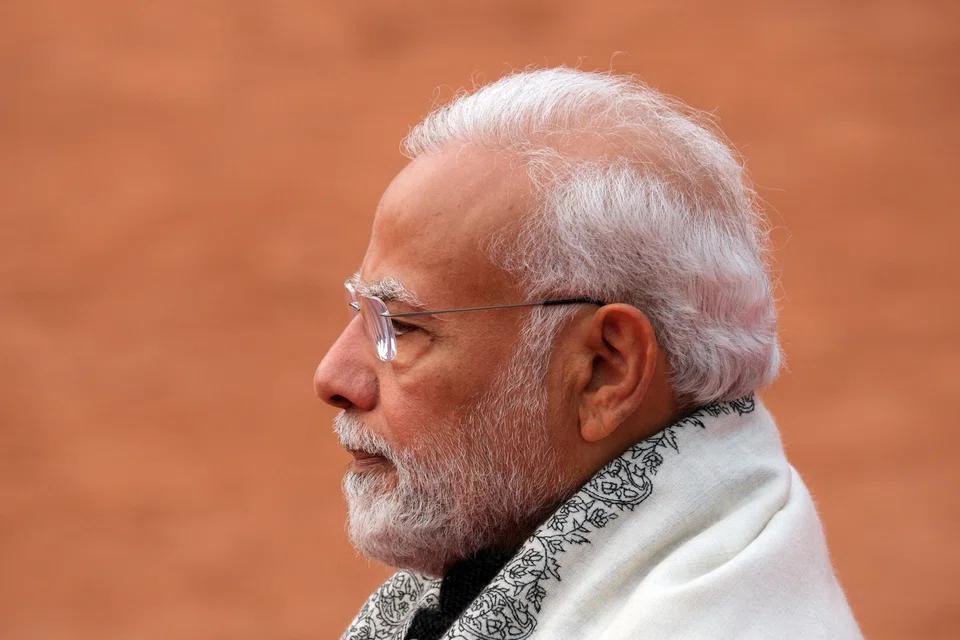
INDIA will unveil its budget on Wednesday (Feb 1), testing Prime Minister Narendra Modi’s fiscal mettle, seen as key to boosting investor sentiment even though it will likely leave less room for handouts, a year before he seeks a third term.
Modi looks poised to sustain fiscal consolidation as he takes the global stage with India’s presidency of the Group of 20 nations. India’s deficit hit a record 9.2 per cent of gross domestic product (GDP) in the first year of the pandemic. Shrinking this deficit is necessary for Asia’s third-largest economy to improve its credit rating, which is currently at the lowest investment grade.
The country recently restructured the world’s largest food programme and trimmed energy subsidies to enable about 1 trillion rupees (S$16.1 billion) in government savings. More than half of the 20 economists in a Bloomberg survey this month expected the upcoming budget – for the fiscal year starting in April – to steer clear of populist measures, with a focus on strengthening manufacturing and creating jobs instead.
Shunning wasteful expenditure is crucial for India’s robust, long-term growth as it frees up funds to build more roads and ports, as well as to enhance logistics linkages that will support Modi’s ambition of making India the new global powerhouse. This must all be done without bloating the deficit capped at 6.4 per cent of GDP for the fiscal year ending in March.
Fiscal consolidation is in keeping with Modi’s first budget in 2014. The prime minister is expected to further burnish those credentials as he becomes the first to lead what is now likely the world’s most populous nation.
A review of budgets since Modi entered office shows that he has been chipping away at subsidies, barring the pandemic years when assistance increased. For the current fiscal year, provisions for subsidising liquefied petroleum gas – used for cooking – were lowered to 58.1 billion rupees. This was down from 352 billion rupees two years ago.
The Indian government is pressing ahead with putting the fiscal house in order, even if it risks, for instance, upsetting Modi’s loyal base of women voters.
“Fuel costs are hurting us the most right now,” said Nupur Kaushik, a 37-year-old New Delhi resident who was seeking lower taxes and incentives for working women.
HSBC Holding’s chief India economist Pranjul Bhandari said the nation’s path to fiscal consolidation would require a herculean effort. “Think of it like a long-distance cyclist who needs to keep pedalling hard to reach the finish line.”

Modi still has a year, before elections are due in the summer of 2024, to course-correct politically if it looks like fiscal prudence is going to hurt his party’s chances at the ballot. State elections this year will indicate whether his popularity can weather tough measures. An interim budget next year will also create some wiggle room for the premier.
Fitch Ratings, which has a “BBB-” rating for India, said: “Fiscal pressures could arise from upcoming national elections. But the incumbent government’s dominant political position likely limits these risks.”
Under Modi, India has risen to become the world’s fifth-largest economy. As he looks outward, he must harness the country’s full economic potential, and meet the target of boosting the share of manufacturing to 25 per cent of GDP from 14 per cent now. That will help the nation gain on Japan to become the world’s third-largest economy before the end of the decade.
A year ago, Finance Minister Nirmala Sitharaman laid out a vision to steer the economy through the next 25 years. That plan involved spurring growth through infrastructure investment and increasing agriculture output to cut reliance on imports, including oilseeds.
Those measures have not translated into gains yet for Modi supporters such as Trilok Chand, a resident of Tibbi village in Himachal Pradesh.
“Whatever we are getting from farming is not enough for my family of four,” said Chand, a rice and wheat farmer on a small one-acre farm. “Prices of all items are very high,” he said, wishing for the government to ensure lower prices of essential commodities.
“If they fail to do this, they will repent.” BLOOMBERG
Decoding Asia newsletter: your guide to navigating Asia in a new global order. Sign up here to get Decoding Asia newsletter. Delivered to your inbox. Free.
Share with us your feedback on BT's products and services
TRENDING NOW

VietJet hit with global asset freeze in FitzWalter dispute

FCT, NLB to turn Causeway Point’s former cinema space into reading hub in mall revamp

Family offices ‘kept captive’ by relationship managers turn to independent advisers, direct deals

Olivia Lum, ex-CFO not giving evidence in their Hyflux trial

