

India’s central bank approves record 2.87 trillion rupee dividend to government
The lower-than-expected dividend is likely to hurt bond markets, which expect the budget deficit to rise
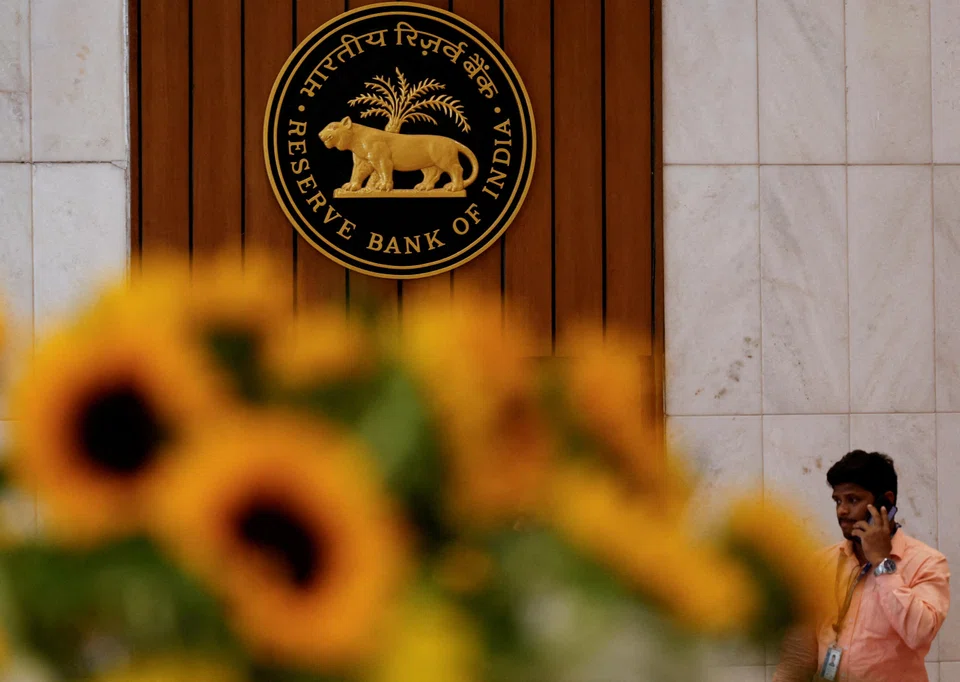
[MUMBAI] India’s central bank will transfer a record 2.87 trillion rupees (S$38.4 billion) to the federal government for the last fiscal, it said on Friday (May 22).
This falls short of market expectations for a larger dividend that would have helped New Delhi, at a time when its finances are strained by the Iran war-led energy shock.
The surplus is higher than last fiscal year’s 2.69 trillion rupees, which was also a record high. A Reuters poll of economists had pegged the surplus in a range of 2.9 trillion to 3.2 trillion rupees.
The lower-than-expected dividend is likely to hurt bond markets, which expect the budget deficit to rise. India’s benchmark bond yield rose three basis points to 7.1 per cent after the announcement.
India, the world’s third-largest crude importer and consumer, has cut federal taxes on fuels to protect domestic consumers from the surge in crude prices. Government spending on subsidies for goods such as fertilisers is also expected to rise.
New Delhi had budgeted for 3.16 trillion rupees in dividends from the Reserve Bank of India (RBI) and state-owned financial institutions. The government does not provide a separate estimate for the RBI dividend.
“The RBI surplus transfer is marginally lower than expected, thereby limiting the levers for the government in terms of managing the fiscal slippage risks,” said Upasna Bhardwaj, chief economist at Kotak Mahindra Bank.
“While we do not see extra borrowing risks for now, we continue to monitor the extent of subsidy and tax growth slowdown.”
The Reuters poll pegs the fiscal deficit at 4.7 per cent of gross domestic product this fiscal year, more than last year’s 4.4 per cent and above the government’s 4.3 per cent target.


Some economists say the deficit could widen to as much as 5 per cent of GDP.
Central bank balance sheet
The central bank’s balance sheet expanded by 20.6 per cent to 92 trillion rupees as at Mar 31, 2026, the RBI statement said.
Gross income for the bank increased 26.4 per cent from the previous year, while its expenditure rose 27.6 per cent.
The RBI’s board lowered the so-called contingency risk buffer – funds kept aside to protect the central bank’s finances from market volatility – to 6.5 per cent of its balance sheet from 7.5 per cent the year before.
The central bank’s economic capital framework allows for a risk buffer of between 4.5 and 7.5 per cent. It transferred 1.1 trillion rupees to the contingency risk buffer.
The Indian central bank earns from its holdings of foreign securities such as Treasuries and also through its sales of foreign exchange – mostly US dollars – in the open market.
These sales are booked at the prevailing US dollar/rupee rate and benchmarked against the historical average cost of acquiring US dollars, typically leading to strong income gains in a year when the rupee is depreciating.
A detailed note on the central bank’s income will be released in its annual report later in the year. REUTERS
Decoding Asia newsletter: your guide to navigating Asia in a new global order. Sign up here to get Decoding Asia newsletter. Delivered to your inbox. Free.
Share with us your feedback on BT's products and services
TRENDING NOW

DBS, OCBC, UOB rout lops billions off STI as inflation, rate concerns spook investors

Grab CEO’s wife Chloe Tong on life with Anthony Tan and finding her purpose

OCBC sheds S$8 billion in value as shares close nearly 6% down; analysts cautious on banks

Deal between tycoon friends sparks scrutiny of Philippine power sector

