India's economy shrinks record 23.9% y-o-y in June quarter
 Add BT as a preferred source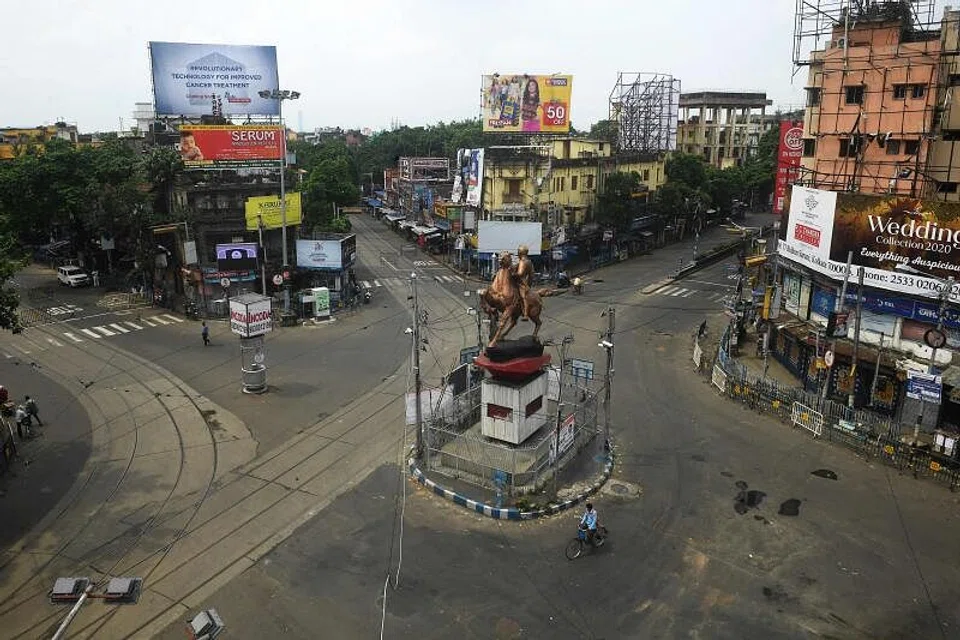
DeeperDive is a beta AI feature. Refer to full articles for the facts.
[NEW DELHI] India's economy contracted at its steepest pace on record of 23.9 per cent in the June quarter as the pandemic lockdown cut consumer and business spending, putting pressure on the government and central bank for additional stimulus and a rate cut.
The gross domestic product (GDP) data released on Monday showed consumer spending, private investments and exports all collapsed during the world's strictest lockdown imposed in late March to combat the Covid-19 pandemic.
The read-out for the June quarter was worse than the 18.3 per cent contraction forecast of analysts in a Reuters poll. It was also lower than a 3.1 per cent growth rate for the previous quarter and upwardly-revised 5.2 per cent growth in June quarter of 2019.
Some private economists have said the fiscal year that began in April could see a contraction of nearly 10 per cent, the worst performance since India won independence from British colonial rule in 1947 and likely to push millions into poverty.
Prime Minister Narendra Modi announced a US$266 billion stimulus package in May, including credit guarantees on bank loans and free food grains to poor people, but consumer demand and manufacturing have yet to recover.
Sujan Hajra, chief economist at Anand Rathi Securities, Mumbai, said the economic slump was widely expected as India was under lockdown for almost half of the quarter.
Navigate Asia in
a new global order
Get the insights delivered to your inbox.
"This (GDP number) improves chances of rate cut in October slightly," he said.
Data showed that manufacturing has already entered recession as the output fell 39.3 per cent in June quarter after falling 1.4 per cent in the previous quarter.
The number of novel coronavirus cases has been spreading in India faster than anywhere else in the world, with more than 3.6 million already infected and a death toll of over 64,400.
However, with an annual growth of 3.4 per cent in the April-June quarter, the farm sector, which accounts for 15 per cent of economic output, gave some hope the rural economy will be able to support millions of migrant workers who have returned to their villages.
REUTERS
Decoding Asia newsletter: your guide to navigating Asia in a new global order. Sign up here to get Decoding Asia newsletter. Delivered to your inbox. Free.
Share with us your feedback on BT's products and services