

India’s May factory activity grows at fastest pace since 2020
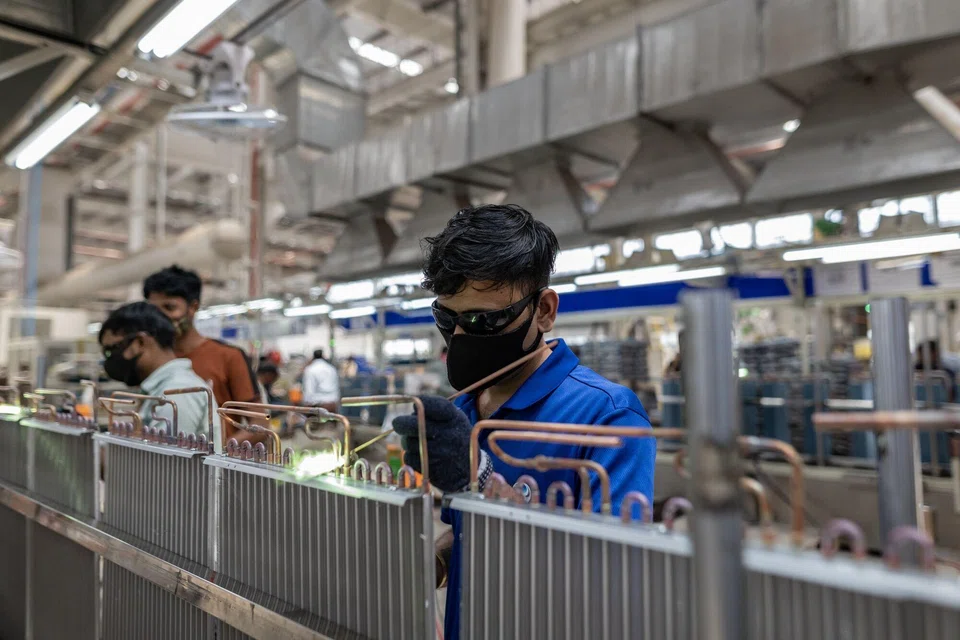
INDIA’S factory output expanded last month at the quickest pace since October 2020, thanks to strong demand and output, while improved optimism led firms to hire at the fastest rate in six months, a private survey showed on Thursday (Jun 1).
While manufacturers in regional peers such as China, Japan and South Korea have struggled for prolonged periods, solid growth in the sector has been one of the primary drivers of India’s economy over the past few quarters.
The manufacturing purchasing managers’ index (PMI), compiled by S&P Global, rose to over a 2.5-year high of 58.7 in May from April’s 57.2. This confounded the result of a Reuters poll, which expected a drop to 56.5. May’s reading remained above the 50-mark separating growth from contraction, for a 23rd consecutive month.
“While the upturn in domestic orders strengthens the foundations of the economy, rising external business foster international partnerships and boost India’s position in the global market,” said Pollyanna De Lima, economics associate director at S&P Global.
“Combined, they also generated more employment opportunities in May.”
Asia’s third-largest economy expanded at an annual pace of 6.1 per cent last quarter, well above a Reuters poll forecast of 5 per cent and faster than the 4.5 per cent rate in the December quarter.
The manufacturing PMI showed that new orders expanded at the quickest pace since January 2021, while foreign demand grew at its fastest rate in six months. Higher orders led to the quantity of purchases of items accelerating at the highest pace in over 12 years.
Thanks to strong demand, firms were able to hire at the strongest rate since November 2022, and optimism around future business activity rose to its highest in five months.
That also allowed firms to pass on higher charges to their clients and pushing output price inflation to a year-high, even as input costs increased at a slower pace.


“Demand-driven inflation is not inherently negative, but could erode purchasing power, create challenges for the economy and open the door for more interest rate hikes,” said De Lima.
The Reserve Bank of India left the door open for future interest-rate rises after holding steady in April, but expectations in a Reuters poll were for no more changes until at least next year.
Decoding Asia newsletter: your guide to navigating Asia in a new global order. Sign up here to get Decoding Asia newsletter. Delivered to your inbox. Free.
Share with us your feedback on BT's products and services
TRENDING NOW

Once staunchly pro-China, Malaysian Chinese businesses are now distancing themselves from Beijing

Britain’s mansion tax shows the difficulty of targeting wealth

Three hats, one goal: How Ng Kian Swan runs sustainability at NUHS

COE review: The gap between luxury and mass-market cars isn’t the only one worth bridging

