

India’s rupee drops to record low as crude surge deepens worries
Falling to 95.3337 per US dollar, the currency breaches its previous low of 95.125 in late March
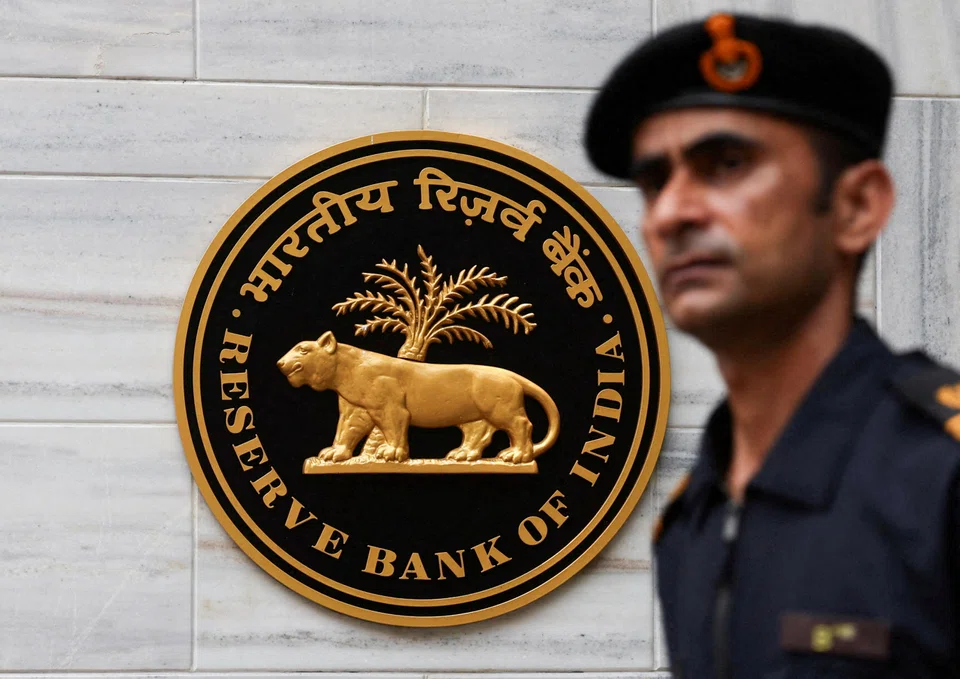
[MUMBAI] India’s rupee slid to a record low, as crude prices continued their relentless surge – deepening worries about the nation’s external deficit.
The currency fell as much as 0.5 per cent to 95.3337 per US dollar on Thursday (Apr 30), breaching its previous low of 95.125 in late March.
The rupee has now erased all gains fuelled by the central bank’s crackdown on speculative bets. The 10-year bond yield surged six basis points to 7.06 per cent.
David Forrester, senior strategist for foreign exchange at Credit Agricole CIB in Singapore, said: “The currency’s poor fundamentals have now come back into play, with the rise in oil prices and foreign investors continuing to shun India’s equity market.”
The Reserve Bank of India (RBI) took bold steps recently to stamp out speculation, yet the gains that followed have proved short-lived.
With the US-Iran war – now entering its third month – keeping oil prices elevated and capital inflows muted, economists are widening their estimates of the nation’s balance of payment deficit.
Kotak Mahindra Bank pegs the gap at US$50 billion in the fiscal year of 2026, versus deficits of US$39 billion and US$5 billion in the previous two years.
IDFC First Bank anticipates it will widen to a range of US$40 billion to US$50 billion from an estimated US$35 billion in the prior period.
Rahul Bajoria, head of India economics research at Bank of America Securities India, said: “The fundamental balance of payments picture continues to look weak, so the pressure on the rupee may persist.


“The RBI’s steps do provide relief, but we do not know if their efficacy will remain the same over a longer period.”
Record third year of balance of payments in deficit
This would be a record third straight financial year that the balance of payments – the broadest gauge of money flowing in and out of the economy – remained in deficit.
Brent rallied to a wartime high, after Axios reported that US President Donald Trump is set to receive a briefing on new military options for action in Iran – signalling the potential for fresh escalation in the Middle East.
The energy shock has coincided with global funds dumping local stocks, citing high valuations and limited artificial intelligence-linked opportunities.
In the first four months of 2026, they pulled nearly US$20 billion from equities, topping the full-year record outflow in 2025.
Net foreign direct investment was also negative for six straight months, before rebounding in February.
Against that backdrop, the RBI has relied on US dollar sales as its first line of defense.
India’s forex reserves stand at US$703 billion, though a negative US$78 billion forward book – reflecting future US dollar obligations – limits the central bank’s flexibility.
On Thursday, the central bank sold US dollars to support the rupee, traders said.
Gaura Sen Gupta, chief economist at IDFC First Bank, said: “RBI will need to use forex reserves carefully while defending the rupee.”
Another constraint for the authority is its large negative forward position, which makes it harder to manage the impact of its interventions in the currency market, she added.
These pressures test how far the central bank’s current playbook can go, especially as some of its tools – such as intervening forcefully in currency markets – carry their own side effects.
Most analysts expect the rupee to stay on a weaker path.
The Bank of America lowered its rupee forecast to 94 per US dollar by mid-year from 89 earlier.
IDFC First Bank expected the unit to weaken to a range of 95 to 96 despite the RBI’s support, while Barclays Bank had a year-end forecast of 96.80.
Meanwhile, strategists are looking up the RBI’s previous playbook to assess what measures it could take to support the currency.
RBI governor Sanjay Malhotra said at the April policy review that the central bank will step in to curb excessive volatility, keeping speculation from driving the rupee beyond fundamentals.
Dhiraj Nim, forex strategist at Australia and New Zealand Banking Group in Mumbai, said: “The problem is, the rupee depreciation expectations are so widespread and broad-based that exporters are stayed away while importers continue to hedge.
“The RBI will continue intervening – their intervention has greater value now that the arbitrage trade loop is broken.”
If oil averages US$85 to US$90 a barrel until FY2027, the RBI might need to look at steps such as easing borrowing rules to boost US dollar inflows and pushing exporters to bring back earnings faster, Standard Chartered economists said.
If prices top US$95, the central bank might have to hike policy rates by at least 50 basis points to contain the impact on the broader economy, they wrote in a note.
Analysts at Goldman Sachs on Monday lifted their oil-price forecasts. They now expect Brent to average US$90 in the fourth quarter, up from a previous outlook for US$80.
State Bank of India chief economic adviser Soumya Kanti Ghosh wrote in a note: “A comprehensive set of measures is required.”
The “exchange rate cannot be construed as a shock-absorbing mechanism in perpetuity”, he added. BLOOMBERG
Decoding Asia newsletter: your guide to navigating Asia in a new global order. Sign up here to get Decoding Asia newsletter. Delivered to your inbox. Free.
Share with us your feedback on BT's products and services
TRENDING NOW

Two Singapore-listed palm oil firms named in Greenpeace report on Indonesian plantation fires

Singapore Airlines flight returns to San Francisco after ‘unruly’ passenger incident

Singapore looking into which companies responsible for haze-causing fires: PM Wong

Deluge IPO 3.86 times subscribed ahead of SGX debut

