
Indonesia aims for V-shaped recovery with stimulus programmes to lift domestic demand
 Add BT as a preferred source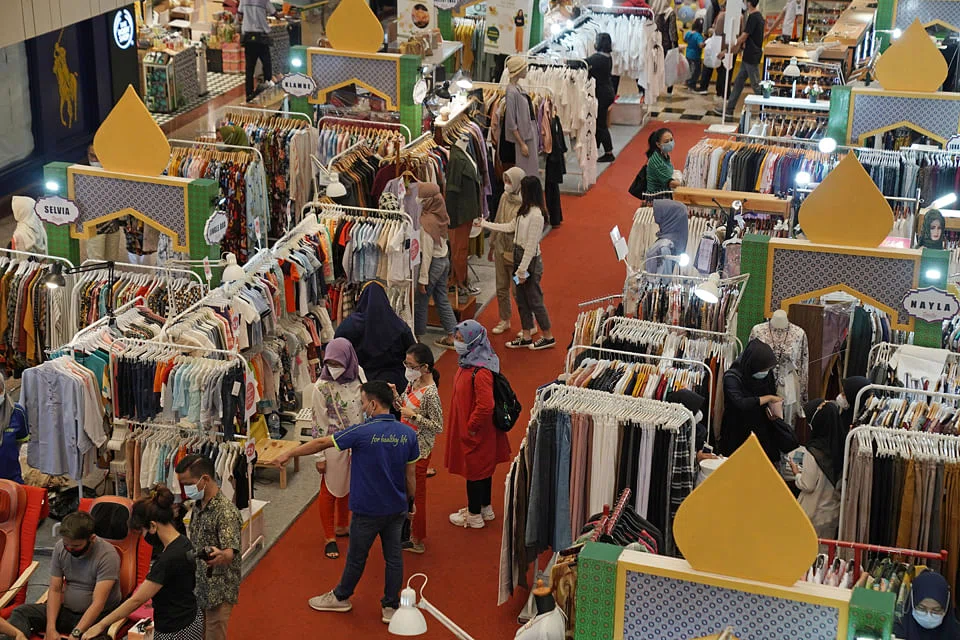
Jakarta
INDONESIA is setting its sights on a sharp turnaround starting this quarter as it assembles more stimulus programmes to lift stubbornly weak domestic demand.
Gross domestic product (GDP) declined 0.74 per cent in the first quarter from a year ago, the statistics bureau said Wednesday, worse than the median estimate of -0.65 per cent in a Bloomberg survey of economists. Still, it represented an improvement from the 2.19 per cent contraction in the final quarter of 2020.
South-east Asia's largest economy should return to growth this quarter as the government readies tax and sales measures to support the retail sector, Coordinating Minister for Economic Affairs Airlangga Hartarto said in a briefing. GDP is expected to expand 6.9-7.8 per cent in the second quarter period, a pace that would be its fastest since 2008, according to Bloomberg data.
"The trend of economic recovery is toward positive growth," he said. "The curve is V-shaped, as seen in many other countries."
"Until we return the consumer confidence that will revive demand, the risk will be on the downside," said Enrico Tanuwidjaja, an economist at PT Bank UOB Indonesia in Jakarta. He added that he would be downgrading his full-year outlook because of the first-quarter numbers.
Navigate Asia in
a new global order
Get the insights delivered to your inbox.
The country's benchmark stock index pared the day's gains to 0.2 per cent after the GDP data were released. The rupiah was little changed at 14,435 to the dollar.
"The virus resurgence at the start of the year is likely to have put a dent in consumption, even though there have been some signs of nascent recovery more recently," said Wellian Wiranto, an economist at OCBC Bank in Singapore. "Bank Indonesia is most likely going to continue to keep its policy rate unchanged, focusing on pushing for more forthright transmission of its previous rounds of rate cuts by the banking system."
Consumption, which makes up about half of the country's GDP, continued to contract as consumers remained reluctant to shell out on big ticket items such as cars, likely due to uncertainties about jobs, Suhariyanto, head of the statistics bureau, told a streamed news conference.
The bureau's survey showed that unemployment numbers in February had decreased to 8.75 million, from 9.77 million in the previous survey in August, but were still higher than 6.93 million in February 2020.
Average wage levels have also improved, but are still below pre-pandemic levels.
"This is one of the reasons why household consumption is not doing as well as we had hoped," Mr Suhariyanto said.
The government recently maintained its outlook for 4.5-5.3 per cent GDP growth for 2021, expecting consumption around Eid celebrations in April-May to boost growth in the second quarter. On Tuesday, it cut its forecast for 2022, now expecting growth of 5.2-5.8 per cent next year, down from an earlier projection of 5.4-6.0 per cent.
"The process of economic recovery will differ between provinces and sectors," Mr Suhariyanto said in announcing the GDP data. "Sectors that are highly dependent on public mobility, such as transportation and accommodation, will take longer to be able to pick up."
While factory activity and consumer confidence have shown a steady increase, core inflation and retail sales remain subdued as movement curbs limit household spending.
Further economic improvement will very much hinge on how the government controls the spread of Covid-19, said Moekti Prasetiani Soejachmoen, economist at Danareksa.
"Although a vaccination programme has been rolled out, that doesn't mean people will be instantly immune to the virus, so health protocol discipline in the community will very much dictate the economic recovery rate," she said.
As many as 12.7 million Indonesians had been inoculated as of early May, though that's still a small percentage of the country's 270 million population. Private companies will begin inoculating workers once the government sets a selling price on vaccines.
"The high frequency mobility data we track from Google suggest that government restrictions and social distancing remain a major drag on activity," Gareth Leather, senior Asia economist at Capital Economics Ltd, wrote in a research note.
By maintaining restrictions even as infections decline, "the government is making a clear trade-off to get ahead of the infection curve, because the cost of future lockdowns will be even worse for the economy", UOB's Mr Tanuwidjaja said.
"This is necessary to get a more sustainable recovery in coming quarters." BLOOMBERG, REUTERS
Decoding Asia newsletter: your guide to navigating Asia in a new global order. Sign up here to get Decoding Asia newsletter. Delivered to your inbox. Free.
Share with us your feedback on BT's products and services

