
Indonesia considers new rules on keeping export earnings in local banks
 Add BT as a preferred source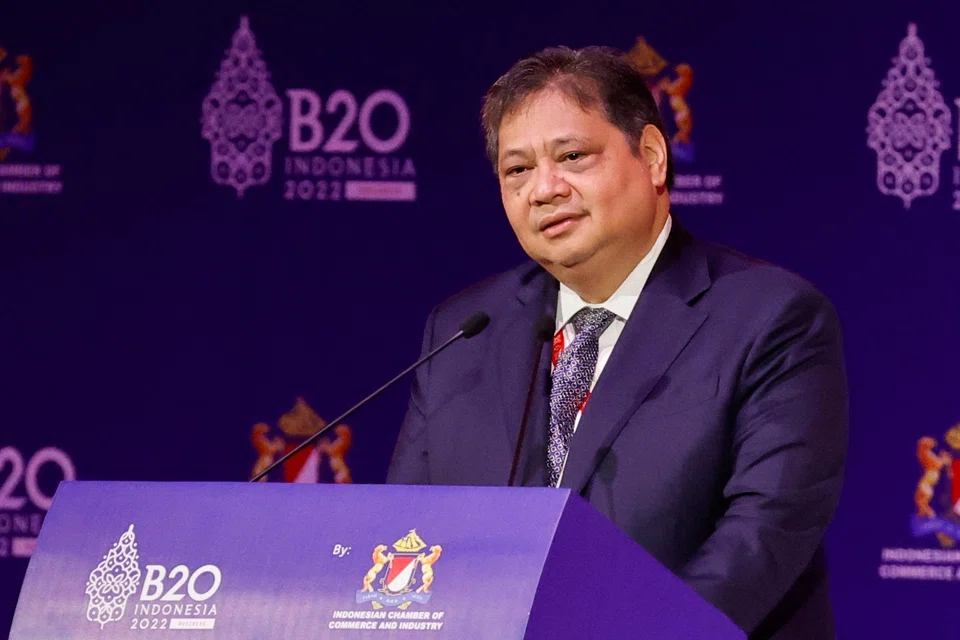
INDONESIA is reviewing a government regulation on export earnings, including potentially setting rules on how long earnings must be kept in local banks, its Chief Economic Minister Airlangga Hartarto said on Wednesday (Jan 11).
Since 2019, South-east Asia’s biggest economy has required exporters of natural resources to keep earnings in a special account at domestic banks, a measure intended to stabilise the rupiah exchange rate, which has often been volatile at times of global market uncertainty.
Airlangga told a news conference the government is considering extending this requirement to exporters of manufactured goods, among other sectors.
“The government will review (the 2019 regulation), not just on sectors it applies to, but also the amount of foreign exchange ... and how long (the earnings) are parked domestically,” he said.
He did not indicate a preference for the length of time, but cited examples of other countries, such as India and Thailand, which require exporters to keep earnings at home for between six months to a year.
“We will regulate so that the foreign exchange comes in and it can strengthen our foreign exchange reserves,” Airlangga said.
Navigate Asia in
a new global order
Get the insights delivered to your inbox.
Exports last year in January-November, at US$268.2 billion, already surpassed Indonesia’s highest on record for annual shipments, as the global commodity supercycle fuelled an export boom.
Natural resource exporters receive a tax cut if they retain their foreign exchange earnings for a longer period. A bigger tax cut is provided if earnings are converted to rupiah.
However, central bank officials said during last year’s export boom many exporters had opted to move earnings to offshore banks offering higher interest rates for US dollar savings.
Bank Indonesia (BI) would launch a new monetary operation instrument to receive exporters’ foreign currency savings passed on by local commercial banks, for which the central bank would pay a competitive rate, officials have said.
BI hopes this would make it more attractive for banks’ depositors to keep foreign exchange in the country.
Anne Patricia Sutanto, vice-president director of textile firm Pan Brothers, said regulating how long a company must keep their money in banks would complicate operations.
“We have obligations to pay suppliers and to pay overheads,” she told Reuters. “Not all of sales revenues are profits.”
Indonesia’s foreign exchange reserves stood at US$137.2 billion at the end of 2022, the highest in nine months. REUTERS
Decoding Asia newsletter: your guide to navigating Asia in a new global order. Sign up here to get Decoding Asia newsletter. Delivered to your inbox. Free.
Share with us your feedback on BT's products and services

