

Indonesia leaves rates unchanged
Jakarta
INDONESIA's central bank left its key policy rate unchanged on Thursday, as expected, bracing for the possibility that higher US rates could pile more pressure on the fragile rupiah.
The benchmark rate was kept at 7.50 per cent, a level that Bank Indonesia (BI) has maintained for seven straight meetings as it tries to strike a balance between stabilising the rupiah, driving down inflation and promoting economic growth.
The central bank said its short-term monetary policy focus remains aimed at maintaining stability in the currency and deepening Indonesia's financial markets. The rupiah has been steadily depreciating against the dollar, trading at levels not seen since the Asian financial crisis. It was trading at 14,455 per dollar on Thursday after the rate decision, not moving from earlier levels.
Economists said the currency may weaken further should the Fed raise rates later on Thursday, sparking capital flight. The benchmark 10-year government bond yield closed at 9.348 per cent, down from 9.498 per cent on Wednesday.
South-east Asia's largest economy is confronting weak exports and consumption, but the risk of outflows and inflationary pressures have limited the central bank's policy options.
"BI may welcome some further currency weakness because of the boost it would give to exporters. However, in the event that a hike in US interest rates triggers another sharp sell-off in the rupiah, it would be difficult for BI to loosen policy at all," said Gareth Leather, Asia Economist at Capital Economics in London, adding that BI was also monitoring inflation.
Annual inflation cooled to 7.18 per cent in August, but is still well above the 3-5 per cent target range the central bank set for this year.
The central bank said there were signs that growth would accelerate in the third quarter, including rising cement sales, imports of capital goods and indication of faster credit growth in August. Economic growth was 4.67 per cent in the second quarter, the slowest in six years.
In a bid to buffer the economy from outflows, the government last week also announced the first instalment of a stimulus package aimed at attracting more investment, boosting consumption and supporting the fragile currency. REUTERS
TRENDING NOW

South-east Asia has lost Nvidia’s best salesman

‘If there’s a price to be paid, so be it’: George Yeo says Singapore must safeguard its reputation

Demand, tech capabilities position Apac and AI as Skyscanner’s next growth frontiers: CEO Bryan Batista
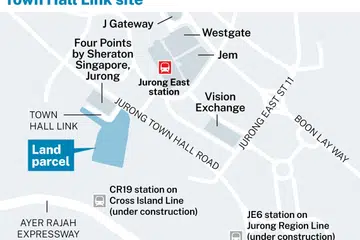
CapitaLand, Far East, Sing Holdings team up for S$1.8 billion bid at S$910 psf ppr for Jurong Lake District site

