

Indonesia pushes budget deficit to 5%, cuts taxes amid virus
 Add BT as a preferred source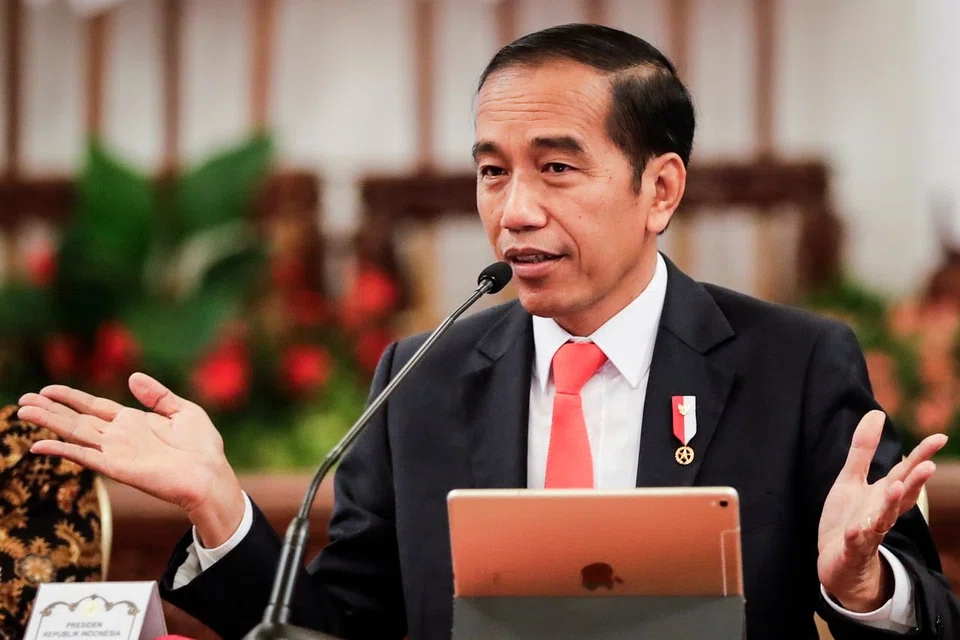
[JAKARTA] Indonesia cut corporate taxes and temporarily scrapped a budget deficit cap introduced after the Asian financial crisis to help shield the economy from the coronavirus outbreak.
The government will allocate US$24.8 billion to fight the pandemic, pushing the budget deficit to 5.07 per cent of gross domestic product this year, President Joko Widodo said in a televised speech Tuesday. The corporate tax rate will be lowered this year to 22 per cent from 25 per cent, he said.
The budget deficit cap of 3 per cent of GDP, introduced in 2003, will be relaxed immediately to allow the government to inject stimulus into the economy. The government will revert to the limit in 2023 under a decree signed Tuesday, Jokowi, as the president is commonly known, said.
The decree, known as perppu, "provides a foundation for the government, the banking and financial authorities to take extraordinary steps in ensuring public health, saving the national economy and financial system stability," Mr Jokowi said.
Indonesia, like many other countries, is confronting a crisis on two fronts, with a spike in Covid-19 virus cases stretching the nation's health system to near-breaking point and the financial fallout prompting a rapid deterioration in the economy. There are concerns of widespread job losses amid warnings from officials the economy could grind to a halt and growth fall to zero if the pandemic lasts three to six more months.
"The stimulus must be directed more to the middle- and low-income households to sustain the economy and stop it from slipping deeper," said Enrico Tanuwidjaja, an economist at PT Bank UOB Indonesia. Given the fluidity of developments, the government must be ready to act as necessary, he said.
The cut in corporate tax rates and wider deficit follow two stimulus packages announced since late February. The government will expand its social assistance programmes to cover a total of 10 million families and loan repayment terms will be eased for small-business owners and low-income borrowers, Mr Jokowi said.
The president also declared a national health emergency and issued a set of new rules on social distancing to fight the pandemic, rejecting calls for a nationwide lockdown. The new measures will mitigate the impact of the outbreak, Mr Jokowi said, adding that police and other law enforcement agencies can take "measurable actions" to enforce large-scale social distancing to contain the pandemic.
Indonesia also banned foreign nationals from visiting and transiting through the country while stepping up the screening of citizens returning from overseas. The deadly virus has infected more than 1,500 people and killed 136, the most in Southeast Asia.
The ramp-up in fiscal stimulus comes as the central bank continues its currency and bond market interventions in response to the crisis, on top of cutting its benchmark interest rate for a second month in a row in February. The bank has purchased 172.5 trillion rupiah(S$15.09 billion) of government bonds so far this year, Governor Perry Warjiyo said Tuesday, to counter a surge in investor risk aversion that's been sweeping the emerging markets.
BLOOMBERG
Decoding Asia newsletter: your guide to navigating Asia in a new global order. Sign up here to get Decoding Asia newsletter. Delivered to your inbox. Free.
Share with us your feedback on BT's products and services
TRENDING NOW

Malaysian tycoon Vincent Tan’s sell-downs point to pruning rather than an exit plan
Ringgit sinks to seven-month low despite record bond inflows as Fed fears dominate

Simba ordered to pay S$700,000 in damages to indoor skydiving operator Altitude Xperience for trespass

What Qantas’ Project Sunrise really means for Singapore

