

Indonesia says scenarios show 3% budget deficit cap hard to keep
The deficit cap would be hard to preserve without spending cuts
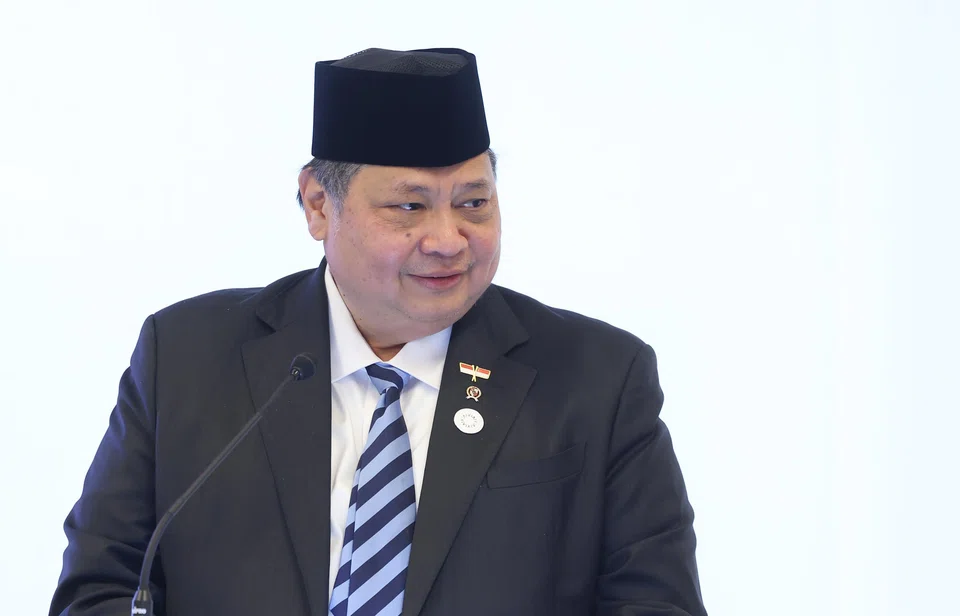
[JAKARTA] Indonesia is facing an uphill battle to keep its budget deficit within the legal limit of 3 per cent of gross domestic product as Middle East tensions push oil prices far beyond initial assumptions.
The government has modelled three scenarios involving fluctuating oil prices and rupiah exchange rates, all of which show the deficit cap would be hard to preserve without spending cuts that risk slowing growth, Coordinating Economic Minister Airlangga Hartarto said during a Cabinet meeting in Jakarta on Friday (Mar 13).
“With these various scenarios, a 3 per cent deficit is difficult to maintain unless we are willing to cut spending and cut growth,” he said.
Hartarto also floated the possibility of issuing an emergency regulation to temporarily raise the deficit cap, as Indonesia did during the Covid-19 pandemic to fund relief measures. The timing would “depend on the president’s political decision,” he added.
The surge in global energy costs adds fresh strain to Indonesia’s fiscal position, already under pressure from President Prabowo Subianto’s high-cost welfare programmes, including public housing and free meals. Investors closely monitor the deficit ceiling – enshrined into law in 2003 after the Asian financial crisis – as a cornerstone of fiscal discipline.
Moody’s Ratings and Fitch Ratings recently cited a weakening fiscal posture in South-east Asia’s largest economy as a reason for lowering Indonesia’s credit rating outlook.
Higher oil prices make the 3 per cent cap a bigger challenge, but markets would still view a breach as “a lack of fiscal discipline, which was already a concern prior to the conflict in the Middle East,” said Brendan McKenna, an emerging-market strategist at Wells Fargo in New York.
“If the deficit widens, we could see rating agencies lower Indonesia’s credit rating as opposed to just maintaining negative outlooks,” he said.
Earlier Friday, Finance Minister Purbaya Yudhi Sadewa said he would defer to the president and parliament on the question of raising the budget deficit ceiling. “If it’s an order, then I’ll carry it out,” he said. “I’m just the president’s hand.”

Speaking later at the Cabinet hearing, he added that Indonesia’s economy and purchasing power are improving, and that the nation has weathered oil price shocks before.
“If we have the right policies – monetary and fiscal, as well as your policies, Mr President – even if oil prices fluctuate, we have the means and experience to manage the impact on the economy,” Purbaya said.
Prabowo during the meeting instructed senior ministers to discuss within days measures to cushion the domestic impact of the Iran war, particularly to reduce costs and fuel consumption.
“By doing so, we hope to ensure our deficit is not increasing,” he said, adding that achieving a balanced budget remains a worthy goal, including by eliminating what he described as budget leaks and inefficiencies.
He also said the crisis should accelerate efforts to achieve food and energy self-sufficiency, and warned the government not to be complacent and to prepare for the worst-case scenario of a prolonged war.
Under a worst-case scenario in which a protracted Iran war drives up Indonesia’s average benchmark crude oil price to US$115 a barrel and weakens the rupiah to 17,500 rupiah (S$1.32) per dollar, the budget deficit could widen to as much as 4.06 per cent of GDP, Hartarto said.
The current state budget assumes the benchmark crude oil prices of US$70 a barrel and the rupiah at 16,500 per dollar.
With annual growth of about 5 per cent, in theory Indonesia could “comfortably deal with a deficit that is higher than 3 per cent in years with shocks,” said Kieran Curtis, head of emerging-market local currency debt at Aberdeen in London.
“However, the current government is also engaging in off-budget spending, and transparency is decreasing, so the market has focused on this number,” he said. “And that focus is understandable in those circumstances.” BLOOMBERG
Decoding Asia newsletter: your guide to navigating Asia in a new global order. Sign up here to get Decoding Asia newsletter. Delivered to your inbox. Free.
Share with us your feedback on BT's products and services






