
Indonesia sets out tax plan with new income bracket, amnesty
General VAT covering most goods and services will be raised to 12%, while certain items can carry variable 5% to 25% rates depending on price
 Add BT as a preferred source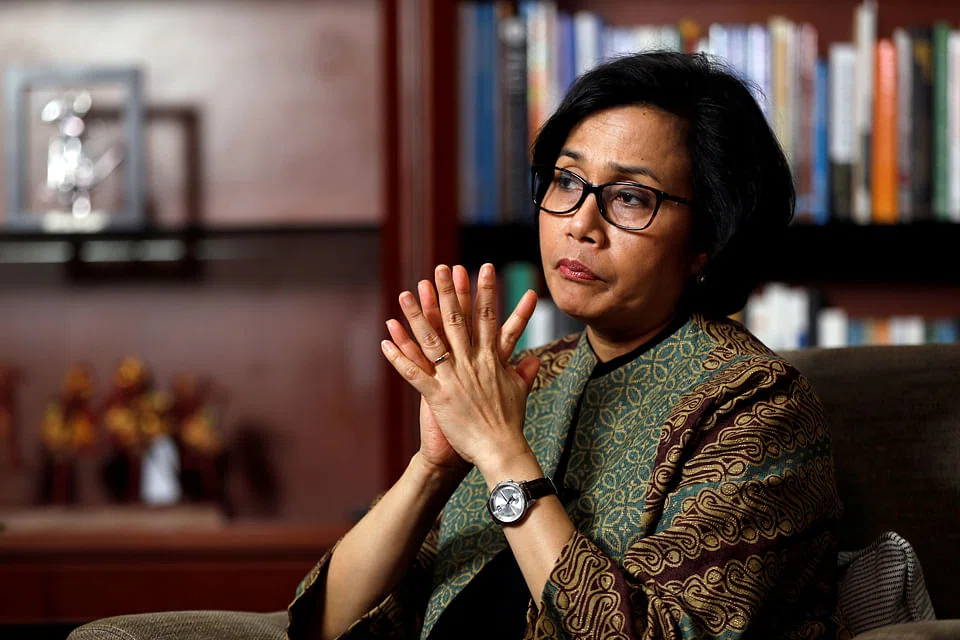
Jakarta
INDONESIA began discussing a tax overhaul proposal with Parliament, with plans to increase the value-added tax (VAT), impose a new income bracket and target loss-making firms, while offering potential amnesty.
The general VAT covering most goods and services will be raised to 12 per cent, from 10 per cent, while certain items can carry variable 5 per cent to 25 per cent rates depending on the price, said Finance Minister Sri Mulyani Indrawati on Monday.
The government included a tax amnesty programme in the draft submitted to the Parliament, even if she didn't read the details out during the hearing.
South-east Asia's largest economy also wants to impose a 35 per cent income tax rate on individuals earning more than five billion rupiah (S$464,310) a year. A minimum corporate income tax should also be set for firms that report losses for many years by "creative accounting, but can still carry on their business and enjoying facilities from the government," according to the bill.
The VAT structure and new income tax bracket are set to be implemented in January 2022, according to the bill.
Navigate Asia in
a new global order
Get the insights delivered to your inbox.
The government saw its budget deficit swell to over 6 per cent of gross domestic product in 2020 as it embarked on heavy stimulus spending despite weak tax collections. Like many emerging markets, Indonesia is seeking to refill its state coffers as the pandemic looks to have a more protracted impact on the economy, with the daily Covid-19 cases surging to new peaks last week.
"The tax base should be expanded and tax compliance should be improved to increase fiscal capacity," Dr Sri Mulyani said. "We need to continue to reform tax policy and administration so that it is fair between sectors and between income groups, and creates legal certainty, becomes an optimal source of state revenue, and follows best practice."
Indonesia's tax gap - the difference between actual and potential collections - is around 8.5 per cent, more than double the 3.6 per cent among peer nations, she said. The so-called omnibus law on tax reform aims to bring that shortfall closer to the international benchmark.
There is scope for improvement across various levies, Dr Sri Mulyani said. Indonesia has among the least progressive income tax framework in the region, with the fewest brackets at four, compared to Vietnam and the Philippines' seven and Thailand's eight.
Only 1.4 per cent of Indonesian taxpayers paid income tax at the highest 30 per cent rate in the last five years.
Indonesia's current VAT rate at 10 per cent is also lower than the global average of 15.4 per cent, while the tax take is eroded because of too many exemptions, Dr Sri Mulyani said.
Under the VAT reform, previously exempted essentials, like basic goods as well as education and health services, will be subject to VAT under the proposal, though at lower rates. Those who can't afford the VAT may be exempted or be eligible for subsidies.
Some VAT exemptions will remain, including:
- Goods and services that are already subject to local taxes and levies.
- Money and gold bullion for the country's foreign exchange reserves and securities.
- General government services that can't be provided by other parties.
- Religious services.
- Facilities supporting exports and downstreaming of natural resources.
The government will offer another tax amnesty programme, allowing taxpayers to declare assets obtained from 1985 to 2015 subject to 15 per cent income tax, or 12.5 per cent for those who invest the assets in government securities.
Assets obtained from 2016 to 2019 will be subject to a tariff of 30 per cent, or 20 per cent for those who invest in government securities.
In line with Indonesia's goal to reduce carbon emissions by 29 per cent by 2030, the finance ministry proposed to include plastic products under its excise tax, along with alcohol and tobacco.
It also set a carbon tax at 75 rupiah per kilogramme of carbon dioxide equivalent.
The levy could earn the government 32 trillion rupiah in revenue, according to a simulation by the finance ministry last year, assuming the use of coal in power generation and industry, and diesel and petrol in the transportation sector. BLOOMBERG
Decoding Asia newsletter: your guide to navigating Asia in a new global order. Sign up here to get Decoding Asia newsletter. Delivered to your inbox. Free.
Share with us your feedback on BT's products and services

