

Indonesia's trade balance back to surplus in Sept
 Add BT as a preferred source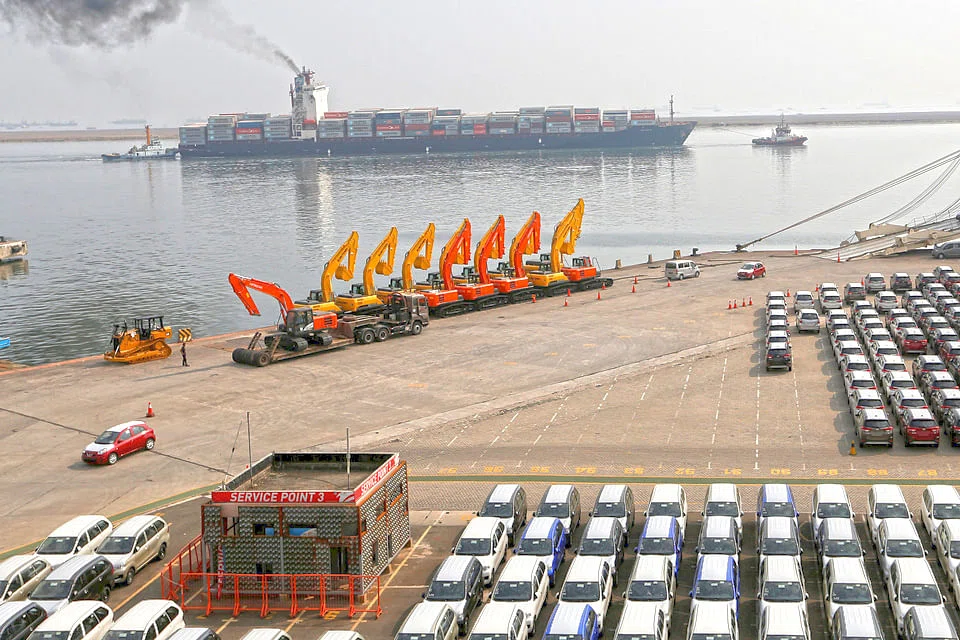
DeeperDive is a beta AI feature. Refer to full articles for the facts.
Jakarta
INDONESIA'S trade balance unexpectedly swung back to surplus in September as imports and exports grew much slower than expected, data released by the statistics bureau showed on Monday.
Indonesia, South-east Asia's largest economy, reported a trade surplus of US$230 million for September, compared with a US$500 million deficit expected in a Reuters poll.
The country revised its trade deficit in August to US$944 million.
September imports were worth US$14.60 billion, up 14.18 per cent from a year earlier. That compared with expectation of a 24.76 per cent increase in the poll.
Exports were worth US$14.83 billion in September, up 1.7 per cent from a year earlier, compared with the poll forecast of a 7.58 per cent increase.
Navigate Asia in
a new global order
Get the insights delivered to your inbox.
Exports were supported by coal and crude palm oil. Oil and gas exports, on the other hand, dropped nearly 17 per cent annually in September, said Yunita Rusanti, a senior official at the statistics bureau.
Declining oil and gas exports despite high oil prices should be treated as a warning for policymakers, said Satria Sambijantoro, an economist at Bahana Securities.
Some measures, including higher tariffs, have been imposed to curb unnecessary imports of consumer goods to contain the trade gap and support the rupiah that has lost around 11 per cent of its value to the dollar so far this year.
The statistics bureau sees only a small impact from the higher tariffs so far.
The rupiah traded at 15,220 per dollar after the announcement, relatively stable compared with Friday's closing at 15,200. REUTERS
Share with us your feedback on BT's products and services
TRENDING NOW

Shelving S$5 billion office redevelopment plan proved ‘wise’ as geopolitical risks mount: OCBC chairman

Eurokars Group introduces rental car franchises Enterprise Rent-A-Car, National Car Rental, and Alamo to Singapore

20 photos that show how dramatically Singapore has changed in two decades
Singapore’s key exports up 15.3% in March from electronics surge, exceeding forecasts

