

Industrial hub Ulsan a warning signal for cooling South Korea
Policymakers have called for greater focus on developing domestic demand and service
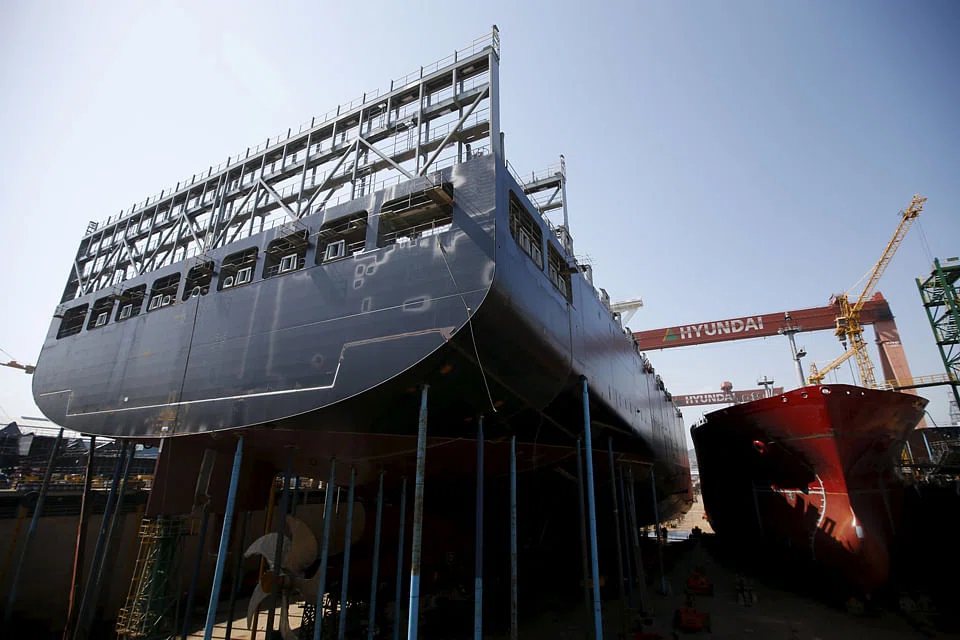
Ulsan, South Korea
THE port of Ulsan was the cradle of South Korea's breakneck industrialisation. Now, the main production site for big manufacturers such as Hyundai Motor and oil refiner SK Innovation risks becoming the country's rust belt.
In effect, Ulsan is a real-time warning signal for South Korea, a nation that has the world's fastest-ageing society and an economy struggling to shake its dependence on manufacturing and exports in favour of a model based on consumption and services. "There's a sense of crisis spreading among people and companies here after pretty much all major companies suffered their worst losses in recent years," said Choi Chan-ho, a director at the Ulsan Chamber of Commerce and Industry.
The world's largest shipbuilder, Hyundai Heavy Industries, suffered an operating loss last year of about US$3 billion and recently laid off hundreds of workers in the city about 380 kilometres southeast of Seoul.
Near the vast shipyard, stores and restaurants have cut opening hours, and an increasing number of single-room flats go empty as thousands of temporary workers have lost work since the winter. "It's getting ever more difficult for landlords to find new tenants for their 'one rooms' and rental fees have kept falling since the winter," said Lee Young-hyon, who runs a real estate agency a block away from the shipyard.
Chemical maker Capro Corp, hit by competition from cheaper Chinese rivals, has slashed output by about 40 per cent since mid-2014, and late last year cut 100 of its 320 jobs. Other chemical firms in Ulsan have also reduced operations.
Hyundai Motor's car plant in Ulsan is the world's biggest, with the capacity to make 1.5 million cars a year. But the company has not built a new plant in Korea for almost 20 years, and is instead expanding overseas.
"The lesson that Ulsan's situation gives is that you should respond to the ever-changing global economy swiftly and continuously before it's too late," said Goohoon Kwon, an economist at Goldman Sachs.
Policymakers have called for greater focus on developing domestic demand and services, but the reality is different: Exports were equivalent to more than 50 per cent of South Korea's gross domestic product last year, up from 39 per cent in 2007.
In 2013, Ulsan's economic output shrank 4.4 per cent, while the national economy grew 3.6 per cent. Figures for 2014 are not yet available, but output is expected to have contracted again in the city.
That is ominous news for Ulsan, where manufacturing accounts for nearly 40 per cent of jobs, more than double the national average of 18 per cent.
In the city of 1.2 million, the employment rate fell to 57.3 per cent in the first quarter from 57.9 per cent for the whole of 2014, which was the second-worst annual reading.
Job prospects for young people are especially scarce. Only 34 of 100 residents aged 15-29 were employed during the first quarter in Ulsan, a record low for the city and fewer than the 41 for the national average, official data shows.
South Korea's population profile is ageing more rapidly than other advanced economies, throwing up more challenges to the economic model that propelled it to the membership of the Group of 20 leading economies.
In Ulsan, the proportion of the elderly - those aged 65 or more - to the total population was relatively low at 8.2 per cent, compared to the national average of 12.7 per cent. But the official forecast is for the city's ratio to double in 12 years, shorter than 18 years for the national average.
"The growth strategy of relying solely on manufacturing and exporting goods has reached its limit on all fronts," said Kang Young-hoon, a director at the Ulsan Development Institute. Reuters
TRENDING NOW

Singapore’s central gas buyer affirms Indonesia’s role as ‘important partner’ amid export review warning

Why the biggest business decision about AI isn’t which model to choose

Is Manila Asia’s new dining hot spot?

KKR founders among investors buying 42% of Peter Lim’s Valencia; club valued at US$1.4 billion

