

Interchangeability of Singapore and Brunei's currencies facilitates trade and investment: MAS
Central bank says that interchangeability cuts out forex rate risks and minimises transaction costs
Singapore
THE Currency Interchangeability Agreement between Singapore and Brunei, now in its 50th year, is testament to how cooperation between the two countries has deepened, as they both benefited from stronger trade and investment flows, Singapore's central bank has said.
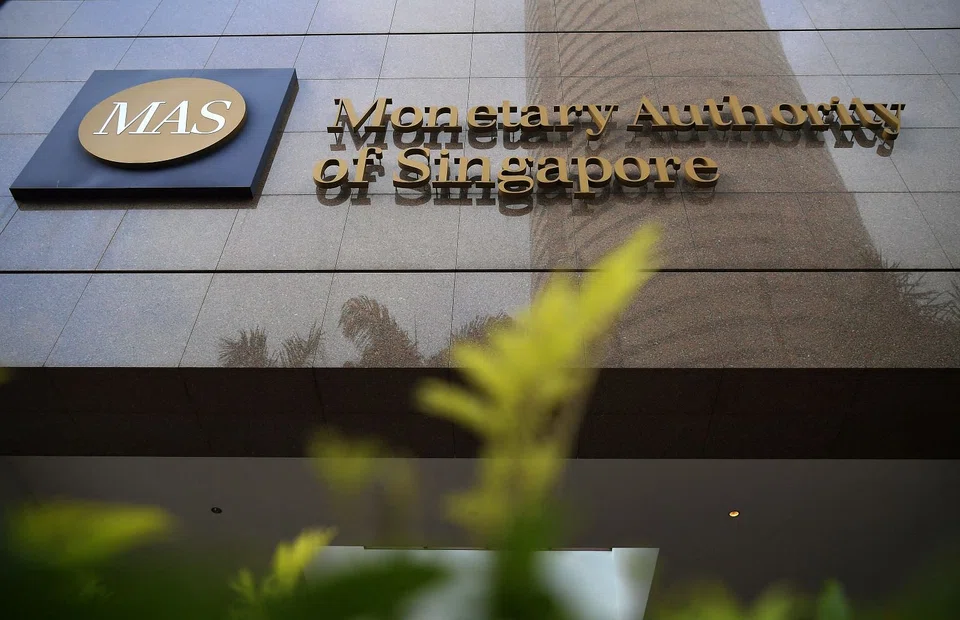
This is despite the agreement having weathered multiple economic challenges on both fronts, said the Monetary Authority of Singapore (MAS) on Thursday, in its twice-yearly macroeconomic review.
" The monetary arrangements prevailing in the two economies have evolved, but the essential spirit of cooperation has stayed the same."
The agreement was born on June 12, 1967, when Bank Negara Malaysia, the newly-formed Board of Commissioners of Currency of Singapore (BCCS) and the Brunei Currency Board (BCB) issued three currencies: the Malaysian dollar, the Singapore dollar and the Bruneian dollar.
The three countries also signed Currency Interchangeability Agreements with each other. This paved the way for them to accept each other's currency and to exchange these at par and without charge with their respective currencies.
In the early 1970s, a series of events shook the international monetary system.
In August 1971, then-US President Richard Nixon closed the gold window and devalued the US dollar against gold, which necessitated a revaluation of the three currencies against the US dollar.
Two years later, the post-war Bretton Woods system of fixed exchange rates broke down when the major currencies were floated against the US dollar.
Malaysia terminated its agreement with Singapore on May 8, 1973. Two weeks later, it also ended the agreement with Brunei.
Singapore proceeded to separate its currency board functions from a monetary authority by setting up MAS in 1971. This helped maintain confidence in the value of the Singapore dollar.
Even though Singapore would later float its currency against the US dollar in 1973 - meaning that it could no longer be exchanged on demand for foreign currency at a fixed rate, it kept the spirit of the currency board system, even when the BCCS was merged with MAS in 2002.
Similar changes were seen in Brunei, but it still operates a currency board system with the Brunei dollar anchored to the Singapore dollar at par.
MAS said in its review that the agreement was buttressed by both countries' underlying economic fundamentals and macro-economic stability.
In maintaining the agreement, MAS said that Singapore and Brunei have managed to preserve and deepen their economic and financial linkages.
The peg effectively eliminates foreign-exchange rate risks between the two currencies while minimising transaction costs, and this facilitates tourism, trade and investment between the two, it said.
TRENDING NOW

Motoring tycoon Peter Kwee is back in court: Here are his previous legal battles

Peter Kwee’s Ridley Park bungalow on the market with S$100 million asking price

Demand, tech capabilities position Apac and AI as Skyscanner’s next growth frontiers: CEO Bryan Batista

South-east Asia has lost Nvidia’s best salesman

