

Invest in innovation, people and community for the future: Heng
New technologies, waning support for globalisation and Asia's ascendency make it imperative, he says
 Add BT as a preferred source
Janice Heng
Singapore
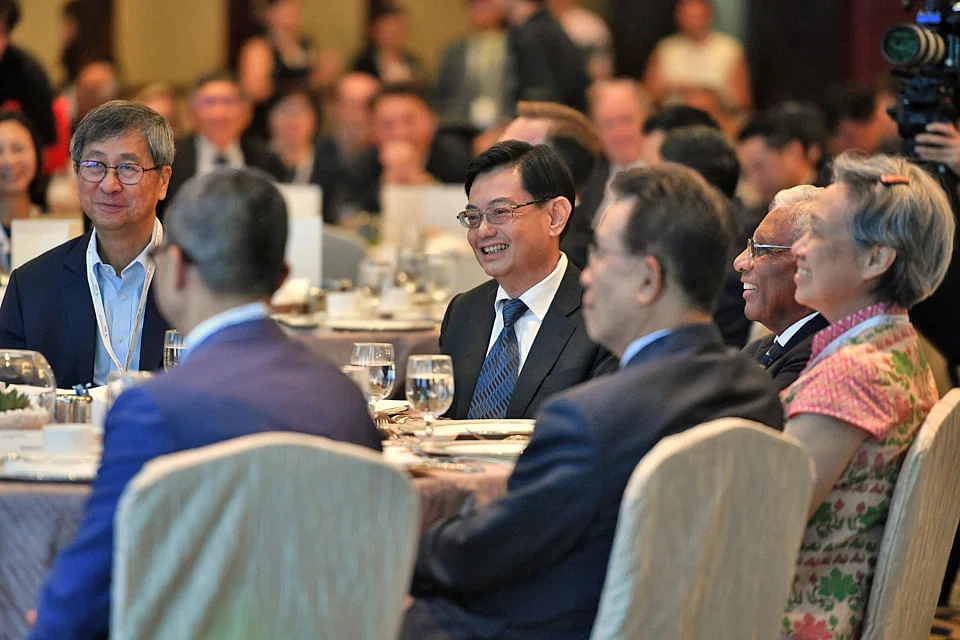
TO BE good stewards of the future, businesses should invest in innovation, people and the community, said Deputy Prime Minister and Minister for Finance Heng Swee Keat on Tuesday.
These investments are called for in the face of three global trends: the rapid rise of new technologies, declining support for globalisation, and the growing economic and strategic weight of Asia, along with the resulting shifts in supply chains.
"Businesses have to be quick to innovate, in order to stay relevant and competitive," said Mr Heng, who was speaking to an audience of business leaders at the Stewardship Asia Roundtable 2019, organised by Temasek Trust non-profit organisation Stewardship Asia Centre.
Though there are trade-offs between short-term returns, "which drive many shareholder decisions", and long-term growth, companies must be prepared to plan and invest in innovation for the long term, he said.
Investment in workers is key so that "technological advancements will help workers do their jobs better, smarter, and not replace them".
And firms have "an integral and multiplier role to play" in doing good, by offering expertise and resources, and mobilising employees for corporate social responsibility initiatives.
The government is doing its part on each front, said Mr Heng. It is supporting firms via the Industry Transformation Maps, helping workers via efforts such as SkillsFuture, providing tax deductions for corporate volunteerism and donations, and starting the SG Cares movement.
Event panellist Dilhan Pillay Sandrasegara, chief executive officer of Temasek International, noted that the investment firms owns many companies that have been built over decades amid the third industrial revolution. "All our companies are facing the challenge of how to be relevant in the digital world."
In his opening address, Temasek Holdings chairman and former labour movement chief Lim Boon Heng said that "the role of up-skilling and re-skilling is so much more important in an environment of rapid change", as leaving workers behind amid industry transformation "is not an option".
The stewardship mindset also aids firms themselves, he added, as it "will open up business opportunities that come from doing good".
For its part, Temasek sees itself a trustee of its portfolio, but also "of the broader community". This is why, when it does well, it seeds endowments to support programmes in the community, said Mr Lim.
The panellists stressed the importance of long-term thinking for responsible stewardship, with Copenhagen Business School's Centre for Corporate Governance professor Steen Thomsen suggesting that this should be rooted in long-term ownership, for instance with family-owned firms.
International Integrated Reporting Council chair emeritus Mervyn E. King argued that firms should move away from an ownership-focused, shareholder-centric approach to a company-centric approach that prioritises the long-term health of the firm.
Grab co-founder Tan Hooi Ling, when asked if a future initial public offering (IPO) could bring risks of short-termism, declined to be drawn into commenting on IPO prospects, but said that there are positive examples of firms such as Amazon, in which an IPO encouraged less short-term thinking.
"When the time is right" for an IPO, there will be ways for Grab to ensure it keeps its long-term focus, including its commitment to investing back in South-east Asia, she said.
Copyright SPH Media. All rights reserved.
TRENDING NOW
Watch live: PM Wong, Chan Chun Sing to address political office-holders’ salary review in Parliament

Vietnam pitches its real economy, not a Singapore replica, in two-city IFC push
Lawsuit from ex-advisers adds to claims arising from Hao Mart’s lease of Taste Orchard
Canada’s fight with the US has far bigger stakes than trade

