

Investors raise concerns about migrant workers' rights in Gulf
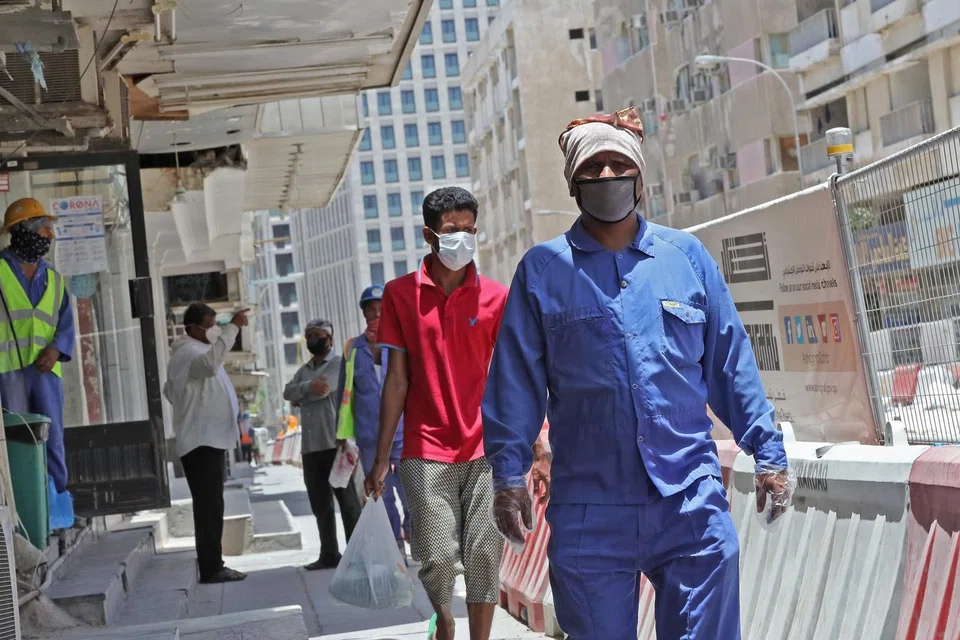
[DUBAI] A group of investors is raising concerns about the treatment of migrant workers in the Gulf, warning that labour practices risk leading to abuses such as modern slavery.
The group, led by fund manager CCLA, says it represents 38 investors with over US$3 trillion in managed assets and wants companies to disclose how they protect migrant workers.
Such workers, many of them from Asia, provide the backbone of Gulf economies, working in sectors such as construction, hospitality and oil and gas.
The group of investors has written to over 50 international companies operating in the region. It does not imply any wrongdoing by the companies it has written to but said some may be unaware of the risks.
The group is concerned recruitment practices can require low-paid migrant workers to pay large fees to agents and middlemen to obtain employment in the Gulf, it said in a statement.
Those workers often need to take out loans or sign over assets to pay those fees, which may lead them to being in "debt bondage" and at high risk of forced labour and modern slavery, it said.
"As investors, we have a moral duty to ensure that we are not profiting from modern slavery in any shape or form," CCLA's Chief Executive Peter Hugh Smith said.
The group also raised concerns about employers withholding migrant workers' passports and the impact the economic fallout of the Covid-19 pandemic has had on migrant workers.
Shell, Spanish construction firm Acciona, French construction firm Vinci, Hyatt and Wyndham Hotels told Reuters they were committed to protecting human rights and had policies designed to safeguard workers.
Shell, Acciona and Vinci said those policies did not allow charging recruitment fees to workers and that they review worker welfare. Wyndham said it was not aware of any malpractice in any of its hotels.
Vinci said it was challenging to guarantee a fair recruitment process in many regions and that the company had to be vigilant to safeguard workers.
Amnesty International Campaigner Ella Knight said the Gulf's migrant workers had long faced problems including not being paid, late payment of wages, forced labour, dangerous working conditions and overcrowded, unsanitary accommodation.
REUTERS
Decoding Asia newsletter: your guide to navigating Asia in a new global order. Sign up here to get Decoding Asia newsletter. Delivered to your inbox. Free.
Share with us your feedback on BT's products and services
TRENDING NOW

32 companies, 6 individuals bag accolades at Singapore Corporate Awards 2026

He built the Vingroup empire. Now South-east Asia’s richest man is handing some key roles to his sons
URA to review guidelines on floor space to give developers more design flexibility: Chee Hong Tat
Chagee, Mixue and Luckin won the market. Sustaining their edge is the harder part

