

Iran conflict widens as Israel strikes Lebanon after Hizbollah attacks
 Add BT as a preferred source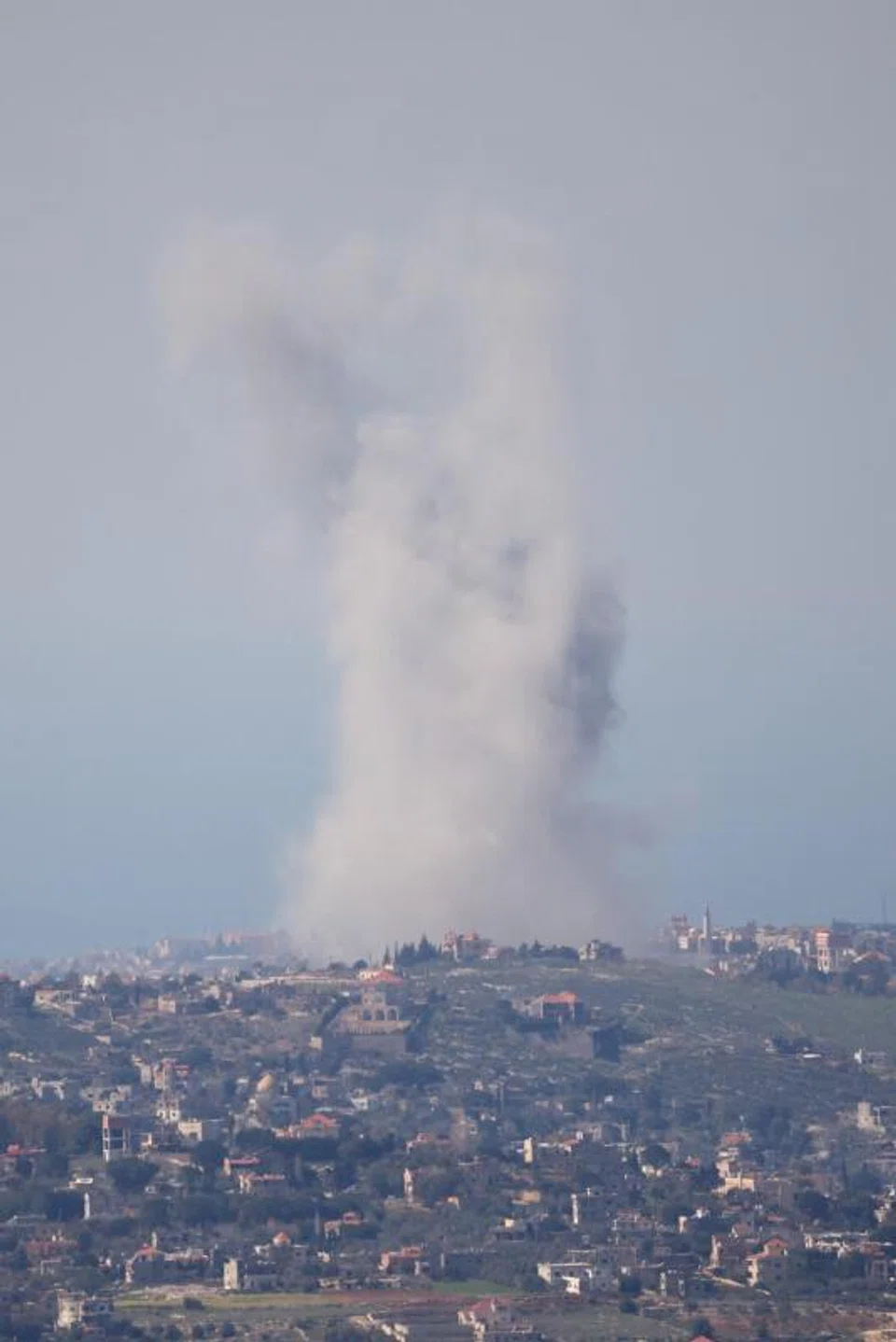
[DUBAI] The US-Israeli air war against Iran expanded on Monday (Mar 2) with no end in sight, engulfing Lebanon with Israel responding to strikes by Hizbollah. Meanwhile, Teheran fired missiles and drones at Israel, Gulf states and a British air base in far-away Cyprus.
Video images showed a US warplane falling out of the sky over Kuwait early on Monday, while a person could be seen parachuting. The location was verified by Reuters as filmed in the Al Jahra area of Kuwait. Kuwait’s defence ministry said several American aircraft had crashed and all crew were safe.
After a weekend of bombing that killed Iran’s supreme leader, dragged its neighbours into war and shut shipping traffic in the Gulf, markets opened on Monday with energy prices rising sharply, putting the global economic recovery at risk.
In the biggest US foreign policy gamble in decades, President Donald Trump launched the campaign alongside Israel against a foe that had tormented the United States and its allies for generations.
Trump repeated his calls on Iranians to rise up and overthrow their leaders, and said the air campaign could last weeks. Within Iran, where residents have jammed highways to flee cities as bombs fell, there was uncertainty about the future and emotion ranging from apprehension to euphoria.
Many Iranians openly celebrated the death of Supreme Leader Ayatollah Ali Khamenei, who ruled the country for 37 years and directed security forces that killed thousands of anti-government protesters at the start of this year.
But the conservative clerical leaders have shown no sign of yielding power. Military experts say US and Israeli air power, with no armed force on the ground, may not be enough to drive them out. Meanwhile, scores of Iranians have been reported killed in strikes, including several that hit apparent civilian targets.
“They are killing children, they are attacking hospitals. Is this the kind of democracy Trump wants to bring us? Innocent people were first killed by the regime and now by Israel and the United States,” Morteza Sedighi, a 52-year-old teacher, said by phone from Tabriz.
A major new front in the war opened on Monday when Hizbollah, one of Teheran’s principal allies in the Middle East, launched missiles and drones towards Israel in retaliation against the killing of Khamenei.
Israel responded with sweeping airstrikes, which it said targeted the Hizbollah-controlled southern suburbs of Beirut and struck senior militants. Lebanese state news agency NNA said an initial tally showed 31 people had been killed and 149 injured.
Israel declared Hizbollah leader Naim Qassem a “target for elimination”. Officials said they were not considering a ground invasion of Lebanon for now.
Inside Iran, explosions were heard across Teheran, while in Israel air raid sirens were triggered in Tel Aviv and Jerusalem.
Washington’s allies in the Gulf have come under attack from Iranian missiles and drones. Black smoke rose above the area around the US embassy in Kuwait, where there was a heavy presence of security, ambulances and fire trucks. There were loud blasts in Dubai and Samha in the UAE, and in Doha, capital of Qatar.
In the first strike to reach US allies in Europe, a drone hit Britain’s Akrotiri air base in Cyprus overnight. Britain and Cyprus said the damage was limited and there were no casualties. European allies have so far distanced themselves from Trump’s decision to go to war, which Britain, France and others say fell short of the legal threshold of combating an imminent threat.
The Israeli military said late on Sunday that its air force had established aerial superiority over Teheran, and that a wave of strikes across the capital had targeted intelligence, security and military command centres.
A source briefed on the Israeli operation said strikes so far have been significantly more intense and extensive than the 12 days of strikes last June. Another wave of Israeli reservists would be called up in the next 48 hours, the source said.
In interviews on Sunday, Trump said the campaign could last four weeks. A senior White House official told Reuters that Washington would at some point talk with Teheran’s leaders, but not yet.
“President Trump said new potential leadership in Iran has indicated they want to talk and eventually he will talk. For now, Operation Epic Fury continues unabated,” the official said.
It remained unclear what the longer-term prospects were for Iran to rebuild its leadership and replace Khamenei, 86.
Iran’s elected president, Masoud Pezeshkian, said on Sunday a leadership council composed of himself, the judiciary head and a member of the powerful Guardian Council had temporarily assumed the duties of supreme leader.
In an X post on Monday, Ali Larijani, a powerful adviser to Khamenei, said his country would not negotiate with Trump. He said the US president had “delusional ambitions” and was now worried about US casualties.
The first US casualties of the campaign, including the deaths of three service personnel, were confirmed on Sunday. Two US officials told Reuters they were killed on a base in Kuwait. Trump paid tribute to them as “true American patriots”.
An extended military campaign could pose a major political risk for Trump’s Republican Party ahead of US midterm elections. Only around one in four Americans approve of the operation, according to a Reuters/Ipsos poll on Sunday.
In a video posted on Sunday, Trump vowed military strikes on Iran would continue until “all our objectives are achieved” without providing specifics.
Trump called on Iran’s military and police, including the Islamic Revolutionary Guards Corps, to stop fighting, promising immunity for those who surrender and “certain death” for those who resist. He reiterated calls for Iranians to rise up.
Meanwhile, the interruption to oil shipments through the Strait of Hormuz – where around a fifth of the world’s oil trade passes along the Iranian coast – was a sudden jolt to global economies. Oil prices leapt by double-digit percentages when trade opened on Monday. Shares fell and the US dollar surged.
Iran’s Revolutionary Guards said on Sunday they had hit three US and UK oil tankers in the Gulf and the Strait of Hormuz and attacked military bases in Kuwait and Bahrain with drones and missiles. Shipping data showed hundreds of vessels including oil and gas tankers dropping anchor in nearby waters.
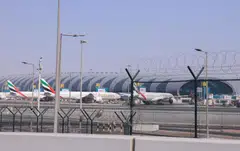
Global air travel was also heavily disrupted as air strikes kept major Middle Eastern airports closed, including Dubai, the world’s busiest international hub. REUTERS
Decoding Asia newsletter: your guide to navigating Asia in a new global order. Sign up here to get Decoding Asia newsletter. Delivered to your inbox. Free.
Share with us your feedback on BT's products and services
TRENDING NOW

Malaysian tycoon Vincent Tan’s sell-downs point to pruning rather than an exit plan

Singapore releases Economic Strategy Review Final Report with more detailed proposals
Ringgit sinks to seven-month low despite record bond inflows as Fed fears dominate

Simba ordered to pay S$700,000 in damages to indoor skydiving operator Altitude Xperience for trespass

