

Iran deal includes US$300 billion fund, more than half of which already committed: source
It is reportedly designed to give both sides an economic incentive to conclude a final deal to end the war
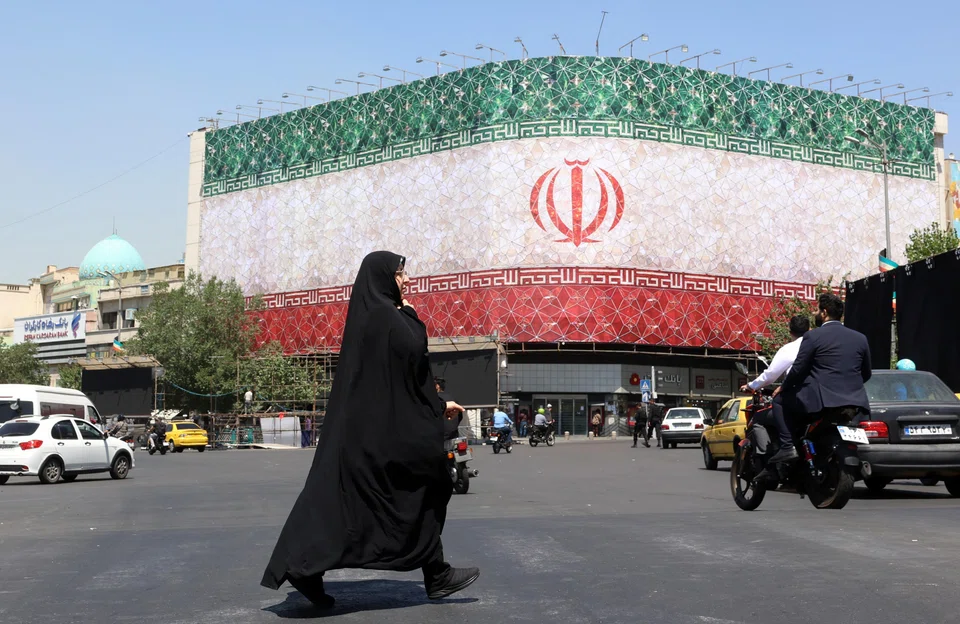
[DUBAI] A US$300 billion private fund designed to trigger investment into Iran is outlined in the US-Iran framework agreement and more than half that sum has already been committed, a source with direct knowledge of the deal told Reuters.
The fund is designed to give both sides an economic incentive to conclude a final deal to end the war, said the source, who spoke on condition of anonymity because the plan has not yet been announced as Washington and Teheran prepare to sign on Friday (Jun 19).
The fund’s existence had been previously reported, but Reuters is revealing for the first time that more than half of the amount has already been committed and that it will entirely comprise private-sector funds.
US and Iranian officials said on Sunday that they had agreed on a framework to end their war – which began when US and Israeli forces attacked Iran on Feb 28 – halt the US blockade of Iran and reopen the Strait of Hormuz, a key supply route for global oil and gas.
The new fund is a private investment vehicle, not a reconstruction or reparations programme, and will not include any government money or grants, the source said, adding that companies based in the US, the Gulf Arab states, Asia, South America and Africa have agreed to commit financing.
Investments pledged span energy, logistics, manufacturing and transport, the source noted.
A senior Iranian source told Reuters that Teheran had originally sought US$400 billion as compensation for war damage from the US, but Washington had said it would not provide it.
The idea for the fund, which is to be named the Reconstruction and Development Fund, then emerged.
The mechanism envisages regional countries contributing in various ways, the Iranian source said.
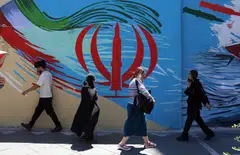

These include securing loans, establishing credit lines or directly financing the reconstruction of sites damaged in the war, including facilities such as the Mobarakeh Steel complex, refineries, airports and, more broadly, infrastructure affected by the conflict.
Iran, one of the Middle East’s largest economies, has attracted almost no significant foreign direct investment in the past four decades, frozen out of global capital markets by successive waves of US and international sanctions.
The country has the world’s second-largest proven natural gas reserves and the fourth-largest proven oil reserves.
It also has a young, educated population of more than 92 million people, a diversified industrial base, and significant untapped potential in sectors ranging from petrochemicals and mining to tourism and agriculture.
The investment fund is entirely separate from a parallel negotiating track over the lifting of US sanctions and the release of Iranian sovereign assets frozen abroad, the source with knowledge of the deal said, describing the two as distinct financial mechanisms with different purposes and timelines.
The fund will not be created or become operational until a final and satisfactory deal is concluded. The memorandum of understanding, once signed, is intended to structure the process over the next 60 days.
“It’ll only be created once the final deal is signed,” the source explained. “During these 60 days, the fund administrators will work with Iranians and investors to plan and scope projects.”
Iran’s foreign ministry and Pakistan’s foreign ministry, which helped mediate the investment fund deal, did not immediately respond to requests for comment.
A White House spokesperson pointed to a CBS interview with Vice-President JD Vance on Monday, in which he said that Iran could gain access to a US$300 billion reconstruction fund backed by Gulf states if it complies with an agreement with Washington.
Such an agreement would include dismantling its nuclear programme, eliminating its stockpile of enriched material, and accepting a stringent inspection and enforcement regime.
The source would not say how the fund will be administered or by whom, noting that key details were still to be worked out.
The source named companies from South Korea, Japan, Singapore, Malaysia and the US among those that had made commitments, but declined to provide a comprehensive list.
The 60-day memorandum is a framework, not a final agreement, and US and Iranian negotiators are expected to work across multiple tracks during that period covering nuclear, sanctions and regional security issues. REUTERS
Decoding Asia newsletter: your guide to navigating Asia in a new global order. Sign up here to get Decoding Asia newsletter. Delivered to your inbox. Free.
Share with us your feedback on BT's products and services
TRENDING NOW

Once staunchly pro-China, Malaysian Chinese businesses are now distancing themselves from Beijing
The middle power moment arrives in South-east Asia – but not for Asean

DBS, OCBC, UOB face rate hike reality check

Vietnam’s northern provinces, not Hanoi or Ho Chi Minh City, are powering near 10% GDP growth

