

The Iran war is now all about the future of Hormuz
It is a geopolitical tool and deterrent far more powerful than Teheran’s network of proxies, and more exploitable than owning a nuclear arsenal
IF IRANIAN leaders are, as US President Donald Trump says, “begging” him for terms to end the war, they have a very odd way of showing it. The negotiations he announced to soothe markets at the start of the week amounted to an exchange of demands that neither side could expect the other to accept.
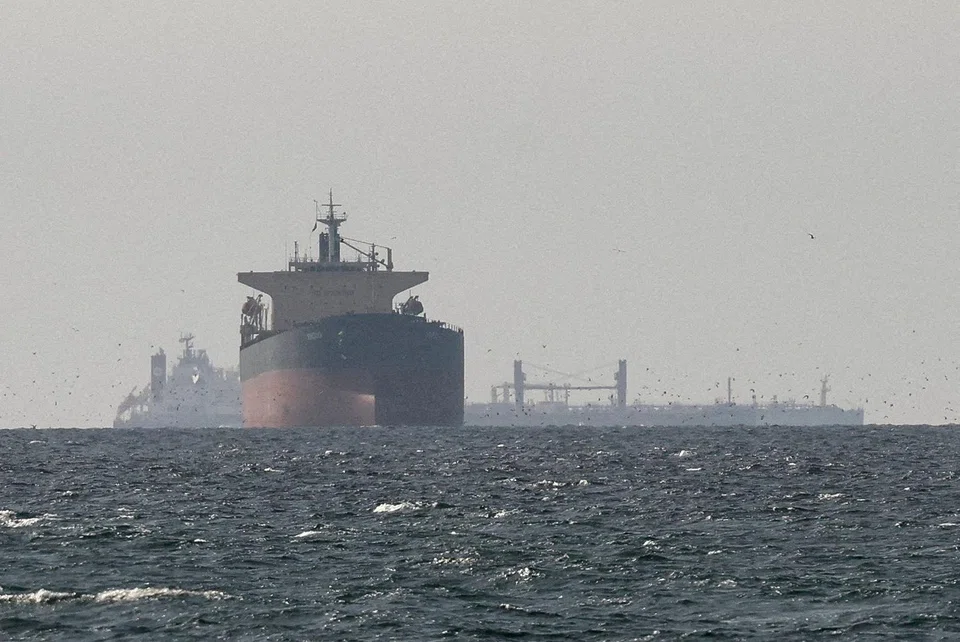
Factor in what both are actually doing – the US deploying a small ground force to the Persian Gulf and Iran legislating to turn the Strait of Hormuz into a permanent toll booth – and it seems we are in for a longer conflict.
A lot has been said, including by some of America’s most storied generals, about how the US administration went into this fight: over-confident in its conventional military advantage, over-reliant on airpower and fundamentally misunderstanding the nature and asymmetric strengths of its enemy. As a result, it now has few good options.
At this juncture, though, it’s probably more important to understand how the Iranians view their situation. And judging by the response Teheran sent to Trump’s 15-point peace offer, Iranian leaders believe they’re in a stronger position to see this out – and they don’t trust Trump enough for a quick settlement to be feasible, anyhow.
Both Iranian beliefs are well-founded. From what we know of Trump’s 15-point peace proposal, it offers to end air strikes and lift sanctions in exchange for Teheran returning the Strait of Hormuz to its status as open seas; ending and demolishing its entire uranium enrichment programme, civilian or otherwise; opening up to inspections that achieve complete transparency; accepting limits on the numbers and types of ballistic missiles it can have, configured for defence only; and ending all support for proxy militias abroad.
In other words, it demands the capitulation the Iranians refused to accept in talks before the US and Israel launched air strikes on Feb 28, but with the additional requirement that it reopen Hormuz, which became a problem in need of a solution only because of the war. The regime would accept such terms only if it had no hope of survival, which is not the case.
The Iranians shot back with five conditions they say the US must meet before it will talk. These consisted of a halt to all US-Israeli hostilities against Iran, including assassinations; a halt to attacks on its regional proxies; concrete guarantees that none of these hostilities are renewed; war reparations; and – the big one – international recognition of Iran’s sovereign control over Hormuz.
Yes, these are starting positions. On Thursday (Mar 26), Trump extended his ultimatum threatening to bomb Iran’s energy infrastructure by a further 10 days. He said this was due to an Iranian request, and that talks were going “very well”. That’s all conceivable, but also uncorroborated and unlikely to produce a result so long as both sides believe they have the upper hand, which it seems they do.
It’s pretty clear why Trump would think so. He’s apparently getting a two-minute daily video that shows him the things the US blew up in Iran the day before.

The combined American-Israeli force has sunk Iran’s conventional navy, destroyed much of its missile launching and manufacturing capacity and decapitated the Islamic Republic’s leadership. At least 7,000 Marines and troops from the 82nd Airborne are on their way to the Gulf to add some of the missing land dimension to US airpower.
Path to strategic success
The Iranian case is more complex and militarily weaker, but it has a clearer path to strategic success. The most commonly cited aspect of this asymmetrical advantage is that all the Islamic Republic needs to do to win this war is to survive it, a low bar against airpower alone.
Harder for outsiders to grasp is that the two US attacks on Iran – in June and again now – have also resolved a decades-long debate between regime hardliners and pragmatists as to whether the US was trustworthy enough to make normalisation worth pursuing. It has also ended tactical restraint over issues such as closing Hormuz.
I asked Seyed Hossein Mousavian, a former Iranian diplomat and member of its nuclear negotiating team, how he thought the regime saw Trump’s overtures. I first met Mousavian in Teheran in 2004, when he was still a government official and a member of the regime’s pragmatist camp, after which he left to join the Program on Science and Global Security at Princeton University as a researcher. He stepped down from that position last year.
Mousavian breaks the broad view of regime officials into three clear statements. First, that Trump’s talk of a negotiation and potential deal is nothing more than a “a new deception – larger than the previous two”. That’s a reference to the nuclear negotiations that were under way both times the US struck.
Second, that the Iranian leaders believe this US sleight of hand aims to obscure “the execution, within the coming days, of a major and decisive military operation against Iran in the Persian Gulf – an amphibious operation accompanied by heavy strikes on Iran’s infrastructure in the southern regions”.
And finally, that the US was pressured into this war by Israel and the Gulf states, which collectively seek the “complete destruction of Iran”, making this an existential fight for Teheran.
This matches my own reading, together with the added flavour that those in command have been preparing for it for decades and feel it validates their beliefs. That doesn’t make them right.
I’m not convinced, for example, that the Gulf states wanted this conflict – quite the contrary. It isn’t yet clear what the US plans to do with its ground troops. And it is not Iran but the Islamic Republic that the US and Israel want to destroy, something that a significant number of Iranians inside and outside Iran support.
Still, for those in Iran’s current leadership, the last point is a distinction without difference. And the way the war is unfolding is drawing the Gulf states in, because they cannot afford for it to end with a wounded, vengeful Islamic Republic in charge of the Strait of Hormuz.
Once institutionalised, running Hormuz would allow the Iranians to turn it into a cash machine, tolling not just the ships that carry the 25 per cent of the world’s seaborne oil and 20 per cent of its liquid natural gas trade, but also the many other products that the Gulf states export via the strait.
Germany’s Kiel Institute recently listed the top 50 products other than crude oil and liguefied natural gas that passed through Hormuz in 2024, finding that they accounted for a cumulative US$773 billion in value and an average 14.9 per cent of total global exports for each product category.
Before the war, the Iranian regime was bankrupt, out of ideas on how to fix the economy and under pressure from a furious population it could control only by jailing or killing them.
Potential route to longer-term survival
Hormuz represents a potential route to its longer-term survival. That is not the kind of regime change Trump was hoping for. It’s also a potential precedent for other choke points, including the Red Sea or the Strait of Malacca.
Teheran has discovered in Hormuz a geopolitical tool and deterrent far more powerful than its network of proxies, and more exploitable than owning a nuclear arsenal.
The ability to choose which ships to let through and which to block, overcharge or detain for alleged safety violations would give Teheran enormous leverage and, in the process, upend a key pillar of the American century: the freedom of navigation that the US Navy guaranteed for its own economic benefit and that of its trading partners.
This is why Teheran’s Majlis, or parliament, is rushing through wartime legislation to write a unilaterally claimed sovereignty over the strait into Iranian law. So transformative would this change be that the issue almost guarantees the conflict’s escalation until it gets resolved.
That can come through force, as Trump again threatened on Thursday, or through the kinds of negotiated trade-offs that Trump would be loathe to make, because they’d look so very much like defeat.
The writer is a Bloomberg Opinion columnist covering Europe, Russia and the Middle East. He was previously Istanbul bureau chief for The Wall Street Journal. BLOOMBERG
Decoding Asia newsletter: your guide to navigating Asia in a new global order. Sign up here to get Decoding Asia newsletter. Delivered to your inbox. Free.
Share with us your feedback on BT's products and services
TRENDING NOW

LTA proposes combining car COE categories, adding rebate-surcharge system

StarHub to acquire MyRepublic’s mobile business amid ongoing telco consolidation

DBS, OCBC, UOB rout lops billions off STI as inflation, rate concerns spook investors

Grab CEO’s wife Chloe Tong on life with Anthony Tan and finding her purpose

