
Israel’s Netanyahu softens judicial overhaul after Biden call
 Add BT as a preferred source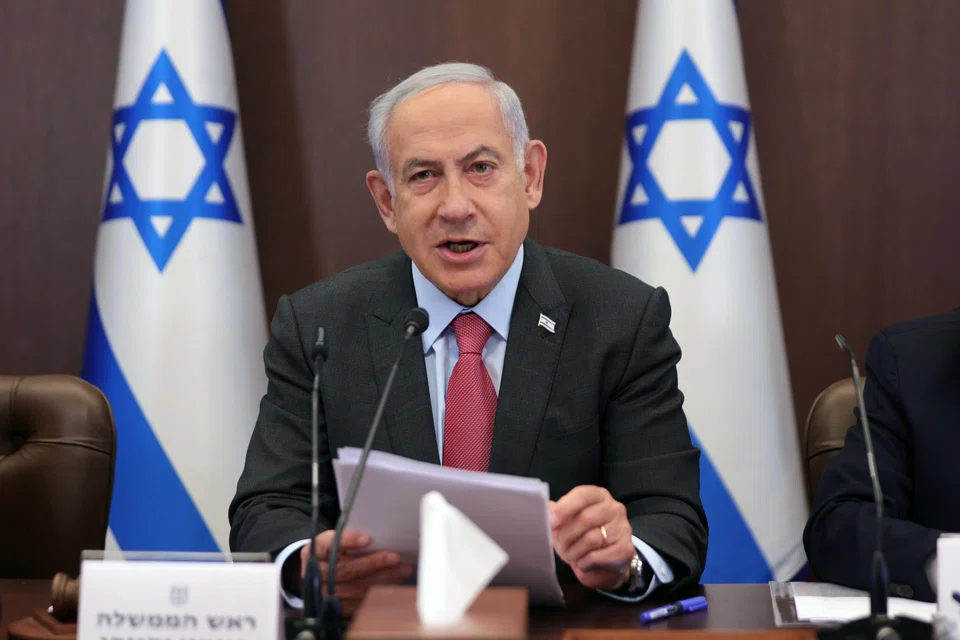
ISRAELI Prime Minister Benjamin Netanyahu on Monday (Mar 20) announced a softening of his hard-right government’s judicial overhaul plan, in an apparent bid to calm more than two months of unprecedented nationwide protests and misgivings voiced by Western allies.
The announcement followed a call to Netanyahu by US President Joe Biden on Sunday. The White House said the president voiced support for a compromise in Israel’s constitutional crisis; he also encouraged checks and balances as well as building a broad consensus.
There was no immediate response from the Israeli political opposition. Protest leaders accused Netanyahu of a ruse and threatened escalation. The already-shaken shekel slipped another 0.4 per cent against the US dollar while Tel Aviv shares opened 0.5 per cent lower.
Wielding a parliamentary majority, Netanyahu looked set to ratify the package of reforms by the Apr 2 recess of the Knesset, Israel’s legislature. But he said and his religious-nationalist coalition allies said that most of those would now be shelved until it reconvenes on Apr 30.
The legislation, still slated for ratification in the next two weeks, would shake up Israel’s method of selecting judges – an issue at the heart of the reform controversy. Critics have accused Netanyahu of trying to curb independence of the courts. The veteran premier, who is under trial for corruption charges which he denies, has insisted that he is seeking balance among branches of government.
Netanyahu’s office said he assured Biden during Sunday’s call that Israel’s democracy was healthy.
Navigate Asia in
a new global order
Get the insights delivered to your inbox.
Monday’s coalition statement used more circumspect language than in the original bill introduced on Jan 4. But it said it would continue to check the power of judges on the selection panel to use what it deemed their “veto” over nominations to the bench. The statement further noted amendments made to the bill in a Knesset review session on Sunday.
Under the amendments, the selection panel would be expanded from nine to 11 members as originally planned, but with a make-up that would grant the government less potential clout.
Previously, the bill envisaged the panel including three cabinet ministers, two coalition lawmakers and two public figures chosen by the government, spelling a 7-4 vote majority. In its amended form, the bill envisages the panel being made up of three cabinet ministers, three coalition lawmakers, three judges and two opposition lawmakers. That could make for a slimmer and less assured 6-5 majority for the government.



The amended bill further stipulates that no more than two Supreme Court justices can be appointed by regular panel voting in a given Knesset session. Any appointments beyond that would have to be approved by a majority vote, including at least one judge and one opposition lawmaker among selection panel members.
Netanyahu called for a rethink by the political opposition, which has pledged to boycott ratification votes in the Knesset and encouraged street demonstrations that have reached into the ranks of the Israeli military, which is usually above politics. REUTERS
Decoding Asia newsletter: your guide to navigating Asia in a new global order. Sign up here to get Decoding Asia newsletter. Delivered to your inbox. Free.
Share with us your feedback on BT's products and services

