Jakarta seeking private money to help fund expansion
New governor eyes funds for state-owned firms and infrastructure projects worth US$1b-US$1.5b
Jakarta
THE newly installed government of Jakarta Governor Anies Baswedan is considering a dramatic increase in the use of private money to help fund expansion at the city's state-owned companies as well as infrastructure.
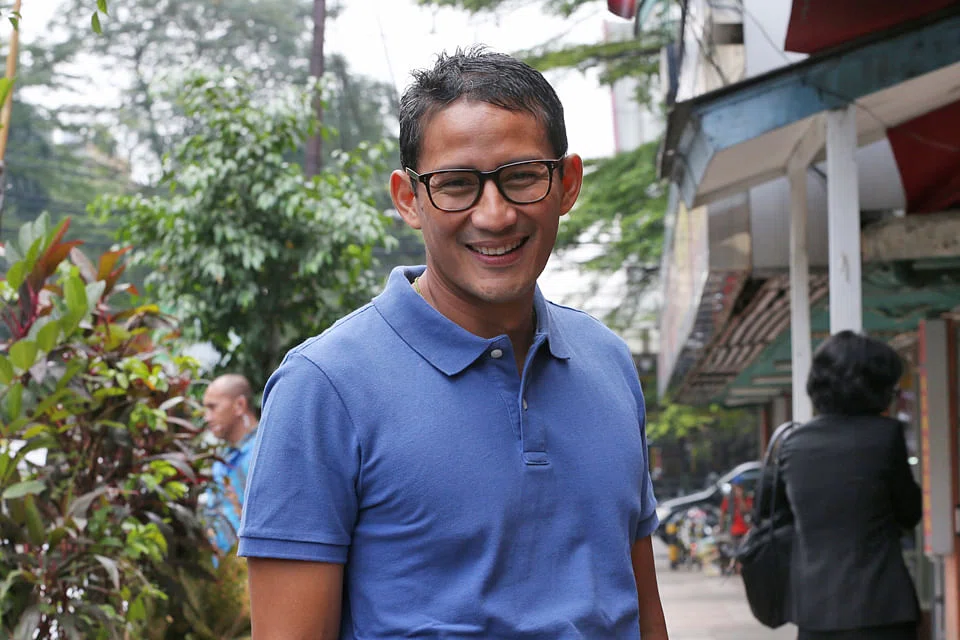
The Indonesian capital will seek private funds in as many as a dozen state-owned enterprises and infrastructure projects worth between US$1 billion and US$1.5 billion, deputy governor Sandiaga Uno said in an interview with The Business Times.
"We are going to be very serious about urban transport. We are going to triple the investment there. We are not going to use the state budget," he said.
Mr Uno said Jakarta's government would seek public-private partnerships to construct the second phase of the city's 116-km light rail transit system, the first instalment of which is expected to trundle into life ahead of next year's Asian Games.
"We are going to embark on a new approach, which is PPP (public-private partnership). We want to invite good companies to participate."
The funding model, however, has a fraught history in Indonesia. While private investors have plumbed for power stations, they have shied away from transport projects in part because of difficulties buying land and bureaucratic headaches.
The central government has so far failed to win private investment for a 25 trillion rupiah (S$2.5 billion) train linking the capital's two airports.
The train, which has been in the works since 2014, is slated to go into service early next year.
Indonesian governments also tend to be deeply sceptical of the private sector. The country's web of state- owned companies catering to segments from everything from beef to telecommunications to airline maintenance, control much of the economy.
Jakarta alone has nearly two dozen city-owned companies. Even so, the Baswedan administration will force some of the city's own companies including, Tjipinang Food Station, a food distributor, and Dharma Jaya, a beef wholesaler to tap capital markets to fund future expansion.
"Their balance sheets are very lazy," Mr Uno said of the companies. "I asked them 'what kind of companies are you running? You need to go to the capital markets for your financing'."
Last month, South Korea's state-owned Korea Rail Network Authority announced it had inked a US$550 million memorandum of understanding to fund the second phase the LRT's second phase.
Mr Uno said the government is considering a PPP for an upcoming sports stadium.
While the city government is splashing out on new rail lines and land reclamation projects to ease congestion, traffic is already effectively gridlocked in some areas during peak times.
A roughly 20-km drive to Jakarta's Soekarno-Hatta international airport can take between 45 minutes and three hours.
Officially, Jakarta's population numbers 10 million. But add the populace of the satellite cities that feed in the low-wage housekeepers and construction workers and that can swell to 28 million.
Scott Younger, a consultant with Nusantara Indonesia says Jakarta needs as much as US$15 billion infrastructure spending over the next 20 years to alleviate bottlenecks.
"A PPP in infrastructure is good news," he said. "(Mr Baswedan) can't deliver infrastructure projects without the private sector."
Even so, the Baswedan administration is eager to halt work on the central government's land reclamation project in Jakarta Bay, which is aimed at building housing as well as a massive sea wall to hold back tidal surges.
In the run-up to the election in April, Mr Uno and Mr Baswedan said the project was environmentally damaging and has disrupted the livelihood of local fishermen.
Mr Uno says he expects the two governments to reach an agreement in the coming months. "We have to be pragmatic and realistic," he said. "We are going to be focusing on this next year."
The administration entered office in October following a bitter election in April centred largely on race and religion.
Former governor Basuki Tjahaja Purnama, a Christian of ethnic-Chinese descent was defeated and later jailed on questionable grounds that he had insulted the Quran while campaigning.
Mr Uno said the city needed to unite. The administration turned down invitations over the weekend to mark the one-year anniversary of protests that helped oust Mr Purnama in a land slide.