Japan declares state of emergency for Tokyo area as Covid cases surge
 Add BT as a preferred source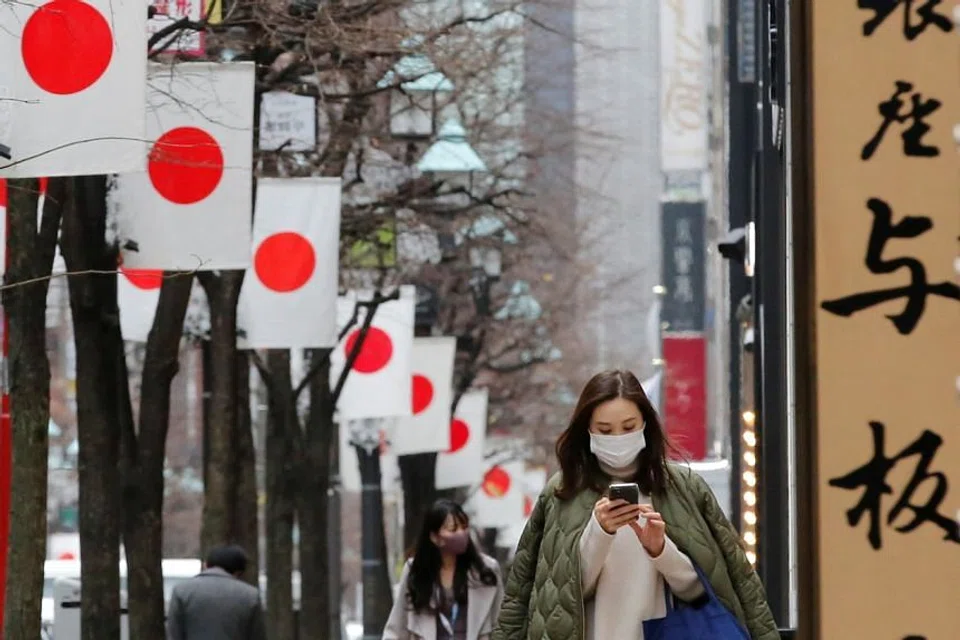
Tokyo
JAPAN has declared a one-month state of emergency in the capital Tokyo and three neighbouring prefectures to stem the spread of coronavirus infections, as new daily cases surged to a record of more than 7,000 on Thursday.
The government said the emergency would run from Jan 8 to Feb 7 in Tokyo and Saitama, Kanagawa and Chiba prefectures, covering about 30 per cent of the country's population.
Restrictions would centre on measures to combat transmission in bars and restaurants, which the government says are main risk areas.
The curbs are less stringent than those imposed nationwide in April under an emergency that ran until late May, as the government seeks to limit damage to the world's third-biggest economy, while striving to defeat the virus once and for all as it looks ahead to staging the postponed Tokyo Olympics in June.
"The situation has become increasingly troubling nationwide, and we have a strong sense of crisis," Prime Minister Yoshihide Suga told a news conference.
Although still less seriously affected by the pandemic than many countries around the world, Japan has been unable to rein in the virus to the extent that some countries in the region have.
Tokyo, in particular, has been a constant worry with its tally of positive tests jumping to 2,447 on Thursday, from a record of 1,591 the previous day.
Authorities aim to start a vaccination campaign by the end of February.
The emergency goes into force on Friday. Measures include asking restaurants and bars to close by 8pm, and residents to refrain from nonurgent outings, more work from home and limiting crowds at sports and other big events to 5,000 people.
The four prefectures are home to about 150,000 restaurants and bars.
Ahead of the declaration, the Tokyo Metropolitan Government said that exhibitions of the Olympics torch around the capital had been postponed.
Mr Suga has said shorter operating hours for bars and restaurants had helped bring cases down in regions such as Osaka and Hokkaido.
But in a worrying sign, Osaka on Wednesday reported a record 560 new cases, while cases in Hokkaido surpassed 100 for the first time in a week.
Osaka governor Hirofumi Yoshimura said on Thursday that he may request a state of emergency for his prefecture as well, given the surge.
Medical experts have said they fear the government's plans might not be enough. "We may need to think about a state of emergency nationwide," Toshio Nakagawa, president of the Japan Medical Association, said on Wednesday.
Simulations by Kyoto University scientist Hiroshi Nishiura showed infections in Tokyo could reach 3,500 a day by February and hit 7,000 by March without new measures. Emergency measures could take at least two months to bring infections to manageable levels, he said.
Tokyo-based Teikoku Databank said this week that bankruptcies in the sector hit an all-time high of 780 in 2020, up from the previous year's record of 732.
Japanese media said the government would raise the maximum compensation for the restaurant business to 60,000 yen (S$766.66) a day, from 40,000 yen.
A loose curfew prompted some businesses not covered by the programme, including department store operator Isetan Mitsukoshi and Tokyo Disneyland, to also shorten their operating hours.
Analysts said the new state of emergency would probably trigger an economic contraction in the first quarter - a reversal from a 2.1 per cent annualised expansion forecast in a Reuters poll last month. REUTERS
Decoding Asia newsletter: your guide to navigating Asia in a new global order. Sign up here to get Decoding Asia newsletter. Delivered to your inbox. Free.
Share with us your feedback on BT's products and services