Japan factory output up, retail sales down amid fragile recovery from pandemic
 Add BT as a preferred source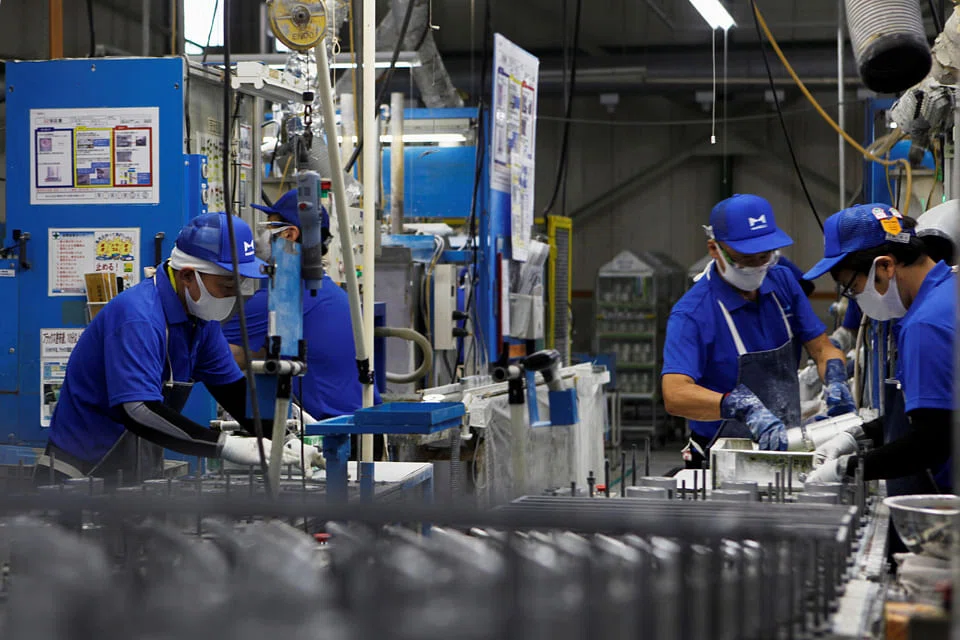
Tokyo
JAPAN'S factory output rose in July at the fastest pace on record, driven by cars and car parts, signalling a gradual recovery from the blow delivered by the coronavirus pandemic.
But retail sales fell for a fifth straight month and at a somewhat faster pace, a worrying sign for private consumption, which accounts for more than half of the world's third-largest economy.
Monday's data underscored the fragility of an economy that suffered a record 27.8 per cent contraction in the April-June quarter as the pandemic took a heavy toll on both domestic and external demand.
While analysts believe the economy has bottomed out after lockdowns were lifted in late May, they say any rebound will be modest amid worries about a second wave of infections. "The bounce-back in factory output will run its course in August and we expect a pullback in production in October to December," said Toru Suehiro, senior market economist at Mizuho Securities.
"Factory output will fluctuate from now on to settle in at about 90 per cent of the pre-coronavirus crisis level," he added.
Data from Japan's Ministry of Economy, Trade and Industry (METI) showed that industrial output grew 8 per cent in July from the previous month, versus economists' median estimate of a 5.8 per cent gain and following a 1.9 per cent increase in June.
The growth rate was the fastest on record going back to 1978, the government said. It was also the second straight month of gains after having hit its lowest level in May since the global financial crisis.
Manufacturers surveyed by METI expect output to increase 4 per cent in August and grow 1.9 per cent in September.
METI officials said industrial output will continue to improve but activity would remain below pre-crisis levels for some time. The officials said they were closely watching the impact of a resurgence in coronavirus infections.
Compared with a year earlier, output was down 16.1 per cent.
Highlighting weak consumer demand, however, retail sales fell 2.8 per cent year-on-year in July, following a 1.3 per cent drop in June, separate METI data showed on Monday.
Declines in car demand dragged down overall retail sales, and department stores and supermarkets suffered from sluggish consumer activity amid a surge in new Covid-19 cases. Clothing demand also suffered, while oil product sales fell reflecting declines in crude oil prices, the data showed.
On a seasonally-adjusted basis, retail sales fell 3.3 per cent month-on-month in July, posting the first drop in three months. REUTERS
Decoding Asia newsletter: your guide to navigating Asia in a new global order. Sign up here to get Decoding Asia newsletter. Delivered to your inbox. Free.
Share with us your feedback on BT's products and services