

Japan finance minister 'firmly' watching FX moves as yen weakens

JAPANESE Finance Minister Shunichi Suzuki said on Friday (Jun 23) that he was “firmly” watching foreign exchange markets and sharp movements in the yen’s exchange rate when asked about the currency’s recent weakening.
“Currency rates should be set by the market, reflecting fundamentals,” Suzuki told reporters at his ministry, adding he will not comment on the levels of foreign exchange.
“Sharp moves are undesirable, currencies should move stably reflecting fundamentals. With that in mind, we will continue to keep firm watch on market moves.”
The latest verbal warning to the markets amid policymakers’ concerns that Japanese households were suffering as a result of the weak yen driving up import costs.
On the flip side, the yen’s depreciation has helped boost exporters’ profits, pushing up stock prices to a 33-year high.
The yen was largely steady on Friday at 143.05 per dollar, languishing near an over seven-month low of 143.23 hit in the previous session.
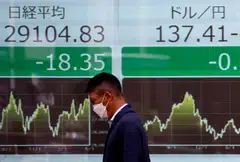
The yen came under renewed pressure after the Bank of Japan (BOJ) maintained an ultra-dovish stance at its meeting last week.
Data out on Friday showed that Japan’s core consumer inflation topped forecasts in May and an index excluding fuel costs rose at the fastest annual pace in 42 years, putting pressure on the BOJ to phase out its massive stimulus. REUTERS
Decoding Asia newsletter: your guide to navigating Asia in a new global order. Sign up here to get Decoding Asia newsletter. Delivered to your inbox. Free.
Share with us your feedback on BT's products and services
TRENDING NOW

MSCI proposes standalone status for Indonesia; Jakarta stocks plunge 8%

Palm oil stocks slide after Singapore begins looking into which firms responsible for haze

High Court rules against Julius Baer’s Singapore trust arm in US$50 million family trust dispute

Why is the haze so bad in South-east Asia this year?

