Japan maintains male-only imperial tradition with succession law
Women will continue to be barred from ascending to the Imperial throne
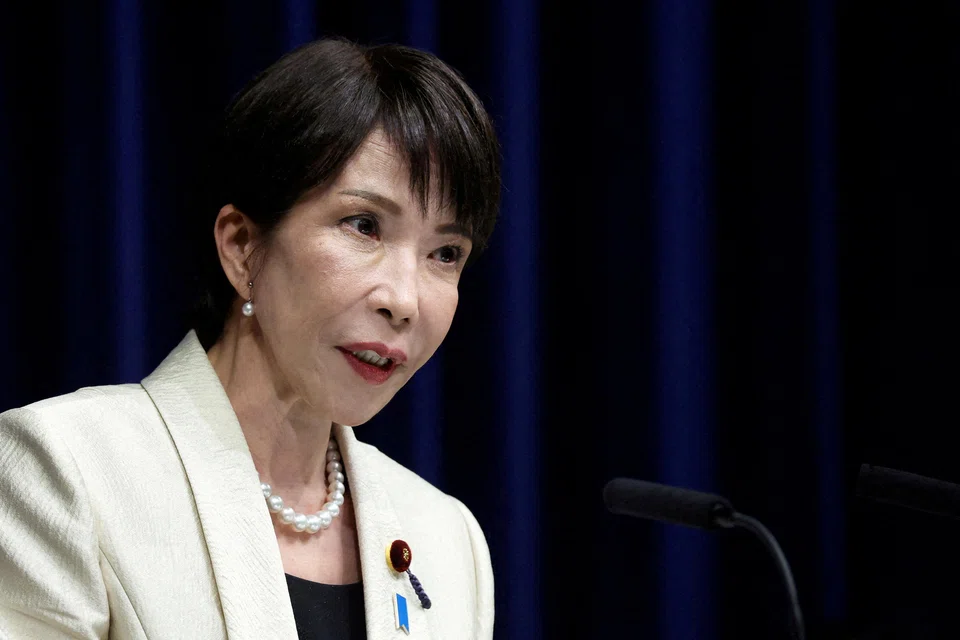
[TOKYO] Japan’s first female prime minister helped ensure that women will continue to be barred from ascending to the Imperial throne, as parliament passed a law on Friday aimed at expanding the pool of men eligible to succeed.
The revised Imperial House Bill highlights Prime Minister Sanae Takaichi’s determination to leave a conservative stamp on the country she’s led for nine months.
Concerns that Japan’s Imperial family would run out of heirs have been simmering for decades, with the household’s dwindling ranks leaving 66-year-old Emperor Naruhito’s brother and nephew the only eligible people younger than himself.
While polls show public opinion is broadly behind a change to allow women on the throne – and Naruhito’s only daughter Aiko is a popular choice – the ruling Liberal Democratic Party has instead opted to allow the imperial family to adopt male relatives, however distant. The adoptees would not be permitted to become emperor, but any sons would be eligible.
Opposition parties have repeatedly asked in parliament why the path to the throne is not being opened to women. Proponents of the law have said the legitimacy of Japan’s monarchy depends on its unbroken male-line succession.
Takaichi smashed through Japan’s glass ceiling to become her country’s first female prime minister in October last year. She went on to win a landslide general election victory in February, with her conservative agenda seen as luring back voters who had drifted away from the LDP in favour of smaller right-wing groups.
She has generally avoided playing on her identity as a woman or pursuing policy goals that could be seen as favouring women, appointing only two female Cabinet ministers.
Yet, maintenance of a male-only succession law puts Japan out of kilter with its Western counterparts. Sweden adopted a gender-neutral order of succession in 1980, while other European nations followed suit, including the UK in 2013. The countries that exclude women from the throne include Saudi Arabia, Qatar and Oman. BLOOMBERG
Decoding Asia newsletter: your guide to navigating Asia in a new global order. Sign up here to get Decoding Asia newsletter. Delivered to your inbox. Free.
Share with us your feedback on BT's products and services