

Japan may face upheaval of funds when BOJ hikes rates to 1%, economist says
The markets are pricing in the chance of another hike as soon as March or April
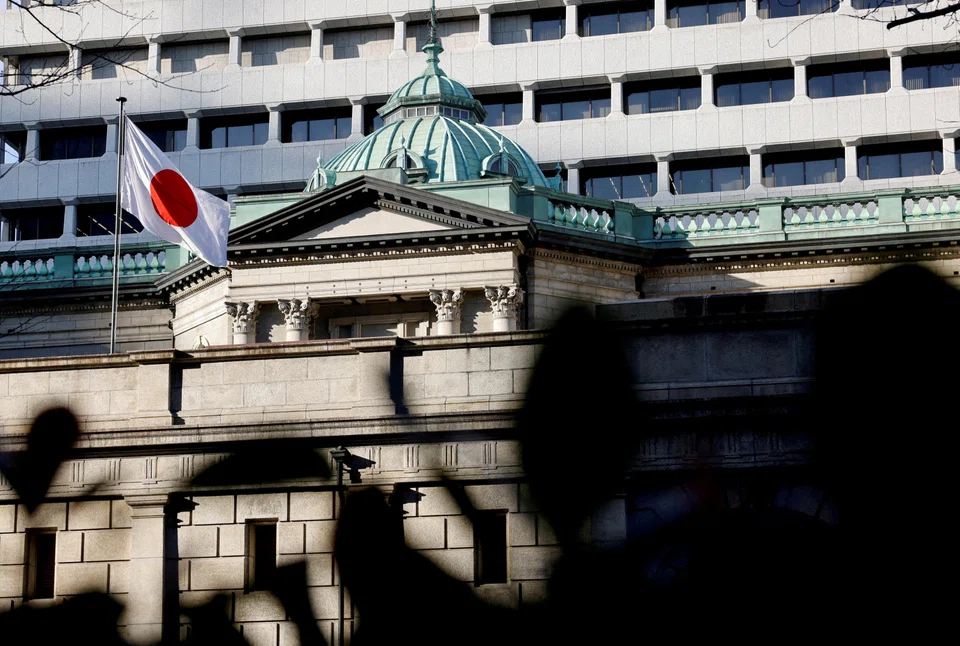
[TOKYO] An expected rise in Japan’s short-term interest rate to 1 per cent may trigger a significant reallocation of cash into deposits that could complicate the Bank of Japan’s (BOJ) monetary policy implementation, a leading economist said on Thursday (Feb 19).
The BOJ exited a decade-long, massive stimulus in 2024 and raised the interest rate several times till December, when it hit a 30-year high of 0.75 per cent. The markets are pricing in the chance of another hike to 1 per cent as soon as March or April.
Ikuko Samikawa, lead economist at think tank Japan Center for Economic Research, said that as Japan emerges from a prolonged zero-rate environment, it could experience huge fund shifts as households move cash into interest-bearing bank accounts.
Trigger point?
Historically, when the BOJ’s policy rate has exceeded 0.5 per cent, households have shifted cash into bank deposits, said Samikawa, a member of a finance ministry panel and frequent participant in BOJ forums.
An increase in bank deposits would lead to a higher overall balance that financial institutions hold with the BOJ, putting downward pressure on money market rates.
She added: “The next anticipated rate hike to 1 per cent could be a trigger point of such inflows... If the flow of funds back to bank accounts turns out to be big, it could complicate the BOJ’s effort to guide short-term interest rates around its target.”
A prolonged era of heavy money printing has made it very hard to predict how funds could move as interest rates rise, she noted.
The BOJ is shrinking its balance sheet after it ballooned 500 per cent in the past two decades to around 756 trillion yen (S$6.2 trillion), due largely to the stimulus deployed in 2013.
The balance of reserves financial institutions hold with the BOJ currently stands at around 454 trillion yen.

The BOJ can reduce the balance to around 280 trillion without causing a spike in short-term rates, Samikawa said, adding though that the numbers may fluctuate depending on future increases in bank lending. REUTERS
Decoding Asia newsletter: your guide to navigating Asia in a new global order. Sign up here to get Decoding Asia newsletter. Delivered to your inbox. Free.
Share with us your feedback on BT's products and services
TRENDING NOW

DBS, OCBC, UOB rout lops billions off STI as inflation, rate concerns spook investors

Grab CEO’s wife Chloe Tong on life with Anthony Tan and finding her purpose

OCBC sheds S$8 billion in value as shares close nearly 6% down; analysts cautious on banks

Deal between tycoon friends sparks scrutiny of Philippine power sector

