Japan PM faces challenges selling ‘proactive’ fiscal policy to bond vigilantes
It involves ramping up investment and a two-year food-tax suspension for a country with public debt twice the size of its economy
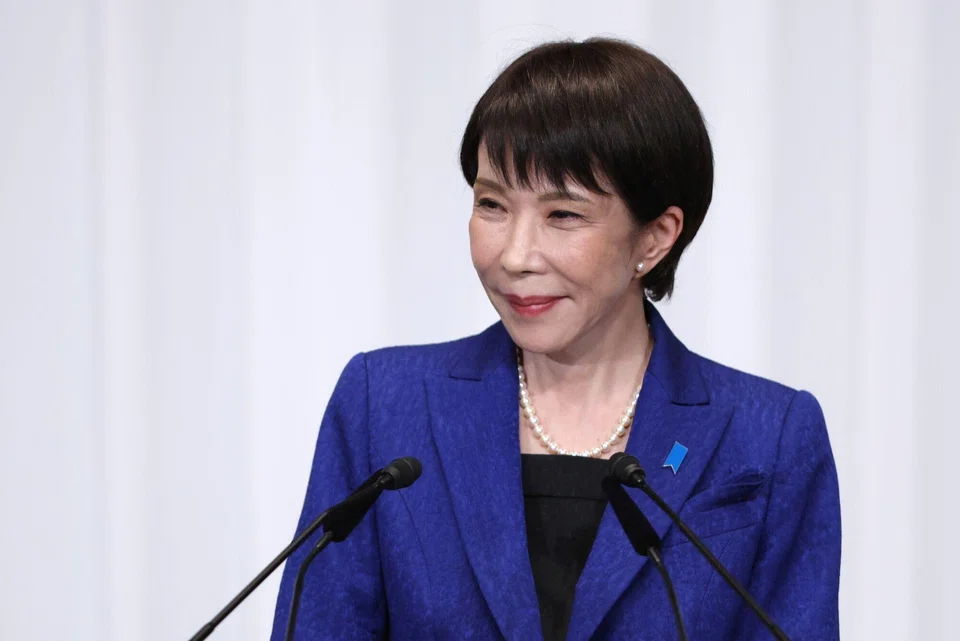
[TOKYO] Japanese Prime Minister Sanae Takaichi will likely seek to convince markets her “proactive” fiscal policies are not as expansionary as they seem, as legislative deliberations on her flagship spending and tax-cut plans kick off next week.
But she may struggle to water down her image as a big spender, given her vow to ramp up investment and suspend an 8 per cent levy on food for two years – under her slogan of “responsible, proactive fiscal policy”.
While markets have recently calmed, investors remain alert to any sign Takaichi’s administration could sell more debt to fund her spending and tax-cut plans.
The International Monetary Fund (IMF) urged Japan to keep the consumption-tax cut targeted and temporary, warning on Wednesday (Feb 18) that high and persistent debt levels leave its economy “exposed to a range of shocks”.
David Boling, principal at The Asia Group, a firm that advises companies on geopolitical risk, said: “‘Responsible, proactive fiscal policy’ was a winning campaign slogan. But turning it into policy will be harder. The idea contains built-in contradictions. And boosting spending while cutting taxes risks fuelling inflation.
“She needs to focus on the ‘responsible’ part of her fiscal policy. That emphasis would reassure the Japanese government bond (JGB) market.”
Having scored a landslide election victory with a mandate to build a strong and resilient economy, Takaichi reiterated in a news conference on Wednesday her resolve to break Japan’s “austerity mindset” and boost investment for future economic growth.
But she also repeatedly stressed the need to keep Japan’s fiscal house in order and gain market trust over its finances, highlighting the administration’s focus on averting a renewed sell-off in yen and JGBs.
“In guiding economic policy, we are mindful of the importance of fiscal sustainability and will remain so,” she said upon being re-elected as premier, adding that she was closely watching daily interest-rate and currency moves.


“What’s key is to stably lower Japan’s debt-to-gross-domestic-product ratio to achieve sustainable fiscal policy and gain market trust.”
After decades of heavy spending, Japan is saddled with public debt twice the size of its economy.
Nearly 60 per cent of economists polled by Reuters said they were highly or somewhat concerned by Takaichi’s proposed two-year tax suspension.
A separate Reuters survey showed that two-thirds of firms were concerned about her loose fiscal policy.
Takaichi aware of market realities
While known as an advocate of loose monetary policy, she refrained from demanding sustained low rates.
Takaichi said she only hoped the Bank of Japan strives to durably hit its 2 per cent inflation target, accompanied by wage gains.
The remarks set the tone for her policy speech to parliament on Friday, which will lay out the administration’s ideas on how to lift potential growth in a country facing geopolitical risks, intensifying labour shortages and rising social welfare costs for a rapidly ageing population.
Bond vigilantes may have affected Takaichi’s rhetoric.
Her ascent to leadership in October sparked a sell-off in government bonds and pushed the yen near historic lows against other currencies, as investors fretted over how Japan – labouring under the developed world’s highest debt burden – would fund her big spending plans.
The pledge to suspend the food tax sparked another bout of bond and yen selling in January, though markets have stabilised after the ruling party’s election victory earlier in February.
The government’s fiscal 2026 budgetary plan, drafted amid the market rout, defies a widely held perception of the administration being prone to massive spending.
Japan kept new bond issuance below the landmark 30 trillion yen (S$246 billion) mark for the second straight year, thereby reducing the proportion of the Budget financed by fresh debt to a nearly three-decade low.
While the size of the Budget hit a record US$783 billion, much of the increase in expenditure came from local allocation tax grants and debt-servicing costs, which rise in tandem with higher tax revenues and bond yields.
The primary deficit of the government for 2025 is estimated to have been smaller than it was in 2019 before the pandemic, and among the smallest in G7 advanced economies, due in part to rising revenues and spending restraint, the IMF said.
“The reason why Japan’s potential growth rate remains stagnant is an enormous shortage of domestic investment,” Takaichi said on Wednesday.
“It’s not as if the government will ramp up spending. Rather, it must coordinate with the private sector,” she said.
Toru Nakazato, associate professor at Sophia University, draws comparisons between the policies of Takaichi and her mentor and former premier Shinzo Abe.
He was also perceived as an advocate of big spending – but held off from ramping up expenditure and raised the consumption tax.
“It’s true Sanae-nomics carries over some aspects of Abenomics. But the fact is, Abe did not expand fiscal spending much. Takaichi’s policies aren’t fiscally expansionary either. That is where there are similarities,” Nakazato said.
“There is a huge gap between her actual policies, and how they are perceived by media and markets. Filling that gap may be among her biggest challenges.” REUTERS
Decoding Asia newsletter: your guide to navigating Asia in a new global order. Sign up here to get Decoding Asia newsletter. Delivered to your inbox. Free.
Share with us your feedback on BT's products and services