

Japan proposes record Budget spending while curbing fresh debt
The 122.3 trillion yen Budget will likely underpin consumption but could also accelerate inflation
[TOKYO] Japan’s government on Friday (Dec 26) proposed record spending for next the fiscal year while curbing debt issuance, underscoring Prime Minister Sanae Takaichi’s challenge in boosting the economy, while inflation remains above the central bank’s target.
Her Cabinet approved a draft Budget of US$783 billion, which addresses market jitters by capping bond issuance, and reducing the proportion of the Budget financed by fresh debt to the lowest in almost three decades.
Also complicating Takaichi’s policy challenge, core inflation in Tokyo stayed above the Bank of Japan’s (BOJ) 2 per cent target this month while the yen remains weak, bolstering the central bank’s case to keep raising interest rates.
The record 122.3 trillion yen (S$1 trillion) Budget for the year starting in April, a core part of Takaichi’s “proactive” fiscal policy, will likely underpin consumption but could also accelerate inflation and further strain Japan’s tattered finances.
Delicate balance of Budget support, debt restraint
The investor unease – about fiscal expansion in an economy with the heaviest debt burden in the industrialised world – has driven super-long government bond yields to record highs, and weighed on the yen.
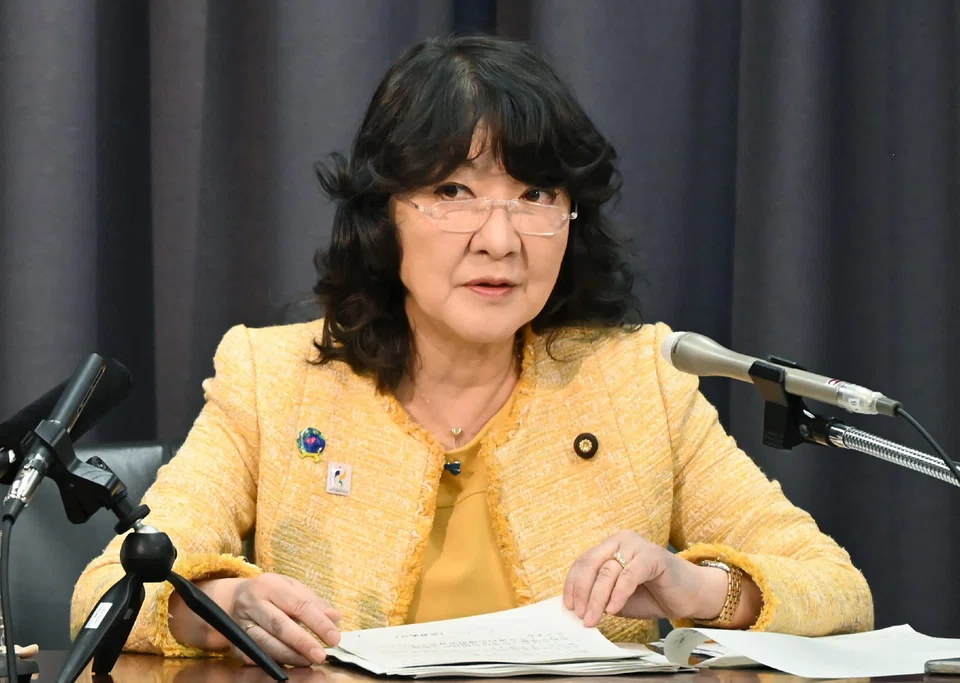
“We believe we have been able to draft a Budget that not only increases allocations for key policy measures but also takes fiscal discipline into account, achieving both a strong economy and fiscal sustainability,” said Finance Minister Satsuki Katayama.
She told a press conference the draft Budget keeps new bond issuance below 30 trillion yen for a second consecutive year, with the debt dependence ratio falling to 24.2 per cent, the lowest since 1998.
The Takaichi government’s efforts to reassure Japanese government bond (JGB) investors were showing some success.
The 30-year JGB yield fell on Thursday from a record high 3.45 per cent, after it was reported that the government will likely reduce new issuance of super-long JGBs next fiscal year to the lowest in 17 years.




The yields slipped further on Friday on the administration’s efforts at fiscal restraint.
The Budget was not as large as initially feared, said Saisuke Sakai, senior economist at Mizuho Research & Technologies.
“But political fragmentation raises the risk that Takaichi may resort to a large supplementary Budget next year to secure opposition support, keeping alive market concerns that fiscal expansion could push the yen down and accelerate inflation,” he added.
He noted: “It’s too optimistic to assume that the current environment will persist.”
The proposed spending is inflated by a jump in debt-servicing costs for interest payments and debt redemption.
It also reflects a 3.8 per cent rise in military spending to nine trillion yen as part of the assertive defence policy of Takaichi, a conservative nationalist, and in line with a US push for its allies to pay more for their own defence.
Tokyo inflation slows but still points to rate hikes
The Tokyo core consumer price index, which excludes volatile costs of fresh food, rose 2.3 per cent in December from a year earlier, less than market forecasts for a 2.5 per cent gain, and slowing from a 2.8 per cent increase in November.
The data backs up the central bank’s view that core inflation will slide below its 2 per cent target in coming months on easing cost pressure, before resuming a more demand-led increase that justifies additional rate increases.
But some analysts warn of the risk renewed yen declines may prod businesses to keep raising prices, leading to sticky, cost-led inflation that could quicken the pace of BOJ rate hikes.
“Today’s data suggests food inflation may be peaking. But the weak yen may give firms an excuse to resume price hikes for food, which may keep inflation elevated,” said Yoshiki Shinke, senior executive economist at Dai-ichi Life Research Institute.
An inflation index for the capital that strips away both fresh food and fuel costs – closely watched by the BOJ as a measure of demand-driven prices – rose 2.6 per cent in December after a 2.8 per cent increase in November.
Data on Friday also showed that Japan’s factory output fell 2.6 per cent in November from the previous month, deeper than market forecasts for a 2 per cent drop, due to cuts in car and lithium-ion battery production.
The BOJ raised its policy rate last week to a 30-year high of 0.75 per cent, taking another landmark step in ending decades of huge monetary support, in a sign of its conviction Japan is progressing towards durably hitting its 2 per cent inflation target.
With core inflation exceeding the bank’s target for nearly four years, BOJ governor Kazuo Ueda has signalled its readiness to keep raising rates if the economy continues to improve, backed by solid wage gains.
Yen bears, however, have dumped the Japanese currency in the belief that Ueda’s rate hikes are too gradual, prompting Katayama last week to threaten yen-buying intervention, saying the government was “alarmed as we are clearly seeing one-sided, sharp moves” in the yen. REUTERS
Decoding Asia newsletter: your guide to navigating Asia in a new global order. Sign up here to get Decoding Asia newsletter. Delivered to your inbox. Free.
Share with us your feedback on BT's products and services
TRENDING NOW
Why US$100 oil, 5% US yields affect Singdollar, ringgit differently vs other Asean currencies

Singapore fintechs struggle to find finance and tech talent
Despite the de-dollarisation debate, demand for dollar liquidity in Asia is growing

Why Tan Aik Keong of digital solutions specialist Agmo wants to make himself less indispensable

