Japan seeks record defence Budget as Takaichi plans buildup
Tokyo is also set to release a new midterm roadmap for defence spending by the end of this year
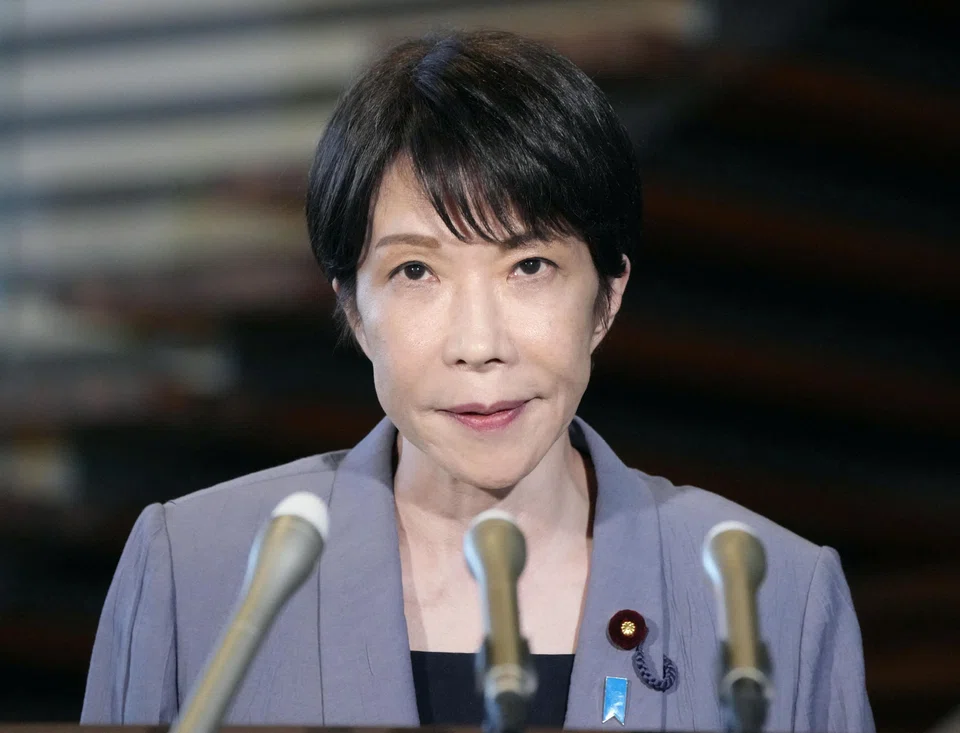
[TOKYO] Japan’s Defence Ministry is seeking record spending of around US$56 billion in the fiscal year starting in April, and the final bill could be considerably larger as Prime Minister Sanae Takaichi prepares to launch a new military buildup plan later this year.
The ministry requested about 8.9 trillion yen for next fiscal year, up 0.9 per cent from the current year, according to figures released on Monday (Aug 31). Among the priorities are unmanned platforms such as air and sea drones, the integration of artificial intelligence into military data collection and decision making, and improved working conditions for service members.
The Budget covers a single year, but Japan is also set to release a new midterm roadmap for defence spending by the end of this year. The current five-year spending programme, launched in 2022, called for about 43 trillion yen in outlays over that timespan.
The looming review makes the headline figure for next year’s Budget request something of a starting point. With the review likely to affect funding requirements, the ministry left costs unspecified for around 160 items. Any additional funding required will be considered during Budget negotiations later this year, it said.
The request includes 292 billion yen for 17 MQ-9B drones for maritime surveillance and 167 billion yen for hypersonic missiles and related equipment. The Budget also includes funds for other missiles that could hit enemy targets at long range, part of Japan’s new strategy of trying to deter rivals from initiating attacks.
Japan’s next midterm defence spending plan is expected to be more expensive as the country tackles rising regional security challenges, from greater Chinese military activity around Japan to a burgeoning security alliance between Russia and North Korea.
Discussions over defence needs and the Budget are expected to result in a more detailed blueprint by end of the year. That leaves Takaichi about three months to settle the size of the next defence plan, with how to pay for it likely to be among the thorniest issues.
Former Prime Minister Fumio Kishida faced public backlash after deciding in 2022 to use tax increases to help fund a defence expansion. An income-tax increase included in that package was repeatedly postponed and is only due to take effect next year.
The current five-year plan called for defence-related spending equivalent to 2 per cent of gross domestic product by fiscal 2027. After taking power last year, Takaichi pledged to reach the goal two years early. The government got to 1.9 per cent last fiscal year – roughly 11 trillion yen – by adding in defence-related spending, such as money spent on the coast guard.

Yet even maintaining a 2 per cent level would require more money. The target was based on Japan’s fiscal 2022 GDP, when the current defence plan was drawn up. Nominal GDP has since grown from a then-estimated 560 trillion yen to about 688 trillion yen, meaning defence-related spending equivalent to 2 per cent of today’s economy would be roughly 13.8 trillion yen.
Yen weakness has also eaten into Japan’s ability to procure weapons from overseas. The ministry said that the Budget request was based on a dollar rate of 149 yen per US dollar, but the yen has been trading at a much lower level in recent weeks, hovering close to 160 yen.
At the same time, pressure for a further increase in defence spending is coming from Washington. The US has urged allies to raise defence spending toward 3.5 per cent of GDP. For Japan, that would amount to about 24 trillion yen a year based on the current value of GDP.
A bigger defence bill would add to strains on Japan’s public finances. Takaichi’s government has also unveiled costly initiatives including a two-year consumption tax cut on food and a sweeping growth strategy, without fully detailing how they will be financed.
Concerns about the fiscal outlook have already helped drive government bond yields sharply higher, with the benchmark 10-year yield reaching its highest level in about three decades on Monday. BLOOMBERG
Decoding Asia newsletter: your guide to navigating Asia in a new global order. Sign up here to get Decoding Asia newsletter. Delivered to your inbox. Free.
Share with us your feedback on BT's products and services