

Japan, US far apart on US$550 billion fund projects
The grant aims to spur a wave of Japanese investment into key US industries, and is vital to the bilateral tariff deal
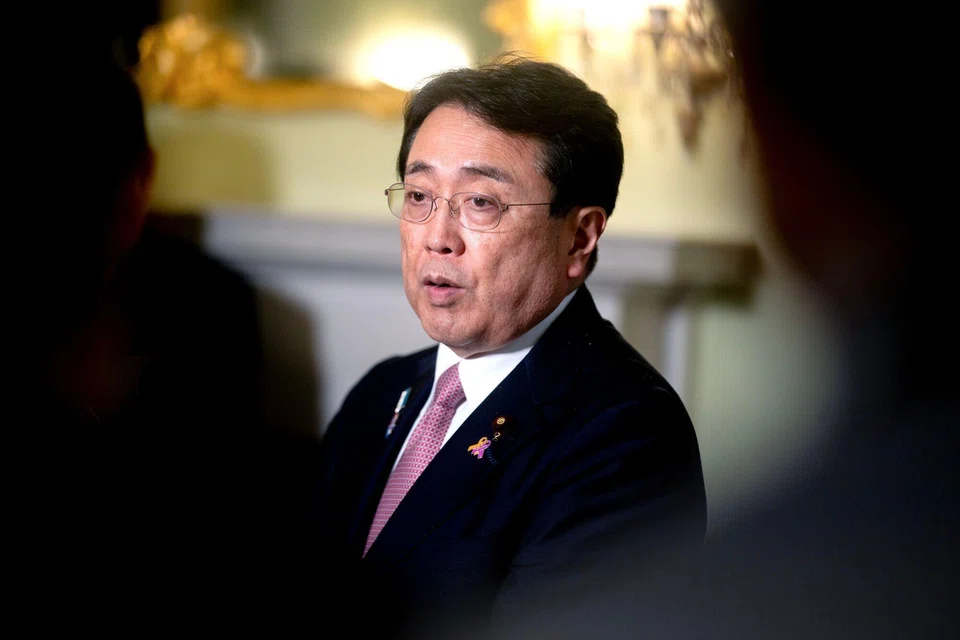
[TOKYO] The US and Japan remain far apart over which projects should be funded first under the framework of a US$550 billion investment vehicle, even as the two sides made progress in their latest round of talks, said Japanese Trade Minister Ryosei Akazawa.
He met with US Commerce Secretary Howard Lutnick on Thursday (Feb 12) in Washington, to discuss establishing the initial projects. He did not announce any projects or elaborate on the details of the private discussion.
He said: “It is premature to say what exactly we will be able to introduce to everyone as the first batch. I have stated that despite the tremendous efforts made by staff, a significant gap remains.”
Akazawa said that he and Lutnick also discussed how to join forces to help both nations diversify their supplies of critical minerals.
He added that he plans to attend the meeting of trade ministers on critical minerals on Friday, hosted by US Trade Representative Jamieson Greer.
He said that he would continue the tough negotiations, keeping in mind that Japanese Prime Minister Sanae Takaichi plans to visit the US in March.
“Prime Minister Takaichi has built an exceptionally strong bond with US President Donald Trump,” he noted.
“Bearing in mind the perspective of making her visit to the US more fruitful, we will continue to advance efforts to strengthen economic relations that serve the mutual interests of both Japan and the US.”
Prior to the latest round of negotiations, three projects were seen as finalists in a review process, sources said.

They are related to a data centre infrastructure project led by SoftBank Group, a deep sea oil terminal in the Gulf of Mexico and synthetic diamonds for semiconductors, noted sources.
The US$550 billion fund is meant to spur a wave of Japanese investment into key US industries, and was a central pillar of a tariff deal struck between the two nations last year.
Under that agreement, Trump agreed to set levies on all imports from Japan at 15 per cent, lowering the previous duty on automobiles, which is a critical driver for Japan’s economy.
The two nations identified a set of potential projects, with cost estimates ranging from US$350 million to US$100 billion, during Trump’s visit to Japan in 2025.
The framework included investments in energy, artificial intelligence and critical mineral initiatives involving companies including SoftBank, Westinghouse and Toshiba.
After a selection is made, Japan has 45 business days to start funding the initiative, based on an agreement between the countries.
If Japan elects not to fund a project, the US could claw back certain revenues or re-impose higher tariffs, said the agreement.
That raises the risk that Trump could increase the duty to the 25 per cent level he previously threatened to impose, before Japan agreed to boost investment in the US to help revitalise the US industry.
Trump has grumbled about the pace of implementation of a similar deal with South Korea, a key competitor with Japan in auto manufacturing.
The US president has already threatened to hike tariffs on imports from Korea once again, underscoring the link between the investment pledges and the tariff changes that accompanied them.
When asked about the US pressure on South Korea, Akazawa said there was no sense of distrust between his team and Lutnick’s team, given that they formed a strong bond through their tariff negotiations last year.
“We’ve reached the stage of forming specific projects,” he added. “We’re proceeding with the mindset that our country is leading other nations.” BLOOMBERG
Decoding Asia newsletter: your guide to navigating Asia in a new global order. Sign up here to get Decoding Asia newsletter. Delivered to your inbox. Free.
Share with us your feedback on BT's products and services
TRENDING NOW

Grab CEO’s wife Chloe Tong on life with Anthony Tan and finding her purpose
Three ex-employees of Envy group join Ng Yu Zhi in bankruptcy

He built the Vingroup empire. Now South-east Asia’s richest man is handing some key roles to his sons
If AI has a one-in-five chance of destroying us, what do we do with the remaining four?

