

Japanese manufacturers face fresh threat on Chinese export curbs
Tighter controls could deliver another blow to companies in Japan, which relies on China for 70% of its rare-earth imports
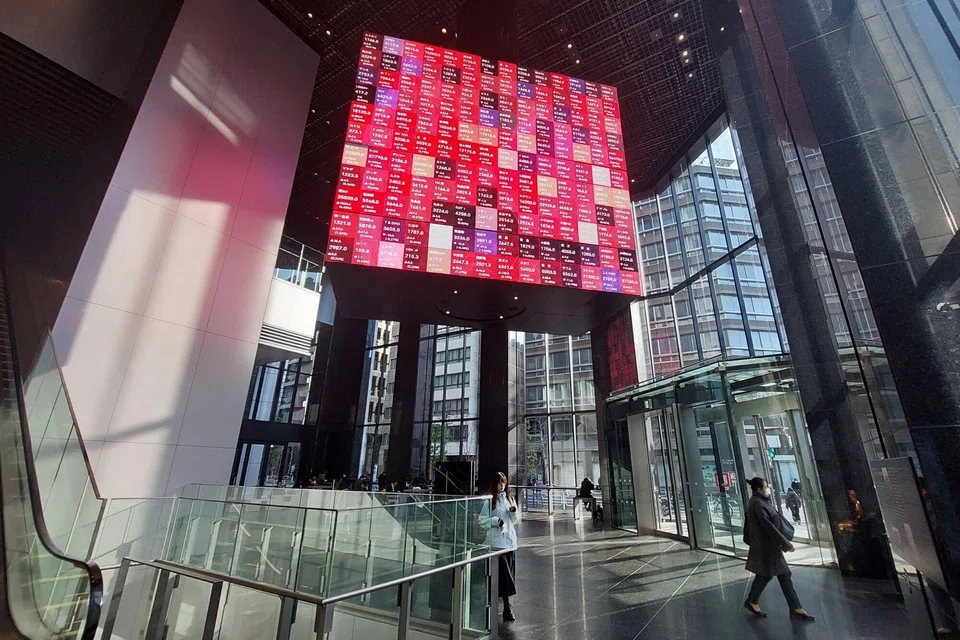
[TOKYO] China’s ban on exports of products with potential military use to Japan marks an escalation in the diplomatic spat between the countries that could disrupt global supply chains for high-tech components.
Tighter export controls for certain medium and heavy rare earth-related items are also being considered by Beijing, according to state-run China Daily, a step that could deliver another blow to manufacturers in Japan, which relies on China for 70 per cent of its rare-earth imports.
Although Japanese companies have spent more than a decade seeking to diversify, the move strikes at the heart of the country’s industrial base given that any sustained disruption would drain stockpiles, curb production of high-value industrial goods and ripple through global markets reliant on components.
When China introduced new procedures for rare-earth exports last year, Suzuki Motor was forced to suspend production of its Swift hatchback.
“Production in the car industry will face significant risks,” said Seiji Sugiura, senior analyst at Tokai Tokyo Intelligence Laboratory. “Depending on the specific brand, it’s possible that factory operations could come to a halt.”
Major Japanese trading houses, the go-between for the bulk of commodity transactions, are bracing for the fallout. Mitsubishi said that it is closely monitoring the details of the new restrictions and assessing potential impact, while Marubeni said that it is checking if any of its business could be affected.
Rare earths are categorised into light elements, such as neodymium, and medium-to-heavy elements such as dysprosium. The latter are critical not only for electric-vehicle (EV) motors and wind turbines, but also for laser equipment and aerospace components.
China leads the world in reserves and production, controlling more than 90 per cent of global refining capacity, according to the Japan Organization for Metals and Energy Security.
Japan’s Ministry of Economy, Trade and Industry said that reducing dependence on China from 85 per cent in 2009 has been uneven. Although there has been progress in diversifying away from light rare earths, the supply chain for medium and heavy elements remains concentrated in China.
Takahide Kiuchi, executive economist at Nomura Research Institute, estimates that a three-month disruption in rare-earth exports could total 660 billion yen (S$5.4 billion) in lost income and shave 0.11 per cent off Japan’s GDP.
Higher inventory levels should help alleviate any immediate pain, according to Kazuyoshi Saito, analyst at Iwai Cosmo Securities. More manufacturers now hold stockpiles meant to last years after the last round of rare-earth disruptions in 2010, when China abruptly restricted exports to Japan following a maritime dispute.
Still, he said that China still holds a virtual monopoly on certain materials such as yttrium, which is critical for motor performance at high temperatures.
Reducing reliance on China is a complex endeavour because sourcing magnets from other countries might serve as a temporary fix, rather than a long-term solution, given that third-party suppliers often remain dependent on Chinese raw materials themselves, according to Takeshi Kitaura, an analyst at Bloomberg Intelligence.
Some Japanese manufacturers are attempting to engineer their way out of the problem. Minebea Mitsumi recently developed a rare-earth-free model for small actuators used in smartphone cameras, while Astemo has unveiled a new EV motor that functions without the use of rare-earth magnets. BLOOMBERG
Decoding Asia newsletter: your guide to navigating Asia in a new global order. Sign up here to get Decoding Asia newsletter. Delivered to your inbox. Free.
Share with us your feedback on BT's products and services
TRENDING NOW

Singapore identifies 7 firms responsible for haze fires, notices issued urging action: Grace Fu
DBS remains analysts’ pick ahead of Q3 earnings after Singapore banks’ share slump

High Court rules against Julius Baer’s Singapore trust arm in US$50 million family trust dispute

Could stablecoins be the future of money?

