Japanese yen set for a dramatic U-turn in 2023
 Add BT as a preferred source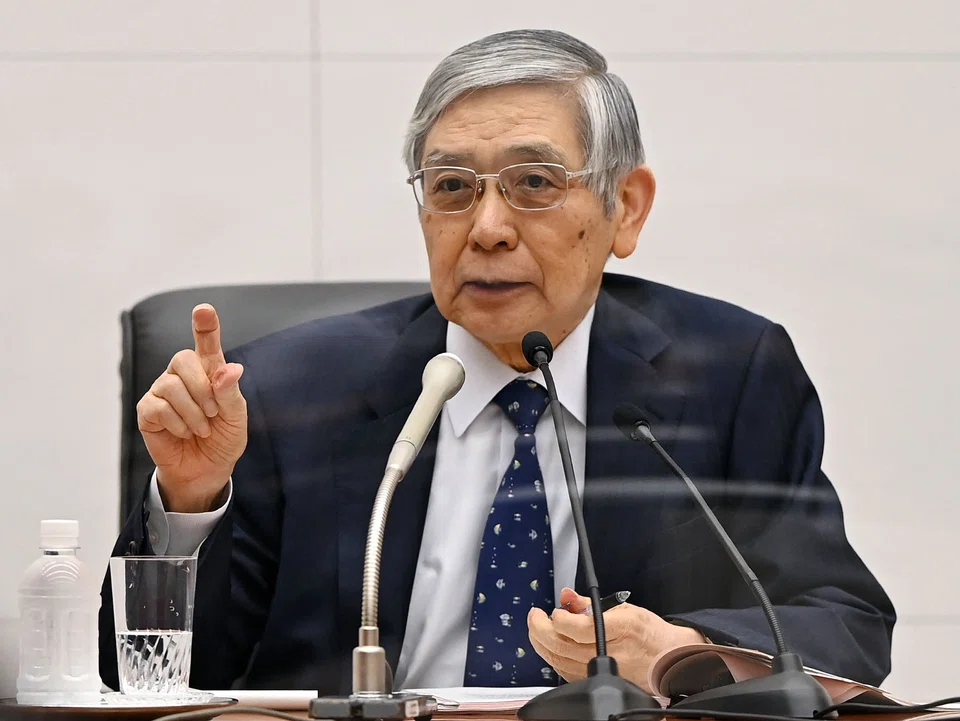
DeeperDive is a beta AI feature. Refer to full articles for the facts.
THE world’s worst-performing major currency looks poised for an impressive turnaround in 2023 as its two key drivers – a hawkish Federal Reserve and dovish Bank of Japan (BOJ) – swap places in the eyes of some investors.
The Japanese yen – a favoured short against the US dollar for most of this year – could rally more than 7 per cent from current levels next year, said Barclays and Nomura Holdings. Meanwhile, Vontobel Asset Management said that fair value is below 100 yen per US dollar – over 30 per cent stronger. State Street Global Markets saw a quick recovery as fears of aggressive US interest rate hikes recede, while T Rowe Price said there is scope for gains on a more hawkish BOJ.
Sebastien Page, global multi-asset head at T Rowe Price, which oversees US$1.3 trillion in assets, said: “We are probably approaching peak yen weakness to the dollar.” He added that when the Federal Reserve finally pauses its interest-rate hikes, there will be room for the BOJ to “surprise the market by being a bit more aggressive” on policy and boost the Japanese currency.
The bullishness is a marked change in tune from September, when hedge funds could not get enough of shorting the yen – a high-profile casualty of the BOJ’s ultra-dovish monetary policy. The widening yield gap between the US and Japan, with the former hiking rates aggressively and the latter keeping them at rock-bottom levels to boost the economy, helped push the yen down as much as 25 per cent this year.
Now, a combination of direct market intervention from the Japanese government and hopes that the Federal Reserve will slow its pace of rate hikes have helped the yen climb more than 12 per cent from its October nadir. Speculation over a potential policy tweak from the BOJ – which will be under new leadership from April – is likely to add fuel to that rebound.
A stronger yen would reverberate past the borders of the world’s third-largest economy, potentially siphoning capital worth hundreds of billions of US dollars back to Japan while bludgeoning the bottom lines of the nation’s export giants. It would also dampen demand for the popular yen carry trade – in which investors borrow in the low-yielding Japanese currency to invest in others with higher rates and pocket the difference.
Navigate Asia in
a new global order
Get the insights delivered to your inbox.
The yen was trading around a level of 134.50 yen per US dollar on Monday (Dec 5). It hit a three-decade low of 151.95 yen per US dollar in October.
Rates bet
Many bullish yen bets centre around the thesis that US interest rates are quickly approaching a peak, and the Federal Reserve may be spurred to ease its policy in a downturn. For funds such as Jupiter Asset Management and abrdn, that is a strong possibility next year.
Hachidai Ueda, senior investment specialist of fixed income at abrdn, said: “The Fed should change its tack to a relatively dovish side in a quick way in 2023.” He expected the yen to strengthen to as high as 130 yen per US dollar, as the greenback will “lack the driver to the upside which it had in 2022”.




Pricing in futures markets suggested that traders see US rates peaking around the middle of next year.
Funds are also wagering that it is only a matter of time before the BOJ, the last major developed-market central bank clinging to dovish policy, will capitulate. That is likely to happen some time after Governor Haruhiko Kuroda steps down in April, and will only further catapult the yen’s gains, said Mark Nash, money manager at Jupiter in London.
He said that Japan “justifiably will be hiking rates as well” next year, and added that there is potential for the currency to strengthen to the 120 yen per US dollar range.
Ten-year Japanese swap rates – which are popular with international funds – have climbed well beyond the BOJ’s 0.25 per cent ceiling for the benchmark bond. This signals that traders are betting the central bank will tweak its policy of capping 10-year yields.
Sonal Desai, chief investment officer for fixed income at Franklin Templeton, said that the BOJ could ditch its control over benchmark bond yields over the next three to six months. That would be “when the dollar completely moves” lower and boosts yen gains.
Seeking shelter
The cocktail of a normalising monetary policy and a still-cheap yen could also lead to Japan’s currency regaining prominence as a haven.
Investors received a taste of that when the yen outperformed its peers in the last few days of November, as concern over China’s Covid policy triggered demand for safer assets.
Expect more of that to come as fears of a downturn rip across markets, said Sven Schubert, senior investment strategist at Vontobel in Zurich.
“The yen could benefit as a US recession will likely lead to safe haven demand,” he said. While the asset management firm also likes the Swiss franc as a haven, “the starting point for the Japanese yen is more extreme” after its losses this year. BLOOMBERG
Decoding Asia newsletter: your guide to navigating Asia in a new global order. Sign up here to get Decoding Asia newsletter. Delivered to your inbox. Free.
Share with us your feedback on BT's products and services