

Japan's Dec machinery orders dip 11.9% - worst in 3 years
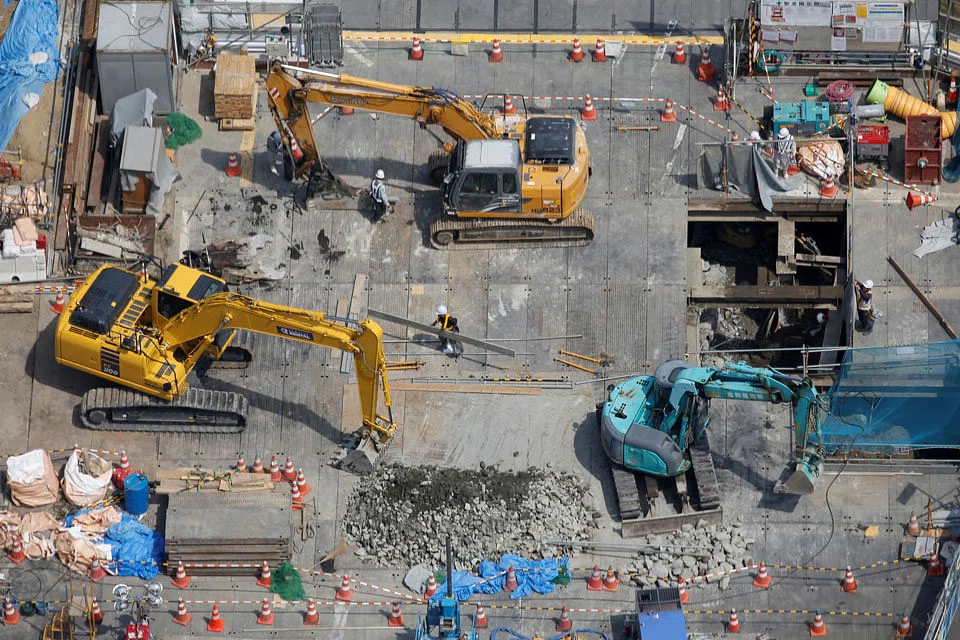
Tokyo
JAPAN'S core machinery orders tumbled in December at the fastest pace in more than three years, and companies expect orders to rise only marginally in January-March, raising concerns that recent gains in capital expenditure may taper off.
The 11.9 per cent decline in December core orders, the largest fall since May 2014, was more than the median estimate of a 2.3 per cent fall and followed a 5.7 per cent increase in November.
The machinery orders come a day after gross domestic product data for October-December showed capital expenditure had risen for five consecutive quarters, although the last quarter's modest 0.7 per cent undershot the median estimate for a 1.1 per cent rise and now suggests this run of gains may not continue at the same pace.
Core machinery orders are regarded as an indicator of capital investment six to nine months ahead.
Economists say Japan's economy can continue to grow thanks to the strength in consumer spending and exports, but they also note that consumer prices, not business investment, will ultimately determine whether the Bank of Japan's bold experiment to generate inflation succeeds.
"Capital expenditure will not accelerate, but at the same time I don't expect it to start falling," said Norio Miyagawa, senior economist at Mizuho Securities.
"Business investment can continue to grow gradually because companies have ample profits. The economy is not stuttering."
Companies surveyed by the Cabinet Office forecast that core orders, which exclude those for ships and from electric power utilities, will rise only 0.6 per cent in January-March after a 0.1 per cent decrease in October-December.
Orders from manufacturers tumbled 13.3 per cent month-on-month in December, the largest decline since February 2016.
That followed a 0.2 per cent decline in the previous month because of reduced orders from makers of metals and manufacturing equipment as well as makers of nuclear fuel.
Non-manufacturers' orders fell 7.3 per cent, following a 9.8 per cent gain in November due to declines in orders from retailers and wholesalers.
For January-March, manufacturers expect their orders to fall 5.7 per cent, while non-manufacturers expect their orders to rise 7.4 per cent.
Investors will get another chance to measure the health of Japan's economy when Reuters releases its Tankan business sentiment survey on Feb 19. Last month manufacturers' sentiment improved to the highest in 11 years .
"Looking ahead, firms are reporting the most severe capacity shortages since the early 1990s," said Marcel Thieliant, senior Japan economist at Capital Economics.
"The upshot is that non-residential investment should continue to expand this year. We've pencilled in a 2 per cent rise."
Since taking office in late 2012, Japanese Prime Minister Shinzo Abe has used tax breaks and other incentives to encourage more domestic capital investment.
Companies were slow to respond at first but in recent years several indicators have shown consistent gains in capital expenditure.
Some companies are also spending on technology to deal with chronic labour shortages caused by Japan's shrinking and rapidly ageing population. REUTERS
TRENDING NOW
Despite the de-dollarisation debate, demand for dollar liquidity in Asia is growing
URA to review guidelines on floor space to give developers more design flexibility: Chee Hong Tat

He built the Vingroup empire. Now South-east Asia’s richest man is handing some key roles to his sons
Can a first-time homebuyer couple earning S$18,000 a month afford a new EC unit?

