

Japan’s factory activity growth hits 4-year high on stockpiling, PMI shows
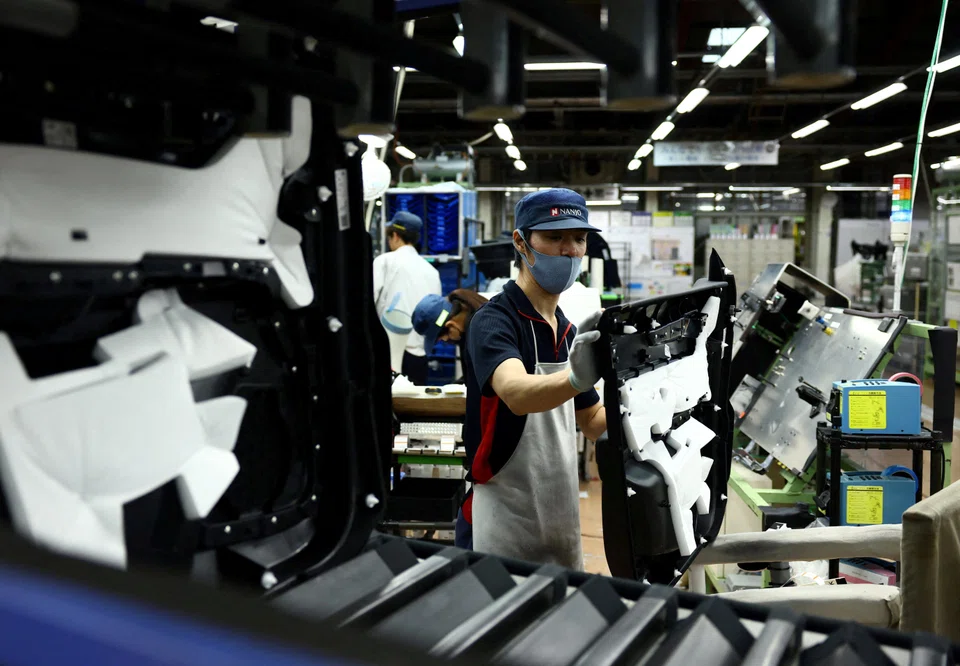
[TOKYO] Japan’s manufacturing activity grew at its strongest pace in over four years in April, as companies ramped up production and stockpiled goods amid supply chain disruptions caused by the Middle East war, a private-sector survey showed on Friday.
The final S&P Global Japan Manufacturing Purchasing Managers’ Index (PMI) rose to 55.1 in April from 51.6 in March, marking the biggest expansion since January 2022. A reading above 50.0 indicates expansion, while below that level signals contraction.
Manufacturing output surged at the fastest rate since February 2014, up sharply from March, driven by higher new orders and efforts to build inventories due to uncertainty over the war in the Middle East.
New orders rose at the quickest pace since January 2022, compared with a slower rate in March. Companies said concerns over future supply chain delays and price increases due to the Middle East conflict prompted customers to place new orders, with some also noting greater demand for AI-related technology.
However, supply chains deteriorated at the steepest rate in 15 years, with delivery times lengthening to the greatest extent since April 2011 during the aftermath of the Tohoku earthquake. This was a sharp worsening from March.
Input cost inflation surged to a three-and-a-half-year high, up from March, as companies reported higher prices for raw materials, oil and transport. Output prices rose at the fastest rate since November 2022, compared with a slower pace the previous month.



Annabel Fiddes, economics associate director at S&P Global Market Intelligence, said: “This suggests the current boost to manufacturing could soon fade unless we see reduced market uncertainty and more stable supply chain conditions, particularly if market demand weakens and stock-building activities start to reverse.”
Business confidence regarding the year-ahead outlook slipped to its second-lowest level since June 2020, down from March, as uncertainty around the Middle East war and its impact on global economic conditions dampened forecasts. REUTERS
Decoding Asia newsletter: your guide to navigating Asia in a new global order. Sign up here to get Decoding Asia newsletter. Delivered to your inbox. Free.
Share with us your feedback on BT's products and services
TRENDING NOW

LTA proposes combining car COE categories, adding rebate-surcharge system

StarHub to acquire MyRepublic’s mobile business amid ongoing telco consolidation

DBS, OCBC, UOB rout lops billions off STI as inflation, rate concerns spook investors

Grab CEO’s wife Chloe Tong on life with Anthony Tan and finding her purpose

