

Japan’s factory growth slows in March as Iran war weighs: PMI
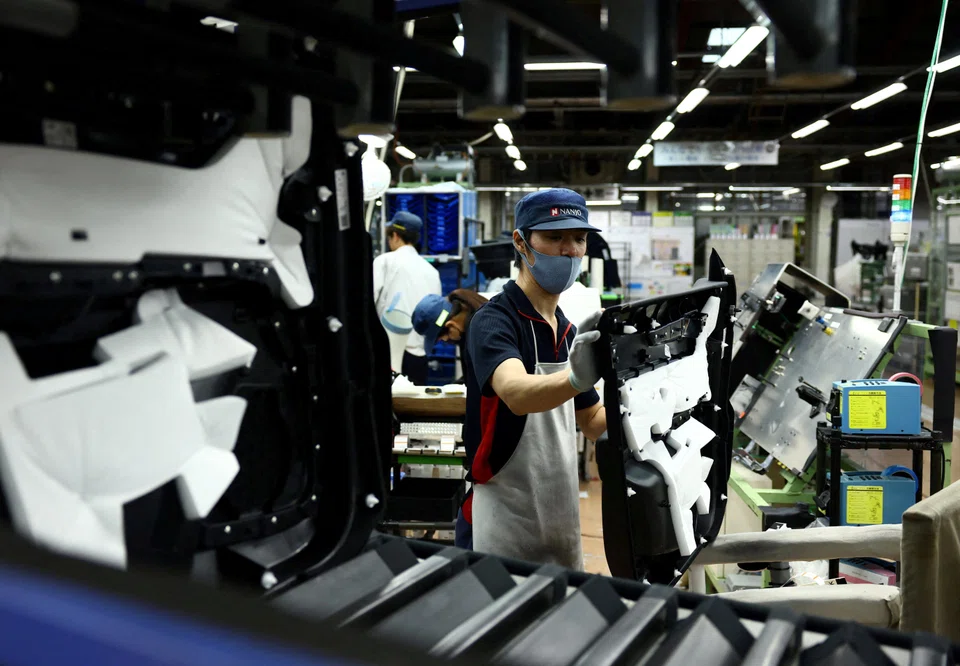
[TOKYO] Japan’s factory activity expanded at a slower pace in March as growth in output, orders and manufacturers’ confidence cooled and cost pressures hit a 19-month high due to the Middle East conflict, a private-sector survey showed on Wednesday.
The final S&P Global Japan Manufacturing Purchasing Managers’ Index (PMI) fell to 51.6 in March from a 45-month high of 53.0 in February, but slightly overshot the flash figure of 51.4. A reading above 50.0 indicates expansion, while below that level signals contraction.
Factory output and new orders both grew for a third consecutive month but at slower rates than in February.
New orders from overseas, while also slowing, stayed relatively resilient with stronger demand noted across Asia, Europe and the United States, according to the survey.
Upstream cost pressures intensified sharply, as input prices rose at the fastest rate since August 2024.
The Middle East war drove higher energy and raw material costs, while a weak yen and increased labour expenses also contributed to inflation. Output prices also increased at a faster rate than in February.


Employment growth eased to a three-month low, though firms continued hiring to address labour shortages, the survey showed. The slower increase in payrolls contributed to a build-up in backlogs of work, which rose at the quickest rate since June 2022.
Manufacturers’ business confidence softened from February’s 20-month high but remained broadly upbeat, supported by expectations of greater demand across AI, semiconductor and defence industries, though respondents expressed caution due to the Middle East war, according to the survey.
Annabel Fiddes, Economics Associate Director at S&P Global Market Intelligence, said, “The war has also fuelled greater uncertainty about the global economic outlook, dampening business confidence and resulting in more cautious hiring and purchasing activity...it will be important to monitor the PMI data in the coming months to see whether cost and supply chain pressures continue to intensify”. REUTERS
Decoding Asia newsletter: your guide to navigating Asia in a new global order. Sign up here to get Decoding Asia newsletter. Delivered to your inbox. Free.
Share with us your feedback on BT's products and services
TRENDING NOW

Could stablecoins be the future of money?

Philippine power giant First Gen rebuffs foreign offers, plans up to US$2.6 billion in expansion
GIC-backed Bank Jago sees wealth management as next growth engine as Indonesian investor base grows
The middle power moment arrives in South-east Asia – but not for Asean

