

Japan’s factory output edges up despite Mid-East headwinds
Manufacturers’ sentiment may gradually improve as concerns over energy supplies ease
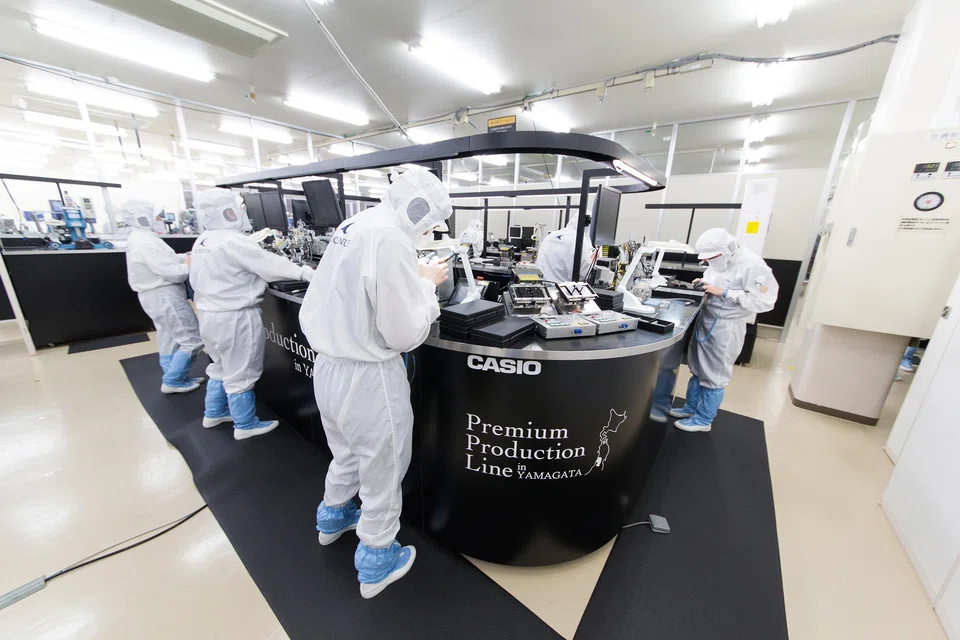
JAPAN’S industrial production eked out gains for a fourth straight month as manufacturers stayed resilient in the face of headwinds from the Middle East conflict.
Output gained 0.1 per cent in July from June, the Industry Ministry reported on Monday (Aug 31). July’s advance, which followed a robust 1.9 per cent jump in June, beat expectations, as economists had forecast a 0.7 per cent drop. Production rose 4.1 per cent from a year earlier, versus forecasts for a 3.3 per cent increase.
The continued expansion suggests manufacturers weathered uncertainty stemming from the Middle East better than expected.
Businesses have faced rising operating costs due in part to supply-chain disruptions resulting from the war in Iran, but the weak yen has helped soften that blow for exporters. Activity in the manufacturing sector has been expansionary every month in 2026.
Separate data from the ministry offered a positive signal with regards to consumption, as retail sales rose 2.4 per cent in July from June. Household spending fell seven consecutive months through June, as shoppers facing rising prices for daily necessities curbed discretionary spending.
Taken together, Monday’s figures are a sign of resilience after growth unexpectedly slowed in the second quarter amid lackluster domestic demand. Evidence that activity is holding up will keep the Bank of Japan on track for a near-term rate increase, with the next policy decision scheduled for Sep 18.
“Global demand for AI remains strong, and chip-related products, particularly those bound for Asia, have been robust, so production and trade have continued to hold up well,” said Takafumi Fujita, economist at Meiji Yasuda Research Institute. “Business investment was weighed down in the second quarter by a deterioration in corporate sentiment amid the Middle East conflict. But looking ahead, we expect investment to recover.”
Industries that recorded increases in output included production machinery, inorganic and organic chemicals and electronic components and devices. Transportation equipment manufacturing excluding motor vehicles and fabricated metal products were among decliners.
Looking ahead, manufacturers’ sentiment may gradually improve as concerns over energy supplies ease. The ministry said it expects output to rise 6.4 per cent month on month in August followed by a 4.2 per cent decline in September, an outlook that reflects the typical volatility of the data series.

The government has diversified crude oil supplies to meet demand through March 2028 as the Strait of Hormuz, a crucial artery for global oil shipments, remains virtually closed. July trade data showed that US crude accounted for 36 per cent of Japan’s imports by volume, up from 7 per cent in February, while the Middle East’s share fell to 59 per cent.
Booming global demand for AI and chips, coupled with Prime Minister Sanae Takaichi’s drive to funnel investment into those industries, is expected to provide another source of support for factory activity. The government plans to mobilize around 100 trillion yen (US$680 billion) in public and private investment for artificial intelligence and semiconductors.
The BOJ also remains optimistic about production outlook. In its outlook report released in July, the central bank said that exports and production are likely to remain broadly flat for the time being, with the impact of Middle East tensions offset by robust global demand related to AI.
“While the Takaichi administration’s growth strategy does not clearly spell out how investment will be divided between the public and private sectors, I think it will help support corporate sentiment,” Fujita said. BLOOMBERG
Decoding Asia newsletter: your guide to navigating Asia in a new global order. Sign up here to get Decoding Asia newsletter. Delivered to your inbox. Free.
Share with us your feedback on BT's products and services
TRENDING NOW

DBS, OCBC, UOB rout lops billions off STI as inflation, rate concerns spook investors

Grab CEO’s wife Chloe Tong on life with Anthony Tan and finding her purpose

OCBC sheds S$8 billion in value as shares close nearly 6% down; analysts cautious on banks

Deal between tycoon friends sparks scrutiny of Philippine power sector

