Japan’s factory output in surprise fall as Iran war takes toll on petroleum-based products
The government has played down the risk of the country facing a severe shortage of crude oil and petroleum-based goods
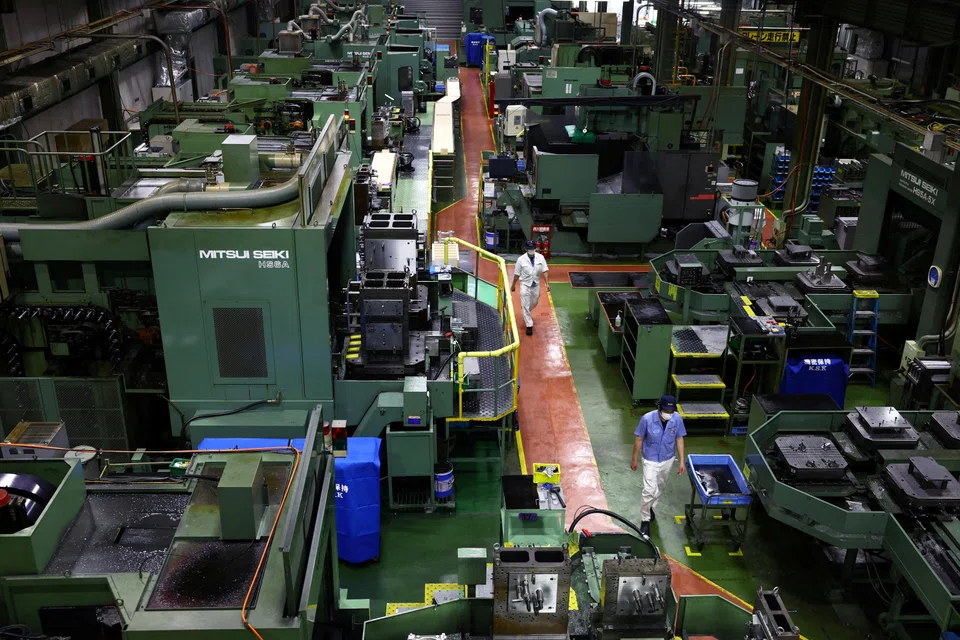
[TOKYO] Japan’s factory output unexpectedly fell in March as production tumbled for a range of chemical and petroleum-based goods, data showed on Thursday (Apr 30), suggesting the Middle East conflict is beginning to harm the country’s fragile economy.
The data highlights the dilemma the Bank of Japan faces in its efforts to raise still-low interest rates, as surging oil prices and supply constraints heighten inflationary pressure while weighing on an economy heavily reliant on fuel imports.
Industrial production shrank by 0.5 per cent in March from the previous month, government data showed, confounding market expectations for a 1.1 per cent gain and marking the second straight month of declines. It followed a 2 per cent drop in February.
Manufacturers expect output to fall again in April, predicting a decline of 0.7 per cent on an adjusted estimate.
“Along with rising costs from high crude oil prices, supply disruptions in goods like naphtha, if prolonged, would weigh heavily on factory activity,” said Masato Koike, senior economist at Sompo Institute Plus.
Petroleum-based goods led the downturn, with the production of polyethylene plunging 27 per cent and polypropylene tumbling 15 per cent. Domestic production of fuels was also sharply lower across the board, with petrol output falling 7.3 per cent and diesel output sliding 14.3 per cent, the data showed.
Supply shortages of such intermediate chemical products could push up prices for a wide range of goods, and add to mounting inflationary pressures from a weak yen, analysts say.
“Wrapping material for food is seeing sharp price hikes due to the Middle East conflict. A shortage of naphtha could lead to a rush in price hikes for food products as soon as this summer,” private think tank Teikoku Databank said in a research note.
Japan relies on the Middle East for some 95 per cent of its crude oil, much of which is channelled through the Strait of Hormuz, a waterway that has been effectively shut by Iran after the US-Israeli attack.



The government has played down the risk of Japan facing a severe shortage of crude oil and petroleum-based goods.
Japan maintains 1.8 months’ worth of inventory for these intermediate chemical products and has largely been able to minimise the impact on downstream shipments, the government said in releasing the factory output data on Thursday. REUTERS
Decoding Asia newsletter: your guide to navigating Asia in a new global order. Sign up here to get Decoding Asia newsletter. Delivered to your inbox. Free.
Share with us your feedback on BT's products and services