Japan's record economic plunge wipes out Abenomics gains
Economy suffers 3rd straight quarter of contraction; Q2 GDP falls annualised 27.8%
 Add BT as a preferred source
DeeperDive is a beta AI feature. Refer to full articles for the facts.
Tokyo
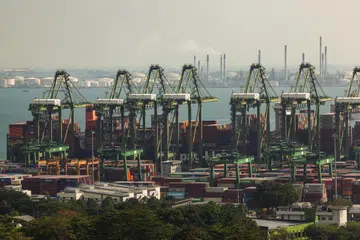
JAPAN was hit by its biggest economic slump on record in the second quarter as the coronavirus pandemic emptied shopping malls and crushed demand for cars and other exports, bolstering the case for bolder policy action to prevent a deeper recession.
The third straight quarter of declines knocked the size of real gross domestic product (GDP) to decade-low levels, wiping out the benefits brought by Prime Minister Shinzo Abe's "Abenomics" stimulus policies deployed in late 2012.
While the economy is emerging from the doldrums after lockdowns were lifted in late May, many analysts expect any rebound in the current quarter to be modest as a renewed rise in infections is keeping consumers' purse-strings tight.
"The big decline can be explained by the decrease in consumption and exports," said Takeshi Minami, chief economist at Norinchukin Research Institute.
"I expect growth to turn positive in the July-September quarter. But, globally, the rebound is sluggish everywhere except for China."
Navigate Asia in
a new global order
Get the insights delivered to your inbox.
The world's third-largest economy shrank an annualised 27.8 per cent in April-June, government data showed on Monday, marking the biggest decline since comparable data became available in 1980 and slightly off a 27.2 per cent fall forecast in a Reuters poll of analysts.
While the contraction was smaller than a 32.9 per cent decrease in the United States, it was much bigger than a 17.8 per cent fall in Japan in the first quarter of 2009, when the Lehman Brothers collapse jolted global financial markets.
The size of Japan's real GDP shrank to 485 trillion yen (S$6.26 trillion), the lowest since April-June 2011, when Japan was still suffering from two decades of deflation and economic stagnation.
Japanese stocks fell on Monday by the most in two weeks and yields on most government bonds fell on the weak GDP data.
Underlying Japan's dismal reading was private consumption, which plunged a record 8.2 per cent as lock-down measures to prevent the spread of the virus kept consumers at home.
External demand - or exports minus imports - shaved a record 3.0 percentage point off GDP, as overseas shipments tumbled 18.5 per cent, with auto exports hit particularly hard.
Falling global vehicle sales have hurt automakers like Mazda Motor Corp and Nissan Motor, among the biggest drivers of Japan's economy.
Capital expenditure declined 1.5 per cent in the second quarter, less than a forecast 4.2 per cent fall, as solid software investment made up for weak spending in other sectors.
Economy Minister Yasutoshi Nishimura conceded the GDP readings were "pretty severe", but pointed to some bright spots such as a recent pickup in consumption.
However, some analysts warn that companies could cut jobs and spending if a resurgence in infections and soft global demand continue to hurt their bottom line.
China tensions may also weigh on the fragile recovery. About 90 per cent of economists surveyed by Reuters expect the conflict to affect Japan's economy. "Demand for business investment is expected to fall due to worsening corporate profits and risk of the coronavirus spreading," said Saisuke Sakai, senior economist at Mizuho Research institute.
"There is a chance economic activity may stagnate if major nations adopt lockdown measures again, or Japan re-issues a state of emergency," he said. REUTERS
Decoding Asia newsletter: your guide to navigating Asia in a new global order. Sign up here to get Decoding Asia newsletter. Delivered to your inbox. Free.
Share with us your feedback on BT's products and services