

Japan’s Takaichi dissolves parliament for shortest campaign
She hopes for a boost to the razor-thin majority she currently holds in the lower house
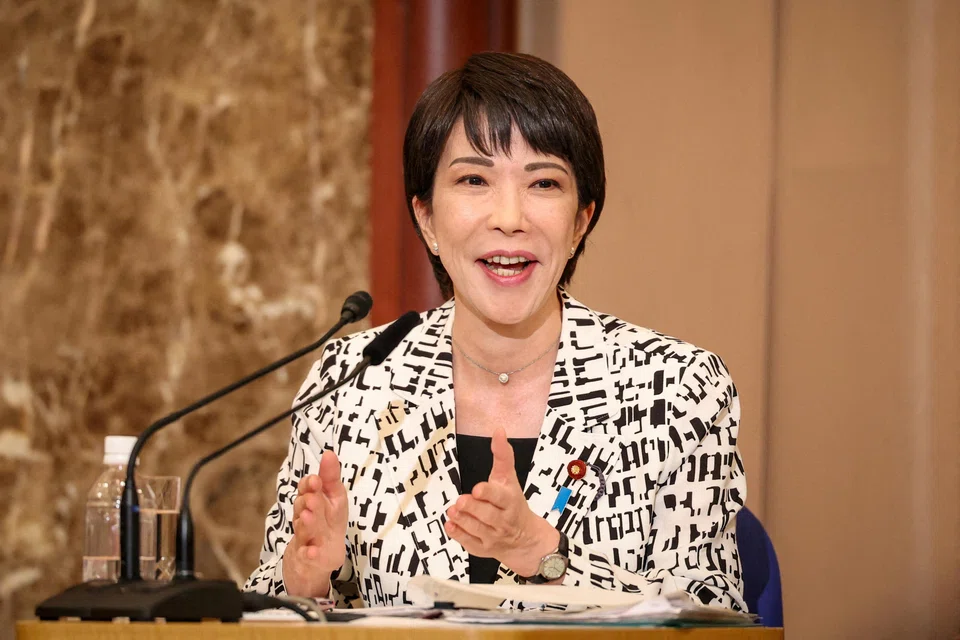
[TOKYO] Japanese Prime Minister Sanae Takaichi dissolved the lower chamber of parliament on Friday (Jan 23) to call a snap election for Feb 8, in an attempt to give a boost to the razor-thin majority she currently holds in the lower house and consolidate power.
Campaigning will officially start on Tuesday (Jan 27), but the time between the diet’s dissolution and voters heading to the polls will be the shortest on record, at 16 days. The poll will also be held during one of the coldest months in Japan, raising concerns about voter turnout in snowy areas.
Takaichi appears to be banking on her high personal approval ratings to give her a national mandate to pursue expansionary fiscal policies. She has promised a temporary sales tax cut on food if she wins a fresh mandate for her new coalition.
“I will put my job as prime minister on the line with these election results,” Takaichi said on Monday when she announced her plans to hold the election, adding that a failure to secure a majority would likely result in a different premier taking power.
“There are many outstanding issues that require political stability to tackle,” Shunichi Suzuki, the Secretary-General of the ruling Liberal Democratic Party (LDP), said after the dissolution. “Our goal is to restore and solidify political stability in Japan through this election,” he added.
Inflation is likely to weigh on voters’ minds as they head to the polls. A survey by public broadcaster NHK conducted earlier in January showed that 45 per cent of respondents thought that the top priority for the government should be the high cost of living.
Soaring food costs are a key component driving broader inflation higher, with data on Friday showing consumer price growth has stayed above the central bank’s 2 per cent target for four straight calendar years. The proportion of food spending within overall household consumption came to 28.9 per cent in November, the highest for that month since comparable data became available in 2000.
Putting the suspension of the food sales tax at the forefront of the ruling Liberal Democratic Party’s campaign pledges indicates a marked shift from its more reserved approach to cutting taxes in the past. It shows closer alignment with the fiscal policies of its new junior partner, the Japan Innovation Party (JIP), which had already campaigned for the two-year tax cut on food in a previous election.
Calling a snap election – a prerogative reserved only for the prime minister – when the opposition is in disarray has been part of the ruling LDP’s playbook of keeping its hold on power for most of Japan’s postwar period.
There are a number of factors complicating that picture this time around.
Takaichi’s call for a dissolution has brought together the biggest opposition party and the LDP’s former coalition partner, creating a larger opposition bloc called the Centrist Reform Alliance. The new party has raised the risk of the prime minister’s election gamble.
The compatibility of the new partnership between the LDP and JIP is also untested in an election. While the LDP cooperated with its former partner Komeito during elections and could rely on its Buddhist organisation-backed grassroots support, the LDP and JIP are aligned only on policy. Co-head of the JIP Hirofumi Yoshimura has made it clear that he has no intention of coordinating candidates and is willing to “battle it out” with the LDP if it came to it.
Other smaller parties could also dent LDP votes. The small but influential Democratic Party for the People has proved to lead successful campaigns previously, with its blunt slogan of “increase take-home pay.” Sanseito, a right-wing fringe party, came in fourth in the previous upper-house election held last year, taking advantage of its untainted image and at times playing into simmering anti-foreigner sentiment. BLOOMBERG
Decoding Asia newsletter: your guide to navigating Asia in a new global order. Sign up here to get Decoding Asia newsletter. Delivered to your inbox. Free.
Share with us your feedback on BT's products and services
TRENDING NOW

LTA proposes combining car COE categories, adding rebate-surcharge system

StarHub to acquire MyRepublic’s mobile business amid ongoing telco consolidation

DBS, OCBC, UOB rout lops billions off STI as inflation, rate concerns spook investors

Grab CEO’s wife Chloe Tong on life with Anthony Tan and finding her purpose

