

Jobless Americans stuck in backlog nightmare as pandemic benefits expire
 Add BT as a preferred source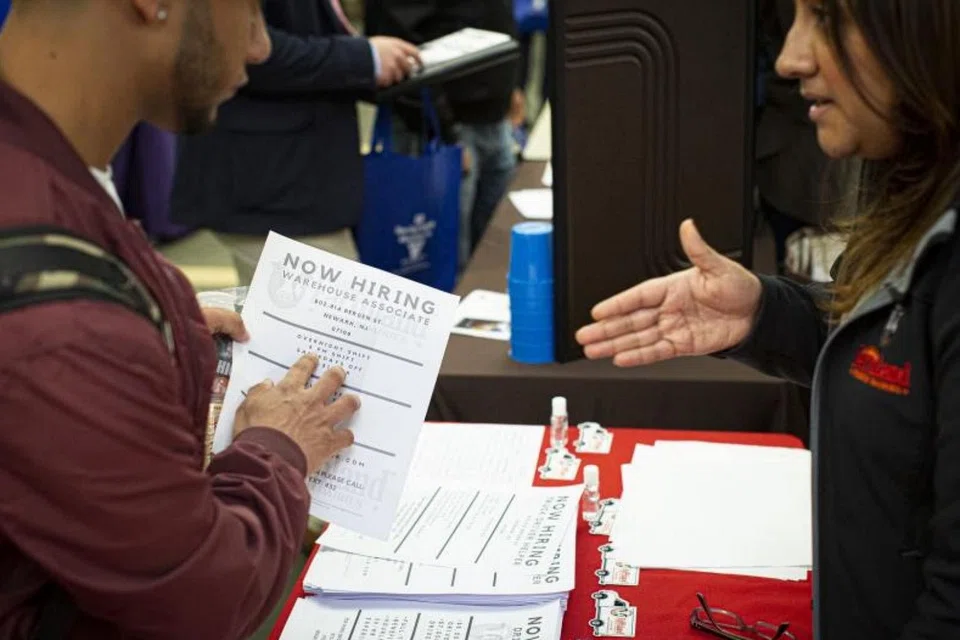
DeeperDive is a beta AI feature. Refer to full articles for the facts.
[WASHINGTON] For millions of Americans, the Labour Day weekend will bring the end of federally funded emergency unemployment benefits and a lurch into the uncertain economic recovery.
Then there are those stranded in a bureaucratic nightmare, still waiting for benefits they are owed.
Laura Ulrich, 59, was laid off in January from her job managing the distribution of coins in the Baltimore area for an armoured car company. She spent the past week hoping that a summer of contacting officials in Maryland was going to bear fruit and more than US$14,000 in unemployment insurance would finally land.
"It's becoming so frustrating. It's wearing on me. It's wearing on my blood pressure. I can just feel it," Ms Ulrich said.
On Saturday, after Bloomberg News raised her case with the office of Maryland Governor Larry Hogan, US$11,200 finally landed in her bank account.
Ms Ulrich's happy moment came after months of frustrating encounters with a vital but occasionally cruel pillar of the economic safety net, experiences shared by many of the 8.4 million Americans who remained unemployed in August.
Navigate Asia in
a new global order
Get the insights delivered to your inbox.
Their ordeal highlights how the debate over whether supplemental benefits have kept people home and held back the job-market recovery often misses just how difficult securing aid in the first place can be for applicants.
According to US Treasury data, the government has spent more than US$830 billion on unemployment insurance from the onset of the Covid-19 crisis through Sept 1.
State agencies that handle these payments have long suffered from antiquated systems and a chronic lack of staffing. The pandemic made it worse with the massive influx of people who lost their jobs and a wave of alleged fraud that led states to freeze numerous claims - including Ms Ulrich's - pending review.
In the year to June 30, according to Department of Labor data, 58 per cent of claims nationally resulted in a first payment within the 21 days required. Not much has changed since June.
"I'm not seeing a lot of states meeting that benchmark yet," said Michele Evermore, a senior policy advisor at the labor department.
In Florida, 58,000 unemployment accounts were frozen over the summer after a data breach resulted in personal details being leaked. State officials said all "verified" accounts affected have been unlocked. As of Sept 1, 47,288 claims more widely were still awaiting verification, according to Florida's public data dashboard.
Maryland has paid out 41 per cent of claims within 21 days over the past year, according to federal data.
Frustration over delays led activists to sue the state. The Unemployed Workers Union, the group leading the lawsuit, has collected more than 5,000 complaints from people caught in the backlog, according to Sharon Black, one of the organisers.
A spokesman for Governor Hogan, Michael Ricci, said 20,795 unemployment claims were still "pending" as of this week. He blamed delays on the state's strict procedures to verify applications.
In Georgia, the median age of appeals filed by claimants was 322 days, or more than 11 months, at the end of June, according to researchers at the Southern Poverty Law Centre. The State Department of Labor is working seven days a week processing appeals, but it will likely take months to clear the backlog, said spokeswoman Kersha Cartwright.
"It really just pushes people into desperation," said Wingo Smith, a regional policy analyst at the SPLC, which has sued Georgia on behalf of residents waiting for benefits.
Ms Ulrich, in Maryland, is experiencing it firsthand. Frustrated with her inability to get anyone on the phone after her claim was wrongly flagged for fraud, she took to email.
Every few days, she responded to a generic state government address from which a woman named Angela had first emailed her in May. In recent months, her messages became a log of her distress. "What is the update? I will kill myself and make it very public. I want my earned money now!" Ms Ulrich emailed July 1.
"Is this a scam?" she asked July 12.
"Why am I not able to get a response or my monies due me?" she said on July 20. "I hope no one you know is forced into poverty by their government."
To Mr Evermore, who before joining the Biden administration worked as an advocate for reform of the unemployment system, cases like Ms Ulrich's illustrate the need for a long-delayed makeover of unemployment insurance, or UI.
"To really fix things we need comprehensive UI reform and 10 years of effort," Evermore said.
The administration has labeled it a priority, but its prospects remain unclear. Many Democrats would like to enshrine expanded benefits for all workers. Republicans are opposed.
One problem hanging over the debate has been what state and federal officials say has been a huge amount of fraud in the unemployment system - although firm data on that is hard to come by.
Senior Republicans in Congress this week asked the Government Accountability Office to come up with a definitive reckoning of the fraud by the end of 2021.
Because of the fraud concerns, states are now re-examining unemployment claims approved early in the pandemic and reversing decisions. They are also sending out bills for "overpayments" to an untold number of beneficiaries, discussions of which have consumed social media groups for unemployed workers in recent weeks.
The resulting self-perpetuating bureaucratic mess will take at least a year to clear nationally, said Andrew Stettner, a senior fellow at the think tank Century Foundation. The unemployment system remains akin to an assembly line "that just can't handle the volume," Mr Stettner said. "If you put too many things on it, the whole thing breaks."
Until the pandemic, Tiffany Longo made a good living as an independent contractor installing epoxy floors in commercial building and residential garages in Maryland.
The work disappeared in the spring of 2020 and has been slow to reappear, said Ms Longo, 35.
Last May, her benefits under the federal Pandemic Unemployment Assistance program were cut off after her account was wrongly flagged for fraud.
Ms Longo eventually made it through an identity verification process only to discover that her account was subject to another review likely to take weeks for missing a deadline to re-submit proof of her past employment.
Why did she miss the deadline? Because her account had been locked as a result of the fraud flag.
She wants to use the more than US$8,000 she is owed to pay back loans to friends and family and as working capital to buy the supplies she needs to actually do her job. In the meantime, she's cobbling together a living. She spent Wednesday playing a juror in a mock trial at a downtown Baltimore hotel. It paid her US$200.
"I'm doing anything and everything," Ms Longo said. "But I'm not just going to sit home and wait."
BLOOMBERG
Decoding Asia newsletter: your guide to navigating Asia in a new global order. Sign up here to get Decoding Asia newsletter. Delivered to your inbox. Free.
Share with us your feedback on BT's products and services
TRENDING NOW
‘Boring’ is the new black: The stars are aligning for a Singapore stock market revival

Near sell-out launches in March boost developer sales to 1,300 units after four slow months

China pips the US if Asean is forced to choose, but analysts warn against reading it like a sports result

Genting Singapore’s Lim Kok Thay receives S$7.5 million pay package for FY2025

