



Li Ka-shing is remaking his empire as a generational shift looms
The bulk of CK Asset’s projects are located in Hong Kong and mainland China
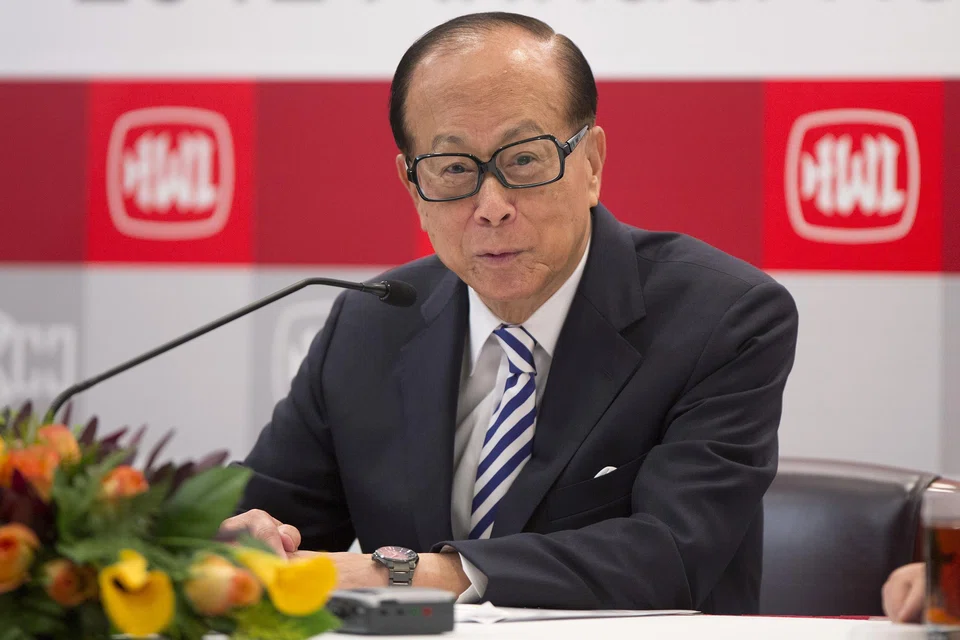
[HONG KONG] Li Ka-shing and his family set in motion a series of deals this year that stand to completely transform his business empire.
The Hong Kong billionaire’s flagship conglomerate, CK Hutchison Holdings, is pursuing three major moves: an initial public offering of its retail arm to raise at least US$2 billion for its largest revenue contributor, a potential listing or partial sale of its global telecom operations, and talks to sell 43 port assets, representing the bulk of its global portfolio for more than US$19 billion in cash.
The Li family, which controls about 30 per cent of CK Hutchison, believes selling and spinning off these businesses can unlock far greater value than the market currently assigns to them under the existing structure, a source familiar with the plans said, asking not to be identified as the matter is private. By separating the assets, they hope to fetch higher prices and narrow the steep discount at which the company trades relative to its net asset value.
If CK Hutchison completes all these deals, it would have shed or spun off most of its core operating businesses, handing Li’s elder son Victor Li, who now chairs the group, a fresh war chest to reshape the company in an era defined by trade tensions and technological disruption, including the rise of artificial intelligence.
“The Li family has accumulated massive wealth over the past decades,” said Vincent Lam, chief investment officer at Hong Kong-based VL Asset Management. “The most important thing for the family now is to make sure that the wealth is monetised and safeguarded.”
The moves mark a generational shift for one of Hong Kong’s most storied business empires. Li Ka-shing built CK Hutchison into the world’s leading port operator and a major player in European telecommunications, leveraging political connections and riding on global expansion.
Victor, who took over in 2018, faces the challenge of steering the group through a far more volatile environment, where geopolitical sensitivities and regulatory hurdles loom large.
In his heyday, Li’s wealth ballooned as Hong Kong grew into an international financial hub, capitalising on China’s opening to a world that embraced collaboration and deepening trade ties.
His uncanny sense of timing earned him the nickname “Superman”. He expanded aggressively abroad – buying ports in Panama, building mobile networks in the UK and operating oil plants in Canada.
SEE ALSO
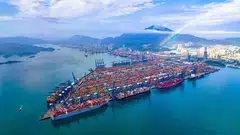
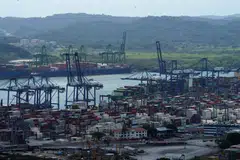
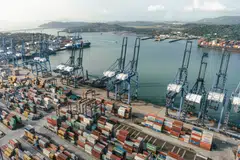
By the early 2000s, he had built his group into the world’s largest port operator and the biggest Asian investor in European telecommunications.
But the landscape has changed since Chinese President Xi Jinping assumed power, tightening the state’s grip on the private sector and keeping once-powerful tycoons at arm’s length. In Hong Kong, Li and his peers are viewed with growing scepticism by Beijing, while abroad, Li’s perceived ties with China have raised suspicions and created political hurdles for his operations, many of which sit in highly regulated industries.
Not easy
The Li family has lately found itself on the wrong side of the politics. The 97-year-old billionaire, who once rubbed shoulders with China’s top leaders, has fallen out of favour with Xi.
Over the past decade, state media have criticised him for selling assets in China and for remarks seen as sympathetic to Hong Kong’s pro-democracy youth. Beijing’s anger over CK Hutchison’s planned ports sale was so intense that state-owned firms were instructed to pause dealings with the Lis.
“Li’s empire was built on intricate political connections he developed in the past,” said Lam. “That’s not easy for Victor to inherit because the world’s and China’s political environments have changed drastically.” According to sources familiar with the family’s thinking, geopolitics was not a factor in their decision to pursue these deals. The Lis believe that restructuring the portfolio is the most effective way to bolster value.
But regardless of the Li family’s motivations, US-China rivalry may now be the biggest obstacle to realising their plans.
Talks over the ports sale have slowed amid regulatory hurdles and uncertainty surrounding the buying consortium’s structure, particularly after CK Hutchison invited China Cosco Shipping into negotiations to appease Beijing’s sensitivities over the involvement of US investment firm BlackRock.
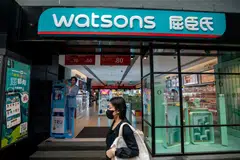
Meanwhile, deliberations on the potential listing of retail arm AS Watson Group have been on-again, off-again since 2013, hampered by market volatility, while telecom mergers frequently encounter intense antitrust scrutiny.
CK Hutchison has been advised to move more cautiously with deals due to the delicate geopolitical environment, and to notify Chinese regulators on the potential retail listing because it involves operations in the country, one of the sources familiar said.
Still, the potential deals have helped reverse depressed market sentiment, narrowing steep trading discounts to net asset value and driving a 32 per cent stock surge this year, outperforming the benchmark Hang Seng Index.
CK Hutchison did not respond to a request for comment.
While the Li family is divesting CK Hutchison, it’s been raising its holdings in property arm CK Asset Holdings, now owning a stake of about 49 per cent. The bulk of CK Asset’s projects are in Hong Kong and mainland China. It also operates the British brewer and pub chain Greene King. “The Li family is bold in selling assets when the price is right,” said Gary Ng, senior economist at Natixis. “The series of moves can be a buildup of cash for acquisitions, leading to a sector shift in the company.”
Rethinking strategy
CK Hutchison is not alone in rethinking strategy. With Hong Kong’s global status diminished amid China’s growing influence and rising trade barriers, other storied business groups are also reshaping themselves.
Jardine Matheson Holdings, a British-rooted conglomerate in Hong Kong, has been taking measures to modernise its management and accelerate divestments.
Controlled for generations by the Keswick family, the 193-year-old group in recent years dismantled its long-criticised cross-shareholding structure and appointed several executives with private equity backgrounds to its top management. Its property unit, Hongkong Land Holdings, aims to raise US$10 billion over the next decade through asset disposals and spinoffs.
The company is transitioning from being an owner-operator to a long-term, engaged investor, Jardine’s executive chairman Ben Keswick said in a statement for the group’s 2024 earnings report.
“Both Jardine and CK operate conglomerates with various listed subsidiaries – and arguably they both are being proactive in extracting value,” said David Blennerhassett, an analyst at Quiddity Advisors. BLOOMBERG
Decoding Asia newsletter: your guide to navigating Asia in a new global order. Sign up here to get Decoding Asia newsletter. Delivered to your inbox. Free.
Share with us your feedback on BT's products and services
TRENDING NOW

Grab CEO’s wife Chloe Tong on life with Anthony Tan and finding her purpose

Hwa Seng Builder, two China companies win S$1.2 billion Tuas Road Viaduct phase two contracts

Deal between tycoon friends sparks scrutiny of Philippine power sector

Canada is upping oil flows to Asia, but South-east Asia’s refineries aren’t ready to handle them yet

