

Liverpool Street Station development stirs controversy in London
 Add BT as a preferred source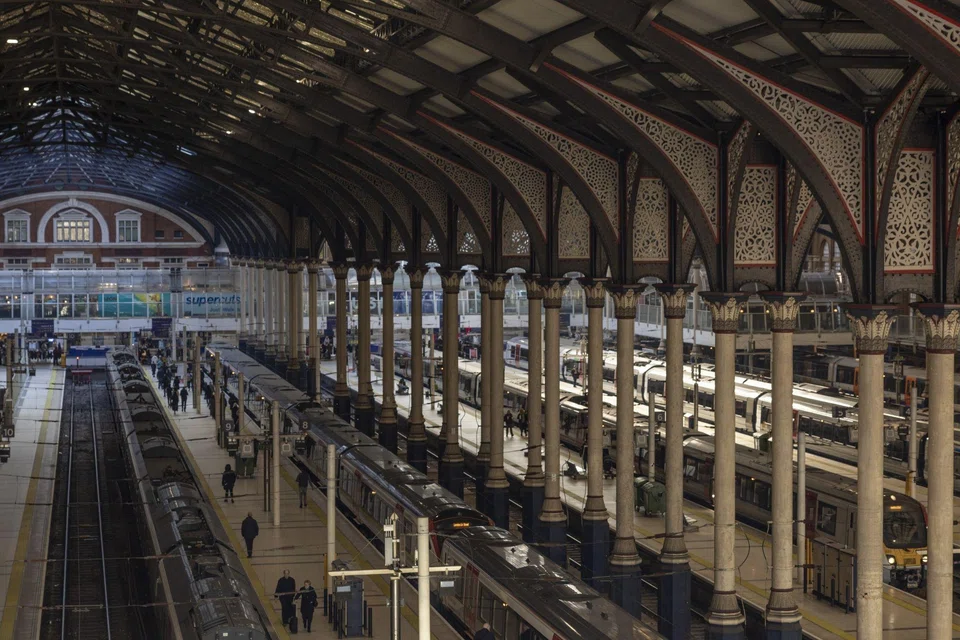
DeeperDive is a beta AI feature. Refer to full articles for the facts.
A PLAN to upgrade London’s Liverpool Street Station is being met with opposition from historic preservationists, who say that redevelopment would overwhelm the Victorian rail hub.
The project is being led by the Sellar Property Group – the UK developer of high-profile London properties such as The Shard and Paddington Square – in conjunction with rail development company MTR and Network Rail, which owns and manages most of the country’s rail infrastructure.
Designed by Swiss architecture company Herzog and de Meuron, the £1.5 billion (S$2.4 billion) project will add 840,000 square feet of office space to two towers that will flank the station. Parts of the existing structure and its surroundings will have to be swept away to make room.
But after two public consultations, several UK preservation groups, led by the national heritage body Historic England, have voiced concerns.
Calling the plan “fundamentally misconceived”, Historic England said that the proposed construction would “trample” on the station and a neighbouring hotel, and threaten views of Saint Paul’s Cathedral. In December, the group boosted the historic protections covering several features of the station and its surrounding area. Britain’s Victorian Society, meanwhile, started a crowdfunding campaign to halt the redevelopment.
The elegant Victorian-era building in the centre of the dispute has been dubbed “London’s most picturesque terminus” by John Betjeman, a poet and defender of traditional architecture. In the 1970s, he successfully led a campaign to save Liverpool Street Station from being demolished.
Navigate Asia in
a new global order
Get the insights delivered to your inbox.
Since then, the station has become an increasingly critical cog in London’s transport system. Around 135 million passengers pass through the station’s elaborate Victorian halls annually, often arriving by the Underground – the city’s rapid transit system – or the new Elizabeth Line, as they transfer to commuter services to Essex and Cambridge, to Stansted Airport and beyond, across East Anglia.
Situated right on the border between London’s financial district and the bar-filled inner East End, the building’s broad concourse is busy during the evenings too, as people arrive for a night out. The station even has a grand pub of its own.
Liverpool Street Station’s passenger numbers have increased dramatically since it was last refurbished in the 1980s, and its facilities are now under intense pressure. The Sellar plan would pump £450 million into upgrades, including an expanded concourse twice the area of the current one, a 60 per cent increase in the number of ticket barriers, and six new access elevators.



The intention is to deliver what Sellar development director Barry Ostle calls a “world-class transit hub for future generations” – without the use of public funds.
To pay for the station improvements, Sellar proposes adding a dense mix of hotel, office and retail space in new 16-storey towers that will adjoin the station, capped with a publicly accessible roof garden and swimming pool.
The developers say that the complex will be built to a very high energy-efficiency standard, to meet increasing demand from companies for more sustainable workspaces: Heat pumps, reclaimed rainwater and greywater, and highly efficient windows will reduce the buildings’ resource demands and lower carbon emissions.
This kind of model, in which developers get the green light for commercial projects around public transportation in return for funding station renovations or rebuilds, has been used before in London.
In 2015, King’s Cross Station gained a new semicircular concourse to the side of its historic building as part of a redevelopment of the wider surrounding area. Similarly, one justification for constructing The Shard – Western Europe’s highest skyscraper – was that Sellar would use some of its profits to fund the reconstruction of London Bridge Station, located at The Shard’s foot.
Early renderings of the Liverpool Street Station project nonetheless suggest why this proposal has encountered more resistance than its predecessors.
The redevelopment and expansion of King’s Cross, an elegantly austere building completed in 1852, did nothing to overwhelm or block the splendid Victorian train sheds, and its new hall is the same height as the original station. At London Bridge, meanwhile, there was little to spoil – the old station was a dismal, unloved 1970s affair, and the far more spacious and pleasant new building easily improves upon it.
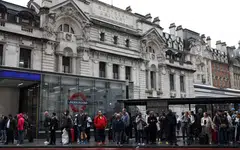
Liverpool Street Station is a different story: It is a splendid neo-Gothic building in yellow London Stock brick, with a soaring glass roof held up by beautiful iron vaulting. Sellar has vouched that the train sheds will not be touched, but parts of the glass concourse roof will be skinned off, and some structures around the entrance will be demolished – notably, an elaborate Victorian building housing what could (externally, at least) be one of the world’s grandest McDonald’s outlets.
However, what has drawn the most objection from critics is the scale of the new buildings that will sandwich the station. Art magazine Apollo described the development that would partially cover the former Great Eastern Hotel as “an overwhelming tower of 11 storeys squatting on top of the fine Victorian hotel like a monstrous succubus in a nightmare”.
TV personality Griff Rhys Jones, who has assumed leadership of a new “supergroup” of eight UK heritage societies against the project, described the plan in similarly colourful terms: “It’s like putting a giant clown’s hat on top of Saint Paul’s Cathedral.”
Architecture critic Rowan Moore, meanwhile, noted that the project’s “implausibly ethereal” renderings were too limited and sketchy to judge the project’s true impact.
Sellar’s Ostle defended the Herzog and de Meuron plans, emphasising that the original 1870s fabric of the station will be untouched, and that the renovation will restore and open up parts of the former Great Eastern Hotel to public use.
“We think it forms a very attractive juxtaposition of old and new,” he said. “That’s something that’s always been a part of London’s DNA.”
Other sceptics of the Sellar plan have pointed out that the size of the office towers does not exactly reflect London’s post-Covid workplace landscape. In 2022, the cost per desk of commercial real estate fell to a record low as many people continued to work from home. Considering that, the plans for the station are “strangely out of date”, said cultural historian Charles Saumarez Smith.
But Ostle is confident that the project’s energy efficiency and amenities – plus its strategic location atop an important transportation hub – will allow it to tap a “drift to prime” office space in central London.
This is not an easy transformation to sell, but it does come with sweeteners. Last renovated in the 1980s, the current train station suffers from overcrowding and poor usability for travellers in wheelchairs – step-free access is limited to a single elevator, with stairs and escalators nearly the only way to reach the sunken concourse.
Based on renderings, the redesign would alleviate this situation by creating an additional access platform at the level of the street outside. People with limited mobility would also gain access to the Underground, which is presently absent.
While few would dispute the value of those station improvements, Londoners have learnt to be sceptical about buzzy amenities such as sky gardens and rooftop swimming pools. And the intensity of the backlash to the proposal suggests that Network Rail and the developers may find themselves having a tough time convincing residents, historic preservationists and the City of London Corporation – whose planning approval is required – that the project’s benefits outweigh the potential costs. BLOOMBERG
Decoding Asia newsletter: your guide to navigating Asia in a new global order. Sign up here to get Decoding Asia newsletter. Delivered to your inbox. Free.
Share with us your feedback on BT's products and services
TRENDING NOW

‘Boring’ is the new black: The stars are aligning for a Singapore stock market revival

Near sell-out launches in March boost developer sales to 1,300 units after four slow months

China pips the US if Asean is forced to choose, but analysts warn against reading it like a sports result

Genting Singapore’s Lim Kok Thay receives S$7.5 million pay package for FY2025

