Liz Truss is UK’s next prime minister
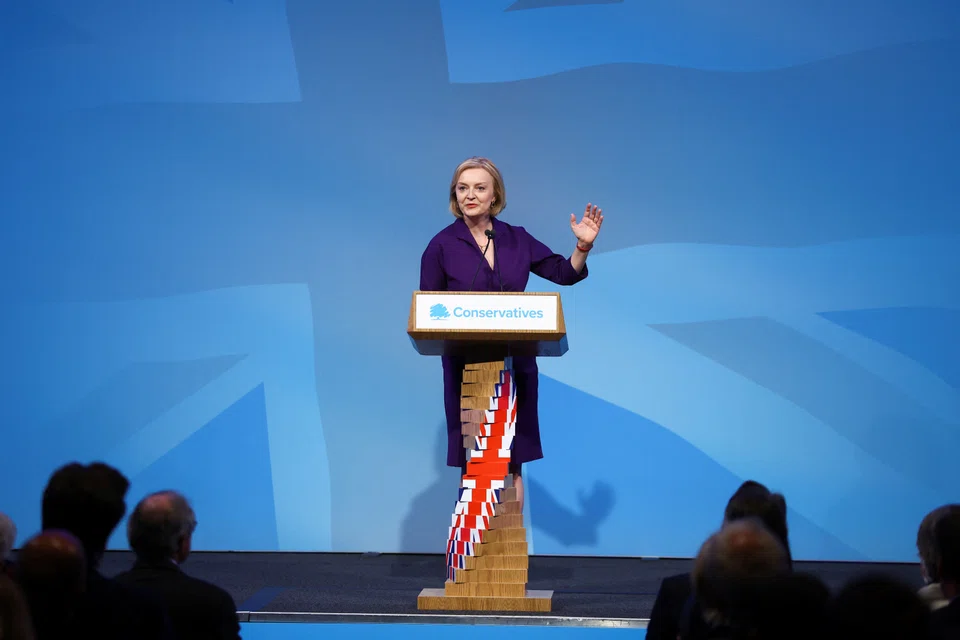
LIZ Truss was named as Britain’s next prime minister on Monday (Sep 5), winning a leadership race for the governing Conservative party at a time when the country faces a cost of living crisis, industrial unrest and a recession.
On Tuesday, Truss, who held the foreign affairs portfolio, will assume her new role when she visits the Queen in Balmoral for an invitation to form her UK government.
Her premiership was made official at the Queen Elizabeth II Centre in Westminster in London on Monday afternoon (7.30 pm Singapore time). It was announced then that she won 81,326 votes or 57 per cent of the vote; her rival for the job, Chancellor of the Exchequer Rishi Sunak, pulled in 60,399 votes (43 per cent). The margin, although comfortable, was not as overwhelming as some polls suggested. This suggests she might have to work hard to heal a governing party deeply divided and lagging in opinion polls.
The turnout for the vote among the Conservative Party was 82.6 per cent after weeks of an often bad-tempered and divisive leadership contest.
In her speech following the announcement, she thanked her predecessor Boris Johnson, and vowed to unite the Tories. She said she would have a “bold plan” to grow the economy and cut taxes. On the rising energy bills plaguing the nation, she said she would not only tackle the bills, but also come up with a longer-term solution to boost energy supply.
“We will deliver, we will deliver, we will deliver,” she said to applause and cheers from the floor.
Truss also ruled out a snap election and promised to deliver a “great victory” for the Conservative Party at the next general election in 2024. “I campaigned as a Conservative and I will govern as a Conservative,” Truss said. “We need to deliver over the next two years.”
The announcement triggers the start of a handover from Boris Johnson, who was forced to announce his resignation in July after months of scandal saw support for his administration drain away. He will also go to Balmoral on Tuesday to officially tender his resignation. Truss will meet the monarch after he does.
Long the front-runner in the race to replace Johnson, she will become the Conservatives’ 4th prime minister since a 2015 election. Over that period, the country has been buffeted from crisis to crisis, and now faces what is forecast to be a long recession triggered by sky-rocketing inflation which hit 10.1 per cent in July.

The foreign minister under Johnson, Truss, 47, had in recent weeks promised to act quickly to tackle Britain’s cost of living crisis, saying that within a week she will come up with a plan to tackle rising energy bills and securing future fuel supplies.
Truss has signalled during her leadership campaign that she would challenge convention by scrapping tax increases and cutting other levies in a move that some economists say would fuel inflation.
That, plus a pledge to review the remit of the Bank of England while protecting its independence, has prompted some investors to dump the pound and government bonds.
Kwasi Kwarteng, widely tipped to be her finance minister, sought to calm markets on Monday, by saying in an article in the Financial Times newspaper that under Truss, there would need to be “some fiscal loosening” but that her administration would act in “a fiscally responsible way”.
Truss faces a long, costly and difficult to-do list, which opposition lawmakers say is the result of 12 years of poor Conservative government. Several have called for an early election – something Truss has said she will not allow.
Veteran Conservative lawmaker David Davis described the challenges she would take on as prime minister as “probably the second most difficult brief of post-war prime ministers” after Conservative Margaret Thatcher in 1979.
“I actually don’t think any of the candidates, not one of them going through it, really knows quite how big this is going to be,” he said, adding that costs could run into tens of billions of pounds.
Truss has said she will appoint a strong cabinet, dispensing with what one source close to her called a “presidential-style” of governing, and she will have to work hard to win over some lawmakers in her party who had backed Sunak in the race.
The Institute for Government think-tank said Truss would have a weaker starting point than any of her predecessors, because she was not the most popular choice among her party’s lawmakers.
First, she will turn to the urgent issue of surging energy prices. Average annual household utility bills are set to jump by 80 per cent in October to £3,549, before an expected rise to £6,000 in 2023, decimating personal finances.
Britain has lagged other major European countries in its offer of support for consumer energy bills, which opposition lawmakers blame on a “zombie” government unable to act while the Conservatives ran their leadership contest.
In May, the government set out a £15 billion support package to help households with energy bills as part of its £37 billion cost-of-living support scheme.
Italy has budgeted over €52 billion so far this year to help its people. In France, increases in electricity bills are capped at 4 per cent and Germany said on Sunday it would spend at least €65 billion shielding consumers and businesses from rising inflation. REUTERS
Decoding Asia newsletter: your guide to navigating Asia in a new global order. Sign up here to get Decoding Asia newsletter. Delivered to your inbox. Free.
Share with us your feedback on BT's products and services