

London’s luxury home market has its worst year since Covid-19
While 2024 brought in at least four £50 million-plus deals, the biggest transactions this year are around the £40 million mark
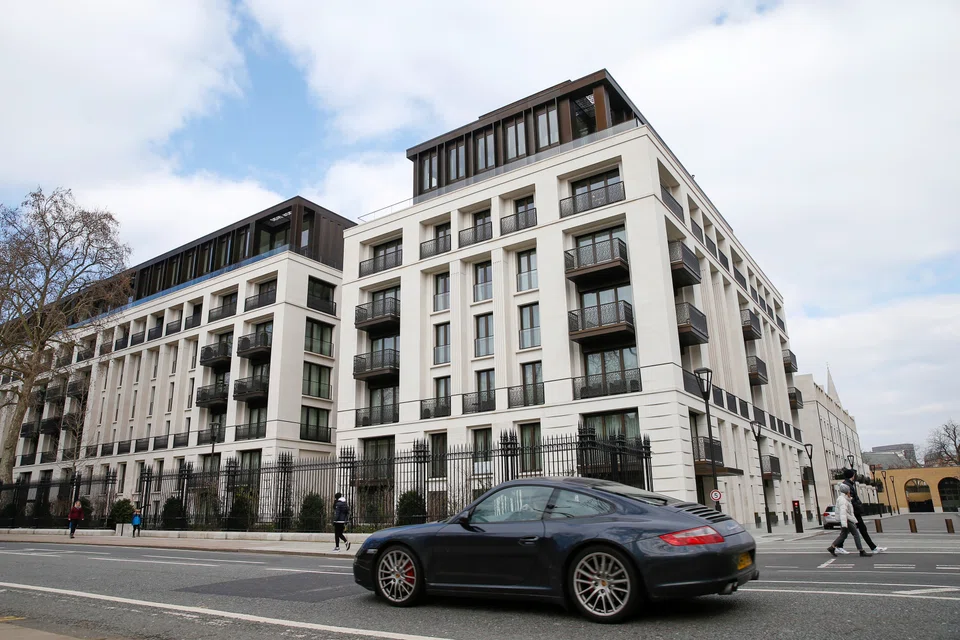
[LONDON] London’s luxury property market is set for its worst year since 2020, after a series of tax measures dampened sentiment among wealthy and discretionary buyers.
It was the second year since 2011 in which no sales above £50 million (S$86 million) were recorded, data from property company LonRes revealed.
While 2024 brought in at least four £50 million-plus deals – including one mansion bought for £139 million – the biggest transactions this year were around the £40 million mark.
Data from broker Savills showed that, in the first three quarters of 2025, residential sales above £5 million tumbled 18 per cent from the same period a year earlier – putting them on course to be the lowest since the Covid-19 pandemic locked down London.
Still, a handful of notable deals wrapped up in 2025.
Hollywood filmmaker George Lucas, Silicon Valley investor Matt Cohler and a member of the multibillionaire family behind Thomson Reuters bought some of the most expensive homes in the capital, publicly accessible data on the UK’s Land Registry and Bloomberg reporting disclosed.
Uncertainty in market
Frances McDonald, director of research at Savills, blamed the slump on the uncertainty prior to the UK Budget statement in November, and the angst around the ruling Labour Party’s abolition of a system that allowed wealthy foreigners, or so-called non-doms, to avoid UK taxes on their overseas earnings.
“The most discretionary, top end of the market is experiencing the greatest downward pressure on prices,” McDonald explained. “The pool of buyers who are typically interested in this price point had already shrunk after the end of the non-dom regime, and some who remain, are hesitant to act.”
The broader slump in the London market, driven partly by hikes to the stamp duty transaction tax, and the coming so-called mansion tax on homes valued at more than £2 million, prompted some desperate vendors to offer discounts of as much as 50 per cent over the past year.

Many of this year’s noteworthy purchases took place in the desirable West London enclaves of Holland Park and Notting Hill.
In June, Charles Lorenceau, founder of private equity firm Ace & Co, bought a £41 million mansion in Holland Park.
Ryan Letchworth, a trader at Capula Investment Services, purchased a £24 million mansion in Notting Hill in January – months before venture capitalist Cohler snapped up a detached house for £22 million in the same district.
Roosevelt Ogbonna, chief executive officer of Nigeria’s Access Bank, bought a £15 million mansion on a street in London’s Hampstead neighborhood, nicknamed Billionaires Row, in August.
And Star Wars creator Lucas purchased a roughly £40 million mansion in a nearby North London district a month later.
Luxury homes’ value may drop further
UK homes worth more than £2 million could drop an additional 5 per cent in value in 2026 as the market adjusts to the mansion tax, forecasts published by London-based luxury real estate broker Hamptons in December revealed.
The broker warned that the new surcharge, coming into force in 2028 – starting at £2,500 a year and rising to as much as £7,500 – will contribute to London’s house prices underperforming the rest of the UK for the next two years.
There were 27 per cent more price reductions on £5 million-plus London homes from August to October than in the same period last year, data compiled by LonRes stated.
That is more than double the average for that period from 2017 to 2019, the researcher’s data shows.
“The government spent months floating ideas that sent shivers down the spine of anyone thinking about buying or selling at the upper end in prime central London,” said Becky Fatemi, an executive partner at UK Sotheby’s International Realty.
“The drip-feed of mansion tax scenarios created a sense of paralysis,” she added, in what was a “master class in how not to encourage a market”.
Charles McDowell, a broker whose decades-old London property firm advises clients on buying multimillion-pound homes, said that the outcome of the Budget “could have been much worse” for London’s luxury market.
McDowell, who also runs a property management firm, noted that non-dom clients who have left the UK are increasingly asking him to manage their homes, rather than sell them, while they are away from London.
“The Budget was all about what the government did not do, and now it is about what action they take next,” he pointed out.
“Wealthy foreign buyers are now hoping the government will alter the recent non-dom legislation, so that it does not include inheritance tax – which they see as utterly unjust,” McDowell added, referring to the recent elimination of inheritance tax breaks on non-doms’ overseas assets.
To be sure, demand in London’s £5 million-plus housing market “recovered somewhat” in November, said LonRes.
Transactions were 3.3 per cent below those of the same month in 2024, an improvement relative to the larger falls seen over the previous three months.
Other cities faring better
London’s high-end property woes are not being echoed in other global financial capitals.
A November report from Knight Frank showed Dubai as the city with the most sales above US$10 million in roughly the past 12 months, with 510 purchases above that threshold. London had 189, fewer than New York City, Los Angeles and Hong Kong.
Meanwhile, Manhattan’s luxury market has so far shown no sign of a slowdown since Zohran Mamdani won the New York mayoral election in November, with sales of luxury homes even jumping in the same month.
Experts say the global wealthy have been hitting pause on transactions in London because of all the uncertainty, but are still purchasing second homes elsewhere.
“The London market will be in a far better place now, simply because stability is back on the table,” said Sotheby’s Fatemi.
But “if Labour decide to replace (UK Prime Minister Keir) Starmer and (Chancellor of the Exchequer Rachel) Reeves with someone more aggressively socialist, and intent on targeting the ultra-high-net-worth community, then all bets are off,” she added, referring to the UK’s Prime Minister and Chancellor of the Exchequer. BLOOMBERG
Decoding Asia newsletter: your guide to navigating Asia in a new global order. Sign up here to get Decoding Asia newsletter. Delivered to your inbox. Free.
Share with us your feedback on BT's products and services

