

London’s vanishing office buildings are being replaced by hotels
Soaring inflation and higher interest rates following the pandemic are upending the city’s office market, and causing values to fall
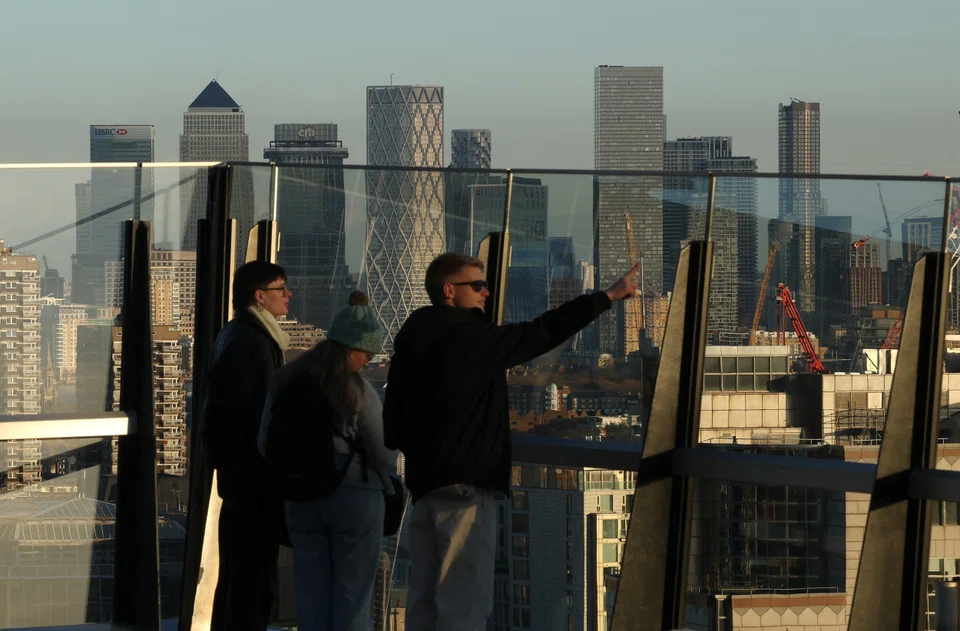
[LONDON] Swathes of London offices have been sold to hotel developers, as they look to take advantage of plunging property values and a bounce-back in travel demand after the pandemic.
Since 2019, almost four million square feet (sq ft) of offices in the UK capital have been sold to investors who intend to convert them, enough to fill the city’s Gherkin skyscraper eight times over, data compiled by real estate company CoStar Group showed.
The bulk of that – 2.7 million sq ft – was sold in the last two years.
Soaring inflation and higher interest rates following the pandemic upended the city’s office market, and caused values to fall.
At the same time, the return of travel demand after lockdowns helped support investor appetite for hotels. Daily changing room rates – in contrast to the fixed long-term leases which are typical of offices – also enabled hotel owners to immediately pass on higher costs.
Felix Rabeneck, director of central London investment broker Savills, said: “It has unquestionably been a trend which has taken hold for the last 24 months or so. People have begun to think about alternative uses for which values might be higher.”
Shifting office demand following the pandemic, and increasingly stringent environmental regulations, have rendered swathes of office space in fringe locations obsolete and struggling to find tenants.
But office developers were cautious about committing the capital needed to modernise them, amid uncertain demand and soaring construction costs – as they waited for the long-term impact of increased work-from-home arrangements to become clear.
That has paved the way for a string of hotel conversions on the edge of London’s historic financial district.


In December, Dominus Real Estate and Cheyne Capital Management completed the acquisition of Ibex House in Aldgate, a district on London’s eastern fringe.
The venture is seeking planning consent to convert the office building into a 382-room hotel.
To the south of the city, Whitbread bought Dorset House on Stamford Street, an office it plans to convert into a 400-room Premier Inn hotel.
“The City of London has seen the largest amount of space being traded for conversions – over 1.3 million sq ft between 2019 and 2025,” said Cristina Balekjian, director of UK hospitality analytics at CoStar Group.
The bout of conversions prompted a pushback in areas including Westminster, as lawmakers seek to protect offices that generate significant tax revenue through the UK’s business-rates regime.
“They have a slightly stronger office market, but they also have a more resolute planning view that they do not want to lose further office space to hotels,” Rabeneck noted.
Still, Surinder Arora’s eponymous property company is pursuing plans to convert an office in London’s Victoria district that it acquired from Land Securities.
The Arora Group wants to turn the building, which was previously home to the UK’s Ministry of Justice, into either a hotel or short-term rental apartments, the billionaire said.
The erosion of supply and little new development is now helping to push office rents higher, with companies seeking high-quality new space finding there are few options. That could spell the end of office-to-hotel conversions, as developers seeking the most profitable use for buildings expect higher office rents to boost valuations.
“We are probably going to see the pendulum swing back the other way,” Savills’ Rabeneck explained. “We are seeing office values beginning to recover, and therefore the viability of converting to hotels will become more marginal.” BLOOMBERG
Decoding Asia newsletter: your guide to navigating Asia in a new global order. Sign up here to get Decoding Asia newsletter. Delivered to your inbox. Free.
Share with us your feedback on BT's products and services
TRENDING NOW

Malaysian king buys stake in Singapore-listed mining firm expanding into rare earths

Grab CEO’s wife Chloe Tong on life with Anthony Tan and finding her purpose

Once staunchly pro-China, Malaysian Chinese businesses are now distancing themselves from Beijing
Longer wait times expected as S’pore healthcare institutions report system disruptions

