

Louboutin fights to save Portuguese retreat from tourism surge
 Add BT as a preferred source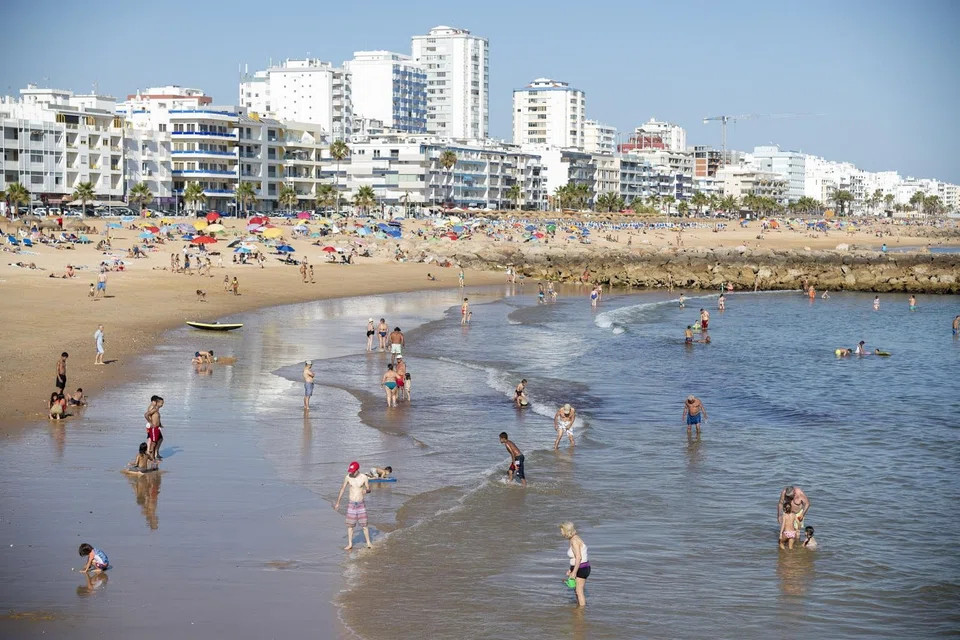
WHEN French designer Christian Louboutin bought a secluded house in Melides, Portugal, it was a sleepy coastal area. Less than two decades later, what was once a well-kept secret has transformed into a playground of the rich and famous.
An explosion of golf and resort developments along the coast has led to local worries about the impact on the environment and that the area, about 90 minutes south of Lisbon, will fall victim to overtourism. Right on Louboutin’s doorstep, water levels in a lagoon have dropped as climate change, farming and higher visitor numbers take a toll.
“Tourists come here for the beauty of this place,” Louboutin, who owns a small hotel in the town of Melides, said in a telephone interview from Paris. “So we need to just keep it that way.”
Such concerns are part of an emerging trend in parts of Europe as the post-Covid travel rebound helps to fuel a backlash against commercialisation and overcrowding. While Melides and the surrounding area benefit from money and jobs, the rapid change has also heightened inequality and stretched resources.
Louboutin, famous for his red-sole shoes, is not opposed to high-end tourism, and is part of a local group working with developers to manage the environment more responsibly. His focus is protecting the area around the town of 1,500 people located along one of the last almost untouched stretches of Atlantic coast in Portugal. But others are far more trenchant in their opposition, decrying damage to nature and the character of the local community.
Some of the tensions are focused on CostaTerra, a luxury residential community owned by US real estate mogul Mike Meldman, best known for founding tequila company Casamigos with George Clooney.
The members-only resort, which plays host to entrepreneurs, celebrities and royalty, is building almost 150 multi-million dollar properties next to a Tom Fazio-designed golf course, as well as dozens of other villas and cottages.
Meldman said his project is striving for a low environmental impact. It replants trees, will use a less water-intensive grass and have a desalination plant to reduce reliance on local freshwater.
“Natural sustainability is a huge issue,” Meldman said in an interview earlier this year. “There’s a lot of forests and farmland and open space there that’s not going to be developed. So we feel the character of the region is going to stay.”




Even with the environmental measures, there is still a question whether the region can cope with everything.
Portuguese real estate company Vanguard Properties is investing more than one billion euro (S$1.4 billion) in development in nearby Comporta – including two golf courses. Meldman’s Discovery Land recently bought one of the region’s oldest and most affordable seaside camping spots close to CostaTerra.
Discovery says it carefully manages its sites, having restricted numbers at the campground and connecting it to CostaTerra’s waste water plant to reduce the environmental impact. Vanguard said in a statement that sustainability is “key” to its investments, citing its use of waste water for irrigation, as well as solar panels and energy storage.
Just to the north, Paula Amorim, one of Portugal’s richest women, runs the JNcQUOI beach club near the town of Comporta. It is close to a resort that Spanish billionaire Sandra Ortega, whose father founded Zara-owner Inditex, is building along the finger-shaped peninsula of Troia.
In the surrounding area, locals complain that property prices have skyrocketed as foreigners snap up plots of land to build hotels or convert old houses into second homes or short-term rentals.
“Prices are absurd,” said Margarida Goncalves, who works at a cafe in nearby Grandola. “There are hardly any affordable homes in the market. The few units available are selling for the same price as in Lisbon.”
So striking has been the upscale shift that even wealthier residents have noticed it. Guy Villax, former chief executive of Portuguese pharmaceutical company Hovione, says locals are being priced out and the traditional restaurants are losing their character.
”Prices have doubled, grilled fish with tomato and onion salad has been replaced with the same international fare as everywhere else,” he said. “Simple, delicious and authentic is a thing of the past.”
Some locals focus on the financial benefits in what was once one of Portugal’s poorest regions. Antonio Mendes, the 81-year-old president of the city council of Grandola, says when he was first elected in the 1970s, the city council had little money and people were leaving to find work. Now, it’s bringing in millions from property taxes and other revenue.
“I sometimes hear people say that tourism is harming the region,” said Mendes. “But I see people with jobs earning salaries above the average.”
Another growing concern is that new multi-million dollar resorts will further deplete water resources in a region where many still rely on farming to make ends meet. That’s part of the campaign of Intertidal Melides, a local group preserving the local environment and encouraging “good environmental practices” by businesses.
It was co-founded by Louboutin and Noemi Marone Cinzano, an Italian whose family once owned the famous brand of vermouth and who has a house in the area.
The municipality is trying to respond. It wants to prohibit development along the coast and cut the number of tourist beds already approved by 40 per cent. Mendes said many developers have agreed to reduce the scale of projects to make them more sustainable.
Louboutin believes it is possible to maintain the beauty of Melides while attracting high-end tourists.
“People are touched by authenticity and we need to keep it that way,” he said. “Don’t expect Melides to become like St Tropez. It’s not going to happen.” BLOOMBERG
Decoding Asia newsletter: your guide to navigating Asia in a new global order. Sign up here to get Decoding Asia newsletter. Delivered to your inbox. Free.
Share with us your feedback on BT's products and services
TRENDING NOW
Jumbo Seafood to close flagship East Coast Seafood Centre outlet on Sep 30

Shanda co-founder sells Tanglin Hill bungalow for S$76 million

Johor property old hand KSL readies family handover amid market boom

Yeo’s, Tiger Beer and now Gardenia – flight of food manufacturing from Singapore might be just as planned

