Macau casinos deal themselves a tough hand with big non-gaming investment pledges
 Add BT as a preferred source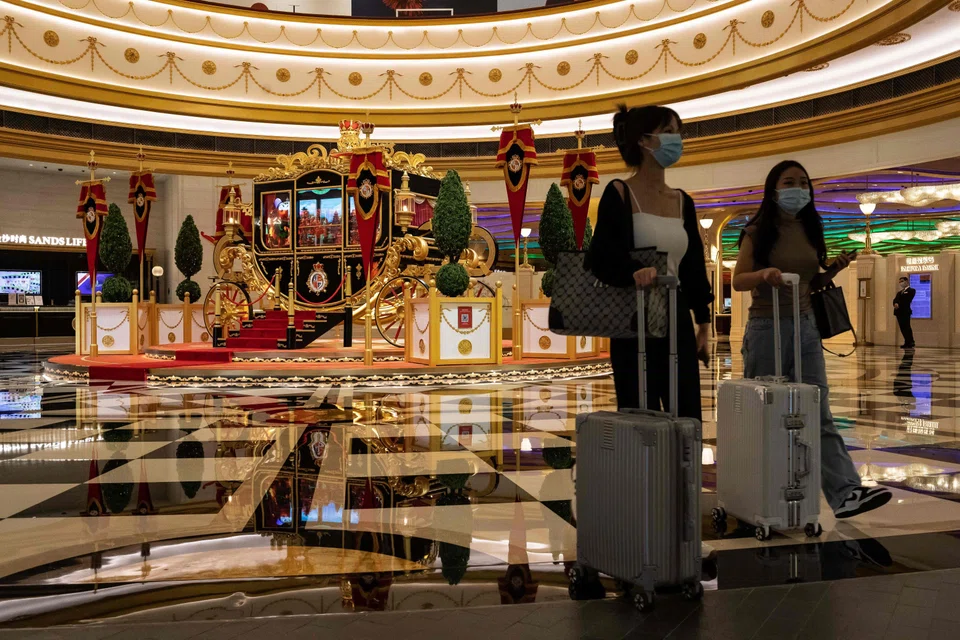
DeeperDive is a beta AI feature. Refer to full articles for the facts.
AS CASINOS in Macau begin new licences to operate in the world’s biggest gambling hub, the stakes are high on whether they will be able to deliver on a government mandate to diversify away from their cash-cow: gambling.
For the last 20 years, Sands China, Wynn Macau, MGM China, Galaxy Entertainment and SJM Holdings have raked in billions of dollars from their casinos in the Chinese special administrative region, turning the once-sleepy fishing village into a glitzy boomtown.
But their 10-year, shortened contracts come at a time when Covid-19 restrictions have decimated gambling revenues in Macau, with 2022 the worst annual performance on record. Industry net debt is surging, and casino operators face a new era of government oversight and control over their operations.
At the same time, casinos are grappling with sick staff, as the recent easing of control measures in mainland China and Macau has resulted in a wave of Covid infections across the city.
Upping the ante
Casinos have committed to investing a total of US$15 billion in the coming decade, of which 90 per cent must be spent on non-gaming ventures.
But gaming executives and analysts said that casino operators will find it hard to monetise these projects, given their poor track record since 2001, when Macau first liberalised the industry.
Navigate Asia in
a new global order
Get the insights delivered to your inbox.
Ben Lee, founder of gaming consulting IGamiX, said that the city’s non-gaming revenue averaged around 5 per cent of overall gaming revenue before the pandemic. Now, that figure must grow to more than 30 per cent in the next decade.
“For the past 20 years, none of the operators has managed to establish any significant progress in non-gaming. Contrary to the vaunted Las Vegas model, non-gaming in Asia does not carry the same profit margin, as spending behaviour is quite different over here.”
He added that Galaxy, Melco and Sands were likely to fare better at diversifying, based on their histories and management teams.
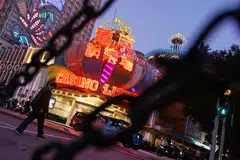
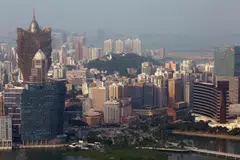
Traditionally, Macau’s visitors have been male gamblers aged 30 and older. But in recent years, more young families and women have been visiting the densely packed territory.
Located on China’s southern coast, Macau is the only place in the country where gambling in casinos is legal.
In December, after the formal awarding of their contracts, Macau’s casinos unveiled their non-gaming plans, which included indoor water parks, health and wellness centres, art exhibitions and a large garden attraction similar to Singapore’s Gardens by the Bay.
Key challenges
Macau’s current non-gaming attractions focus on retail and dining, with some entertainment offerings, such as Melco’s nightclubs, Galaxy’s cinema, Sands’ Venetian- and Parisian-themed properties and its exhibition arena.
But they pale in comparison to the attractions found in Las Vegas, a city which boasts daily entertainment and draws an international crowd. More than 90 per cent of Macau’s visitors are from greater China, prompting the government to require casino operators to attract foreign tourists as part of their new contracts.
New rules also stipulate that companies must routinely submit to the government the progress of their investment projects, the value of their investments and the execution periods.
The increased regulatory oversight comes as Macau’s casinos face much higher debt levels compared to numbers seen in 2019. Net debt increased fourfold to US$23 billion in 2022, and might only peak in end-2023 at US$24 billion, said financial services firm Morgan Stanley.
Compounding casinos’ challenges are Macau’s own: it lacks connectivity with international markets, and has dilapidated infrastructure and a shortage of skilled labour, as well as reputational damage over its Covid management, said gaming executives.
David Green, head of Macau gaming consultancy Newpage, pointed out that there are very few direct flights between Macau and potential markets outside China, while transport within the city is limited to move large groups of people around.
“(I have seen) no indication that the government is, or intends to, address these weaknesses. Given the serial mismanagement of public works… it leaves concessionaires with a less-than-optimal host attraction proposition.”
A lack of land also hinders Macau’s further development, while competition to hold conferences and exhibitions is rife from cities such as Hong Kong and Singapore, and within China itself.
Alidad Tash, who has worked as a senior executive in Macau’s casinos since 2006 and now runs consultancy 2nt8, said the biggest challenge for casino operators was that mainland Chinese already had access to conventions, restaurants, shows and shopping in their own cities.
“What they come to Macau primarily for is the one thing that is not legally allowed within China: gambling.” REUTERS
Decoding Asia newsletter: your guide to navigating Asia in a new global order. Sign up here to get Decoding Asia newsletter. Delivered to your inbox. Free.
Share with us your feedback on BT's products and services