Malaysia elections: Outcome shows that a Malay tsunami swept all before it
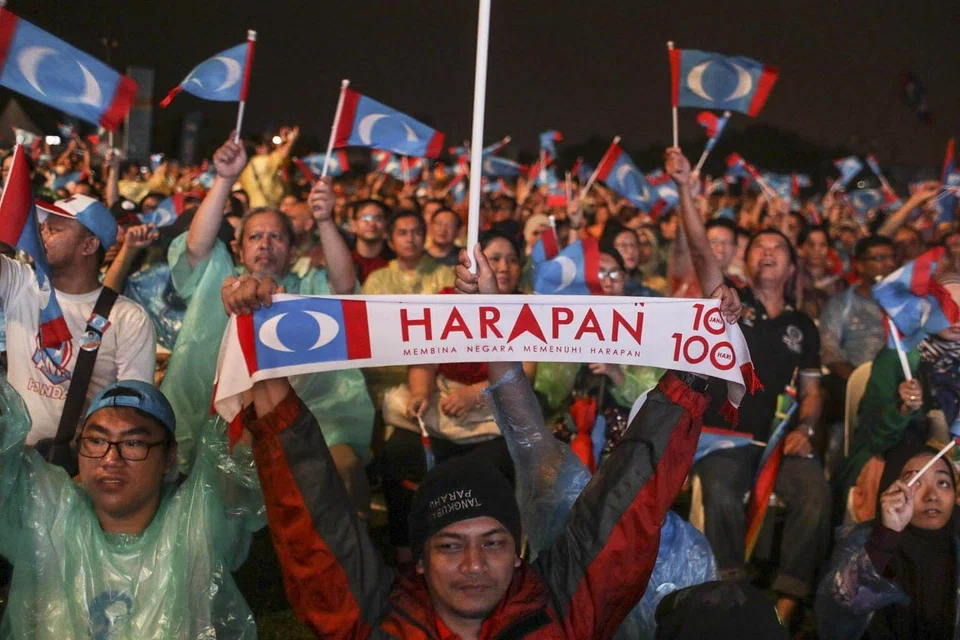
It now seems there was a Malay tsunami after all. Malaysia's most keenly-fought general election has seen opposition coalition Pakatan Harapan (PH) pulling significantly ahead of Barisan Nasional (BN), in spite of the odds against it.
PH also added several states to the two it currently governs, Penang and Selangor, putting a majority of the country's 13 states in opposition hands for the first time.
This outcome appears to be why BN leaders and officials displayed a certain anxiety in the months leading up to the election.
Yesterday's polls saw the strongest Malaysian opposition alliance ever mustered against an incumbent government, with its best shot at federal power. For the first time, a sitting prime minister was being challenged by a former premier.
As it turned out, Tun Dr Mahathir Mohamad's helming the opposition with the aim of unseating Datuk Seri Najib Razak appears to have played a key role in helping to swing enough votes from the Malay majority to generate a "Malay tsunami" to push his alliance towards Putrajaya.
Five years ago, the opposition led by Anwar Ibrahim won a record 82 seats and made significant inroads into BN strongholds like Johor, on the back of a groundswell of support from Chinese voters which Mr Najib dubbed a "Chinese tsunami".
And in the run-up to yesterday's polls, senior BN leaders rubbished talk of a Malay tsunami.
But another factor was at work - a slow erosion of support for BN from Malay voters, including in seats with a sizeable number of Felda settlers, especially those in the second and third generations who did not hold deep-seated allegiance to Umno.
Compounding this slide in support for BN since 2013 was a cocktail of factors - rising costs of living, the introduction of the unpopular goods and services tax, and the scandal at state-owned fund 1MDB linked to the Prime Minister.
While BN leaders claimed that the 1MDB saga did not bother voters, it has had a long tail.
Dr Mahathir's clash with Mr Najib on the issue saw the former premier - and two senior Umno leaders Muhyiddin Yassin and Shafie Apdal - part ways with the party, and in a matter of years build up two parties, Parti Pribumi Bersatu Malaysia and Parti Warisan Sabah, that attracted votes away from BN on the peninsula as well as in Sabah.
Dr Mahathir remains especially popular, and many Malaysians remember his 22 years at the helm fondly. Many traditional opposition supporters still have not warmed to him and harbour reservations about his switch. Still, one poll showed that up to 60 per cent of respondents favour him compared with some 40 per cent for Mr Najib. That these former Umno leaders prevailed in spite of the odds against them reflects an overriding desire among voters for change, but arguably also for fair play.
The BN government went out of its way to hobble the opposition, tinkering with the levers of power at its disposal to gain an edge.
It redrew electoral boundaries to sway marginal seats in its favour and create more "safe" seats, and deregistered Dr Mahathir's party over administrative irregularities, thereby hobbling PH's registration.
PH leaders took this in their stride, opting to field candidates under a common logo, that of Parti Keadilan Rakyat.
The Election Commission (EC) then set out to have polling on a weekday, ostensibly to reduce voter turnout which tends to favour the opposition, and kept the campaign period to the minimum 11 days required by law.
The EC also issued regulations stating that only images of the top two leaders of parties contesting the election could be on display across the country.
Many saw this as a move to prevent Dr Mahathir's image from being on display across the country. And when a candidate sought to put up posters of Dr Mahathir, officials cut out his image, a move that could have swung undecided voters.
Umno-controlled broadsheet Utusan Malaysia also ramped up its rhetoric against the former premier and, in a daily display of leaders of the three main parties contesting the election, used an image of Democratic Action Party leader Lim Kit Siang - who it regularly derides - instead. The subtext was clear - plant doubt among its mostly Malay readers that it is Mr Lim, not Dr Mahathir, who pulls the strings in PH, on top of its daily attacks on PH.
This talking up of the opposition threat appears to have backfired.
Indeed, a tsunami can be hard to block. Not even three-cornered fights in almost all constituencies, which BN candidates initially hoped would work in their favour, could dampen the strong sentiment against BN.
Neither did the three last-minute treats of income tax waivers for youth, public holidays or toll-free Hari Raya travel that Mr Najib doled out on the eve of polling, or yesterday's less than peak turnout.
In the end, the tale of the vote suggests that Malaysian voters, across all races, were clear that they wanted a change of leadership.
THE STRAITS TIMES