
Malaysia's new PM brings old guard back to power
Appointment of Mr Ismail Sabri marks UMNO's comeback to the country's top post after just three years on the periphery
 Add BT as a preferred source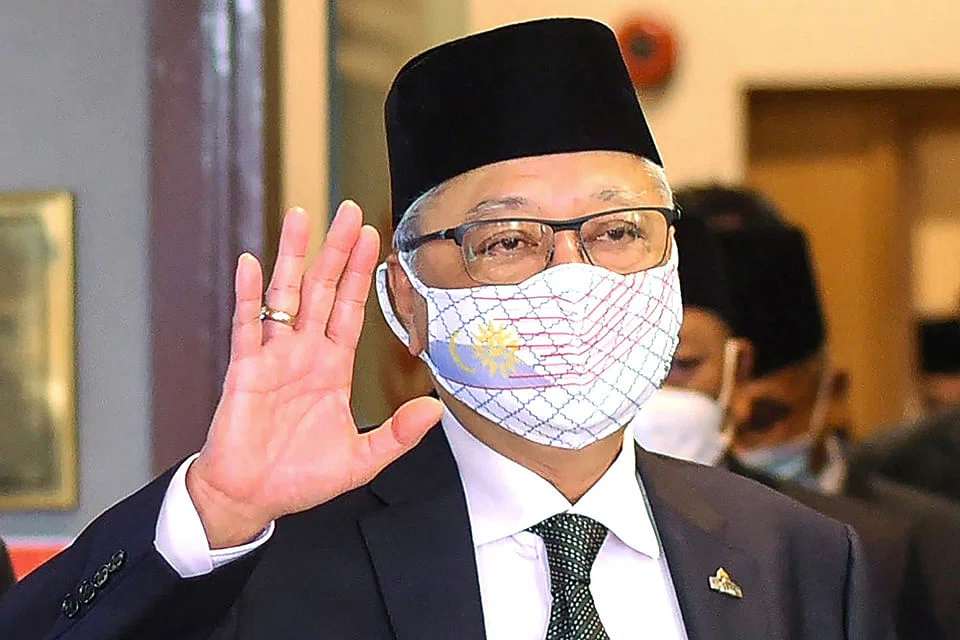
Kuala Lumpur
MALAYSIA'S king appointed the country's third prime minister in just 18 months, marking the return to power of a pro-Malay party that ruled the country for decades as virus cases reach new highs.
The monarch on Friday selected Ismail Sabri Yaakob, the deputy leader of the previous government, as the new prime minister. The long-time member of the United Malays National Organisation (UMNO) will be sworn in on Aug 21, according to a statement from the palace, which said he commanded the support of 114 lawmakers in the 220-member body.
The appointment caps weeks of political upheaval, which prompted Muhyiddin Yassin and his entire cabinet to resign on Monday after 17 months in office amid mounting anger over his handling of the pandemic and the economy. Daily Covid-19 cases hit a record for a third day on Friday despite a seven-month state of emergency and multiple lockdowns.
"His Majesty expressed his views that with the appointment of the prime minister, the government should continue efforts to fight the Covid-19 pandemic immediately for the benefit and safety of the people and the country's well-being, which are greatly affected by this crisis and the pandemic threat," the palace said in a statement.
The appointment of Mr Ismail Sabri, 61, marks UMNO's comeback to the country's top post after just three years on the periphery. UMNO ruled Malaysia since independence from Britain in 1957 before it was ousted in 2018 in part due to the multibillion-dollar 1MDB corruption scandal. The party was briefly relegated to the opposition, but returned to the ruling coalition last year under the Muhyiddin administration.
Navigate Asia in
a new global order
Get the insights delivered to your inbox.
Still, Mr Ismail Sabri faces a tough road ahead to stay in the job: The palace said he must face a confidence vote in parliament as soon as possible. Even if he wins that, he must call another national election by July 2023. The ringgit was little changed at 4.2393 per US dollar and 10-year government bond yields fell one basis point to 3.24 per cent. The main stock index closed with a 0.2 per cent gain.
"The decision is not a surprise, and a more stable political environment will ease investor concern," says Qi Gao, a currency strategist at Scotiabank in Singapore. Weak oil prices and the US dollar's strength could see the currency testing the 4.25 level, he added.
As part of Mr Muhyiddin's senior cabinet, Mr Ismail Sabri was a leading figure in the nation's fight against the pandemic. He appeared almost daily in televised press briefings to update the public on containment measures. Still, virus cases continued to skyrocket as the government oscillated between tightening and loosening restrictions on movements.
Mr Ismail Sabri initially controlled the defence portfolio and was pushing for snap polls until Mr Muhyiddin appointed him deputy premier in early July in a bid to shore up support from the party. Previously, the new prime minister had overseen domestic-focused portfolios, including the ministries of rural development and agriculture.
"I think you're going to see a large amount of continuity between the Muhyiddin Yassin administration and this one," said Francis Hutchinson, coordinator of the Malaysia studies program at the ISEAS-Yusof Ishak Institute. "I don't think we're going to see too much of a change in terms of the rhetoric. At this point in time, really the priority is very much on Covid-19."
The king plays a largely ceremonial role but appoints the prime minister based on who he believes commands a majority in parliament. That hasn't been easy to figure out, with members of both ruling and opposition parties regularly switching sides. Friday's decision is another disappointment for Anwar Ibrahim, the long-time opposition figure who had a deal to succeed Mahathir Mohamad, now 96, following the duo's surprise election win in 2018. But that never happened, with Dr Mahathir's resignation in early 2020 kicking off a round instability that has gripped the country ever since.
"It's almost like the same group that's retained power, but I think it's a fairly significant change in that UMNO has returned," said Johan Saravanamuttu, an adjunct senior fellow at the S Rajaratnam School of International Studies. "But whether this can sustain for a long period of time, I am not entirely sure because of the extreme fractionalisation that has occurred in the party, and within the Malay political class as a whole." BLOOMBERG
Decoding Asia newsletter: your guide to navigating Asia in a new global order. Sign up here to get Decoding Asia newsletter. Delivered to your inbox. Free.
Share with us your feedback on BT's products and services

