

The man who helped turn Toronto into a high-tech hotbed
Toronto
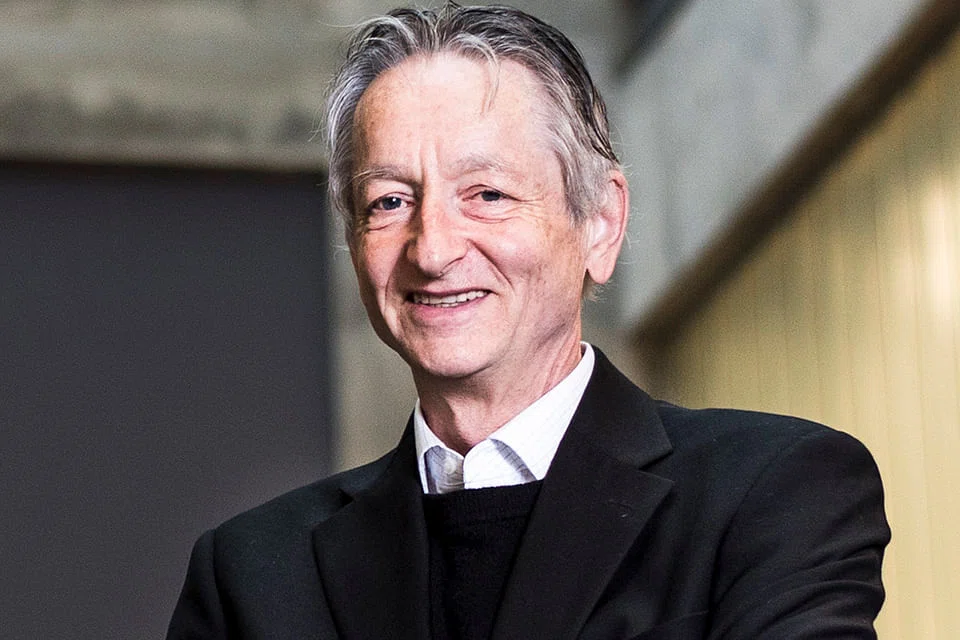
AS an undergraduate at Cambridge University, Geoffrey Everest Hinton thought a lot about the brain. He wanted to better understand how it worked but was frustrated that no field of study offered real answers.
So he set about building his own computer models to mimic the brain's process. "People just thought I was crazy," said Mr Hinton, now 69, a Google fellow who is also a professor emeritus of computer science at the University of Toronto.
He wasn't. He became one of the world's foremost authorities on artificial intelligence (AI), designing software that imitates how the brain is believed to work.
At the same time, Mr Hinton, who left academia in the United States in part as a personal protest against military funding of research, has helped make Canada a high-tech hotbed.
Dictate a text on your smartphone, search for a photo on Google or, in the not too distant future, ride in a self-driving car, and you will be using technology based partly on Mr Hinton's ideas. His impact on AI research has been so deep that some people in the field talk about the "six degrees of Geoffrey Hinton" the way college students once referred to Kevin Bacon's uncanny connections to so many Hollywood movies.
Mr Hinton's students and associates are now leading lights of AI research at Apple, Facebook, Google and Uber, and run AI programmes at the University of Montreal and OpenAI, a non-profit research company.
"Geoff, at a time when AI was in the wilderness, toiled away at building the field and because of his personality, attracted people who then dispersed," said Ilse Treurnicht, chief executive of Toronto's MaRS Discovery District, an innovation centre that will soon house the Vector Institute, Toronto's new public-private artificial intelligence research institute where Mr Hinton will be chief scientific adviser. Mr Hinton also recently set up a Toronto branch of Google Brain, the company's AI research project.
Mr Hinton started out under a constellation of brilliant scientific stars. He was born in the United Kingdom and grew up in Bristol, where his father was a professor of entomology and an authority on beetles. He is the great-great-grandson of George Boole, the father of Boolean logic.
His middle name comes from another illustrious relative, George Everest, who surveyed India and made it possible to calculate the height of the world's tallest mountain that now bears his name.
Mr Hinton followed the family tradition by going to Cambridge in the late 1960s. But by the time he finished his undergraduate degree, he realised that no one had a clue how people think.
Mr Hinton heard about an AI programme at the University of Edinburgh and moved there in 1972 to pursue a PhD. His adviser favoured the logic-based approach, but Mr Hinton focused on artificial neural networks, which he thought were a better model to simulate human thought.
His study didn't make him very employable in Britain, though. So, PhD in hand, he turned to the US to work as a postdoctoral researcher in San Diego with a group of cognitive psychologists who were also interested in neural networks. They were soon making significant headway. They began working with a formula called the back propagation algorithm. That algorithm allowed neural networks to learn over time and has since become the workhorse of deep learning, the term now used to describe AI based on those networks.
Mr Hinton moved in 1982 to Carnegie Mellon University in Pittsburgh as a professor, where his work with the algorithm and neural networks allowed computers to produce some "interesting internal representations", as he put it.
By 2012, computers had become fast enough to allow him and his researchers in Toronto to create those internal representations as well as reproduce speech patterns that are part of the translation applications we all use today.
He formed a company specialising in speech and photo recognition with two of his students at the University of Toronto. Google bought the business, so Mr Hinton joined Google half time and continues to work there on creating artificial neural networks.
Now he is turning his attention to healthcare, thinking that AI technology could be harnessed to scan lesions for cancer. The combination of the Vector Institute, a surrounding cluster of hospitals and government support, he added, makes Toronto "one of the best places in the world to do it". NYTIMES






